
FCITS Defect Library: Buckling Over Wood Substrates Installed Over Concrete
Also Known As
- Wood Underlayment Buckling
- Plywood Expansion Buckling
- Moisture-Induced Underlayment Buckling
- Substrate-Induced Buckling
- Wood Panel Swell Buckling
Primary Classification
Substrate-Related Moisture Condition
Definition
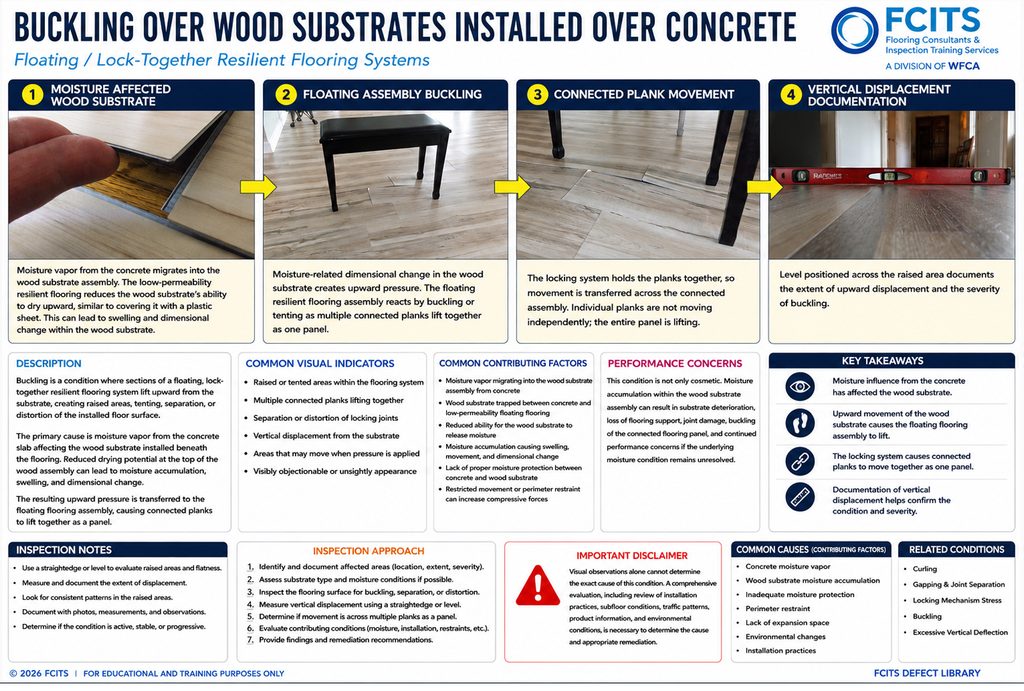
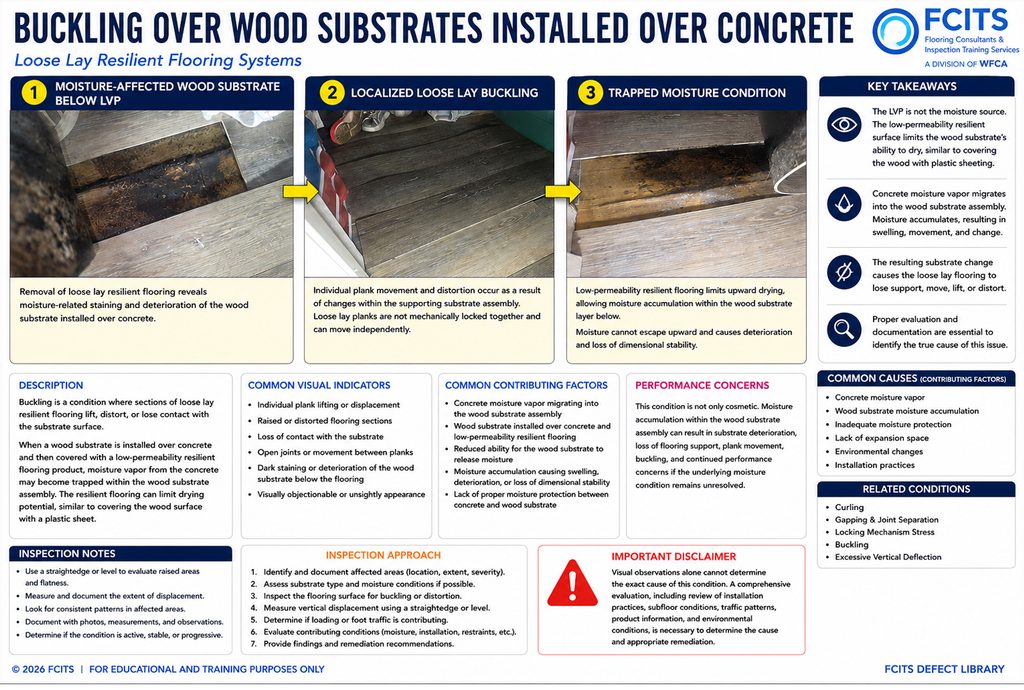
Buckling Over Wood Substrates Installed Over Concrete is a substrate-related moisture condition in which resilient flooring becomes raised or distorted due to movement, swelling, expansion, or deterioration occurring within a wood underlayment installed over concrete. Unlike conventional buckling, the finished flooring is often responding to dimensional change within the supporting wood substrate rather than acting as the primary source of the movement. Although commonly associated with moisture-related conditions, underlayment deterioration, or installation characteristics, the visible buckling alone does not identify the underlying cause.
What Does It Look Like?
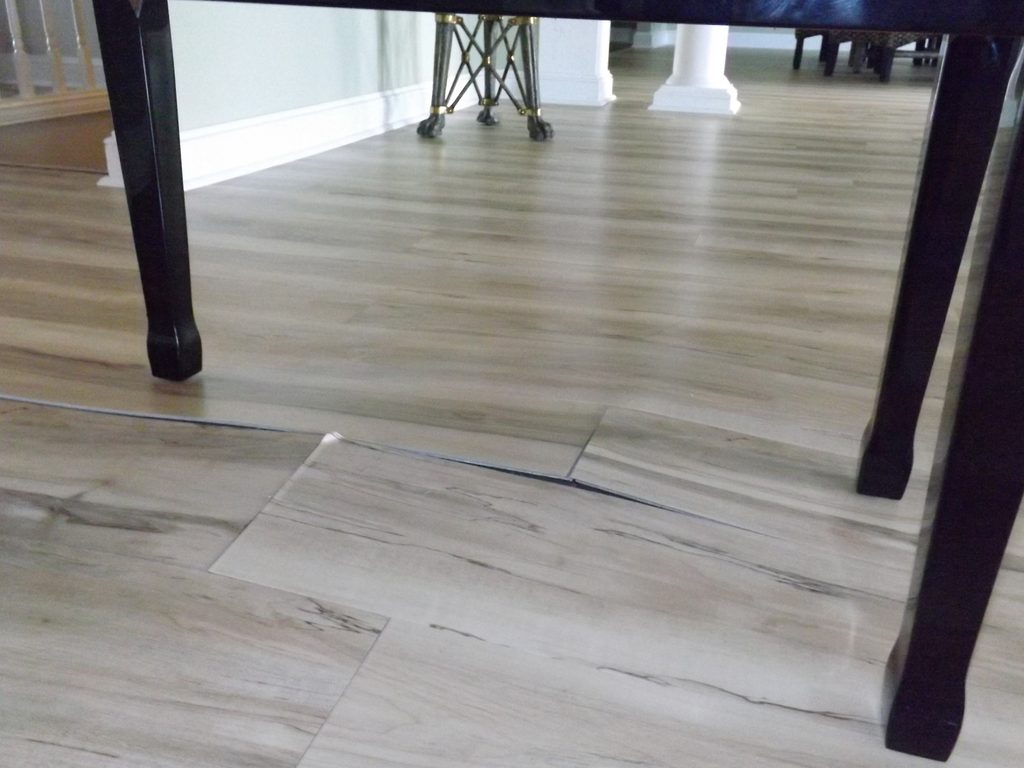
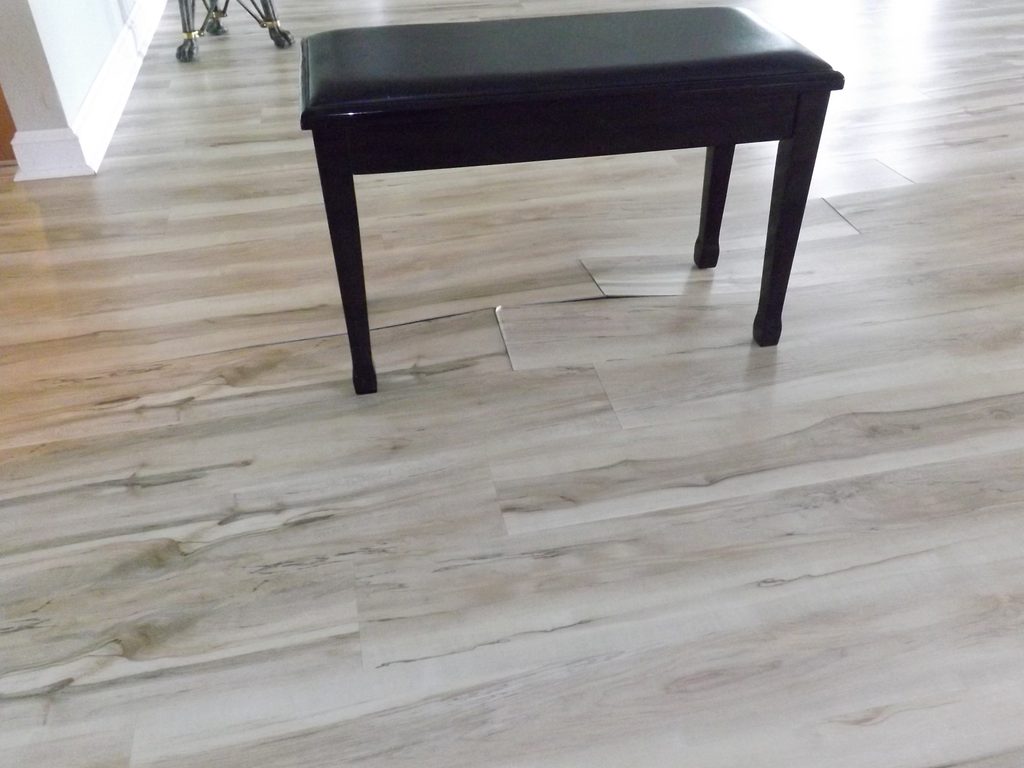
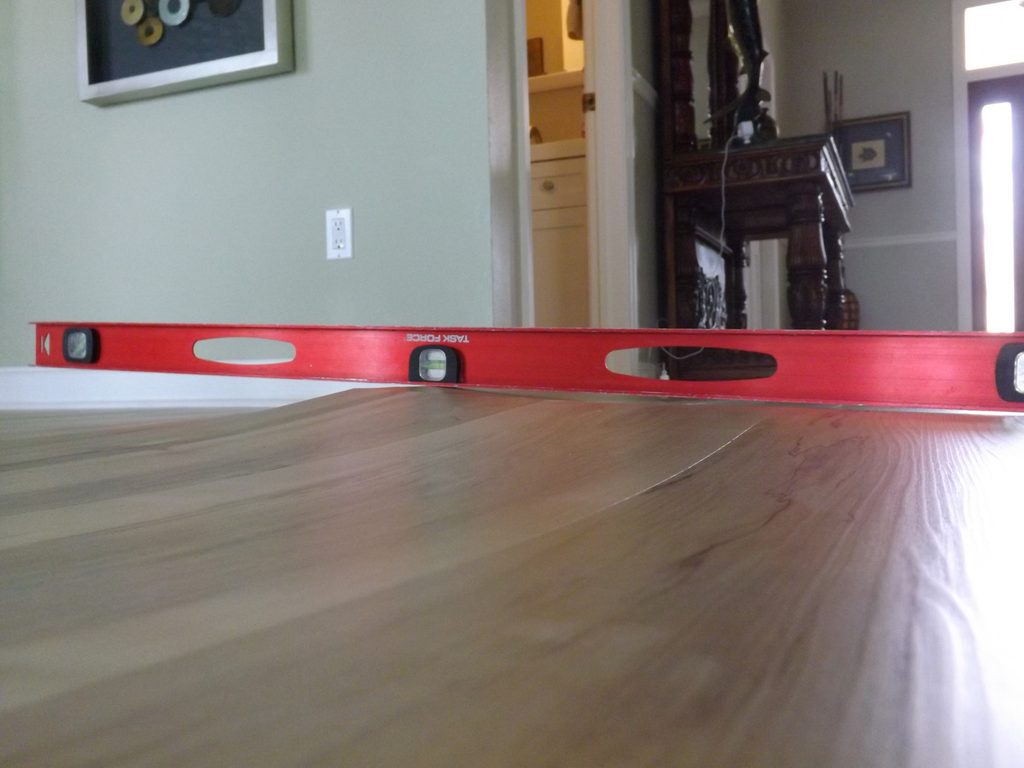
- Raised or buckled flooring
- Buckled seams
- Humps or ridges
- Telegraphing of wood panel joints
- Raised underlayment seams
- Soft or uneven areas underfoot
- Localized or widespread distortion
- Seasonal or moisture-related changes
Degree of Severity
- Minor: Slight movement with minimal effect on performance.
- Moderate: Clearly visible raised areas that may be felt underfoot.
- Severe: Significant buckling, floor movement, loss of support, or trip hazard requiring corrective action.
What Causes It?
Multiple contributing factors are common.
Moisture-Related Underlayment Movement
Common Contributing Factors:
- Concrete moisture vapor
- Missing or ineffective vapor retarder
- Plumbing leaks
- Exterior water intrusion
- Flooding
Mechanism: Moisture absorbed by the wood underlayment causes swelling, expansion, and distortion that is transferred to the finished flooring.
Wood Panel Expansion
Common Contributing Factors:
- Plywood or OSB expansion
- Panel edge swelling
- Fastener movement
- Wood deterioration
Mechanism: Dimensional changes within the underlayment create stresses that raise or distort the flooring above.
Installation-Related Conditions
Common Contributing Factors:
- Improper moisture evaluation
- Failure to provide required moisture protection
- Improper underlayment selection
- Improper fastening
Mechanism: Installation deficiencies allow moisture-related movement to develop within the underlayment system.
Moisture Entrapment Within the Flooring Assembly
Common Contributing Factors:
- Low-permeance flooring
- Concrete moisture vapor
- Restricted drying
]
Mechanism: Moisture may become trapped within the wood underlayment, contributing to long-term swelling, fungal decay, wood rot, and buckling. Think of the LVP as a plastic lid over the wood flooring. It does not create the moisture, but it can restrict the moisture from escaping upward. Moisture can then accumulate within the wood flooring below, resulting in swelling, distortion, buckling, delamination, deterioration, and microbial growth.
What Makes This Condition Different?
In many conventional buckling claims, the flooring itself is the primary source of the expansion forces. The finished flooring expands due to environmental changes, restricted movement, improper installation, or other flooring-related factors until the accumulated compressive forces cause the floor to lift or buckle.
- In Buckling Over Wood Substrates Installed Over Concrete, the mechanism is often fundamentally different. Rather than generating the movement, the resilient flooring is frequently responding to dimensional changes occurring within the wood underlayment beneath it. As the wood underlayment absorbs moisture, it may swell, expand, distort, deteriorate, or lose structural integrity. These changes can displace the finished flooring upward, creating visible buckling even though the flooring itself may not have undergone significant dimensional change.
- This distinction is important because the visible flooring condition may represent a symptom rather than the source of the problem. Focusing only on the finished flooring may lead to an incorrect diagnosis if the underlying wood underlayment and concrete moisture conditions are not thoroughly evaluated. Proper forensic evaluation should determine whether the observed buckling originates within the flooring system itself or is secondary to movement occurring within the supporting substrate.
What This Condition Does Not Tell You
- A manufacturing defect
- Adhesive failure
- Improper flooring installation
- Flooring-related expansion
- The specific mechanism responsible
Inspection Considerations
- Evaluate concrete and wood underlayment moisture.
- Determine whether vapor retarders are present and functioning.
- Inspect for panel swelling, telegraphing, fastener movement, fungal decay, and wood rot.
- Correlate buckling with underlayment panel layout.
- Base conclusions on the totality of the available evidence.
Common Misdiagnoses
- Manufacturing defect
- Adhesive failure
- Product expansion
- Normal seasonal movement
Related Conditions
- Buckling
- Telegraphing
- Panel Edge Swell
- Wood Rot
- Fungal Decay
- Adhesive Failure
- Substrate Movement
Typical Findings
- Elevated moisture readings
- Swollen panel edges
- Buckling aligned with panel seams
- Moisture staining
- Telegraphing
- Softened underlayment
- Evidence of trapped moisture
Effect on Performance
- May affect appearance
- May create trip hazards
- May reduce substrate integrity
- May require underlayment replacement
Recommended Documentation
- Overall photographs
- Concrete and wood moisture measurements
- Panel seam photographs
- Fastener observations
- Evidence of vapor retarders
- Representative samples when available
Buckling Over Wood Substrates vs. Similar Conditions
- Conventional Buckling: Movement often originates in the wood underlayment rather than the finished flooring.
- Telegraphing: Telegraphing reflects panel joints; buckling involves vertical distortion.
- Adhesive Failure: Loss of bond alone does not establish substrate expansion.
- Panel Edge Swell: Panel swelling may contribute to, but is not synonymous with, buckling.
Reoccurring Conditions Following Repairs
If replacement flooring develops the same condition, investigate the underlying substrate and moisture conditions rather than the replacement flooring.
Additional Forensic Consideration
In many cases the resilient flooring is the visible symptom rather than the source of movement. Determine causation using all available evidence.
Is It a Manufacturing Defect?
Not typically. Most occurrences are associated with moisture-related changes within the wood underlayment system rather than defects in the finished flooring.
Photo/Video Gallery
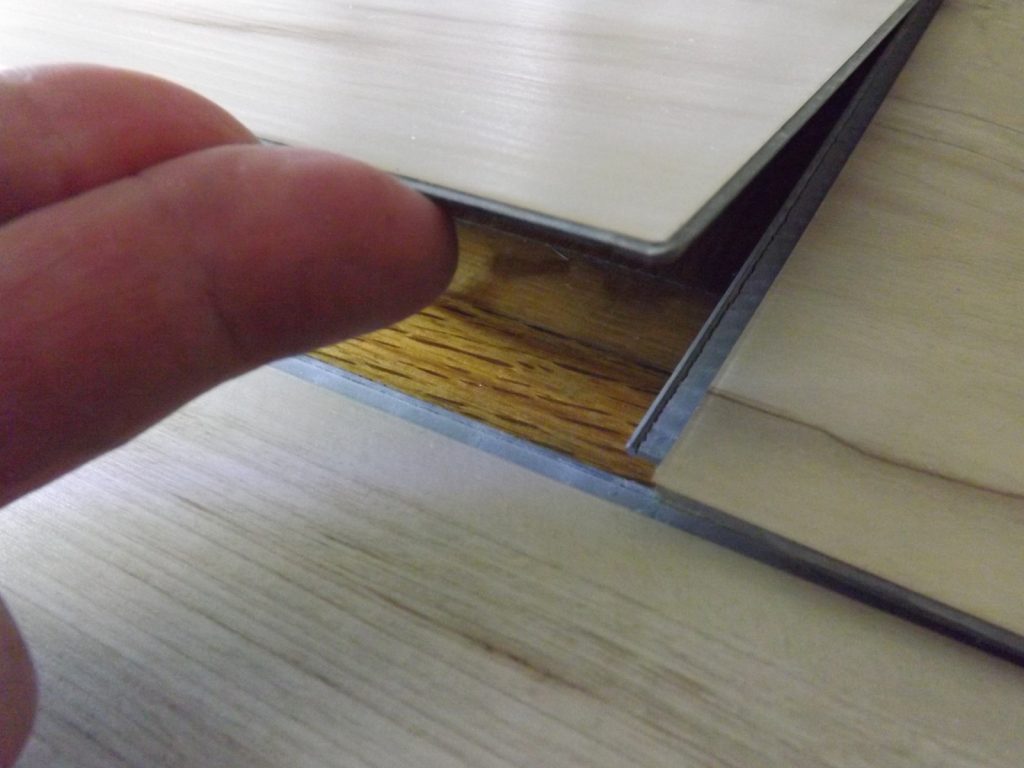 When the buckled/damaged LVP plank was lifted, an existing hardwood flooring system was visible beneath the LVP installation.
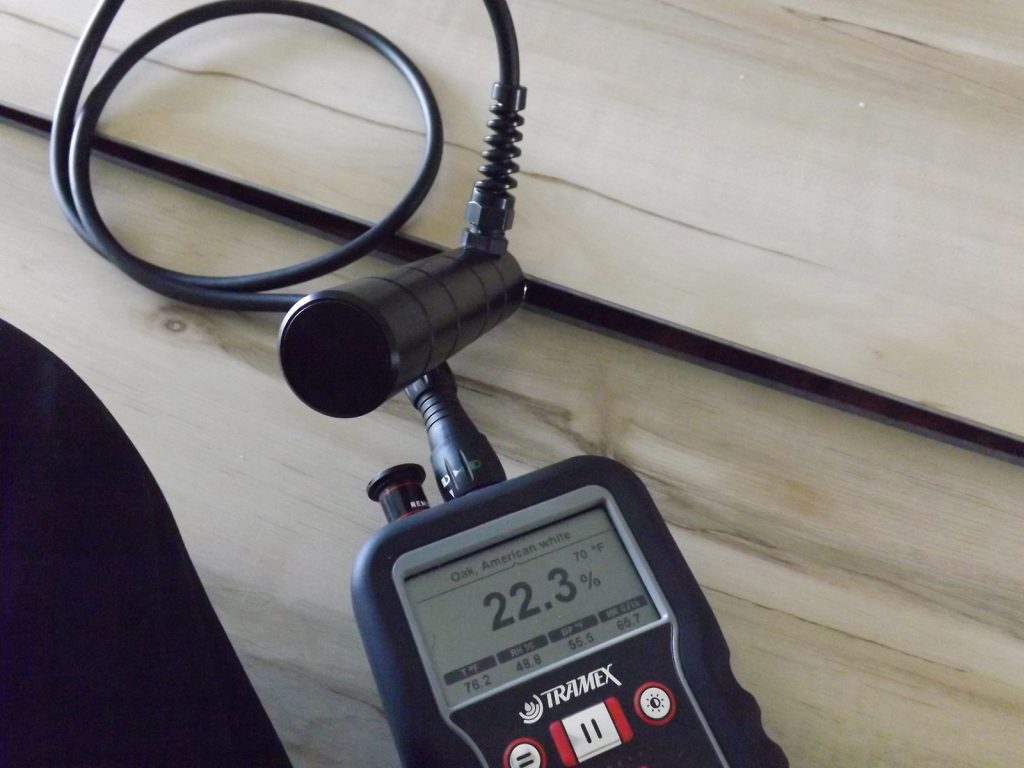 Field photograph documenting a moisture measurement of 22.3% taken within the affected flooring area. The elevated moisture reading confirms excessive moisture within the flooring assembly. Moisture trapped beneath the LVP has resulted in elevated moisture conditions within the underlying engineered hardwood, contributing to swelling, dimensional change, and/or delamination.
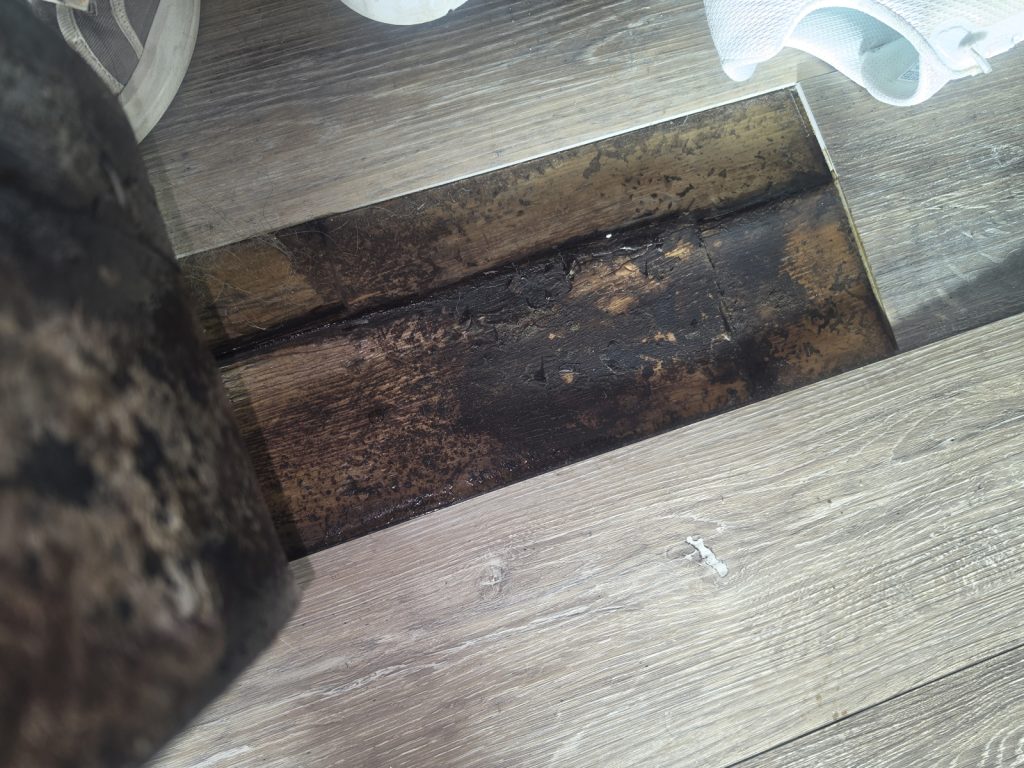 Exposed section of wood substrate beneath the resilient flooring with mold growth, delamination of the engineered wood, and discoloration. This area will emit a very musty odor.
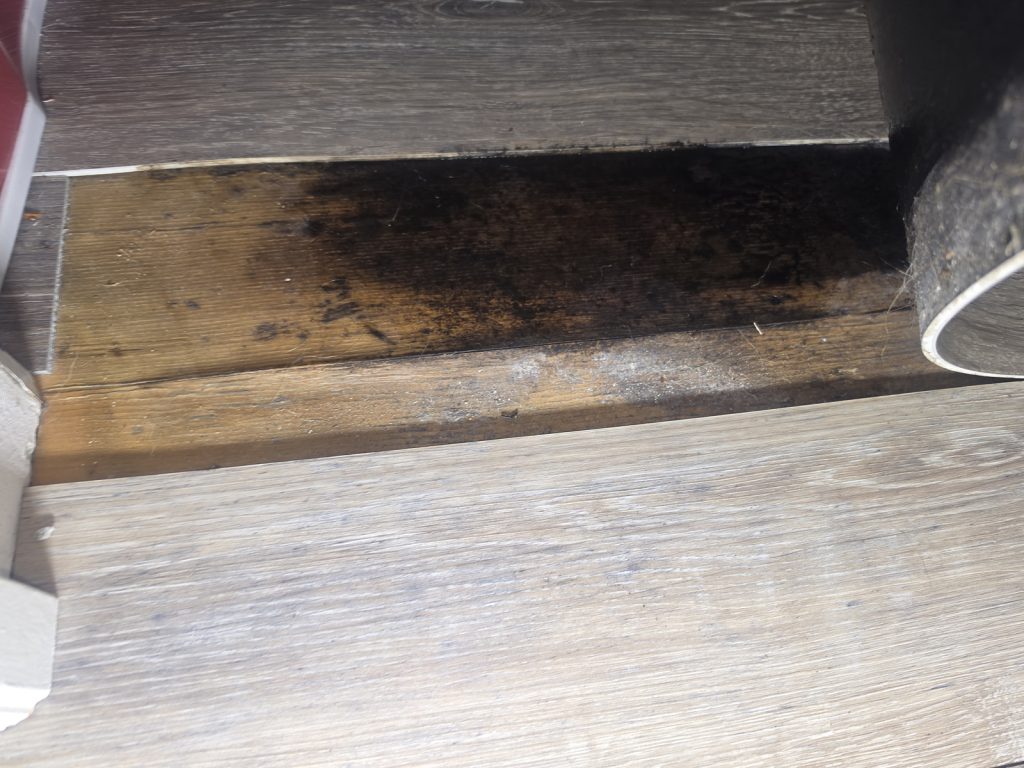 Exposed section of wood substrate beneath the resilient flooring with mold growth, delamination of the engineered wood, and discoloration. This area will emit a very musty odor.
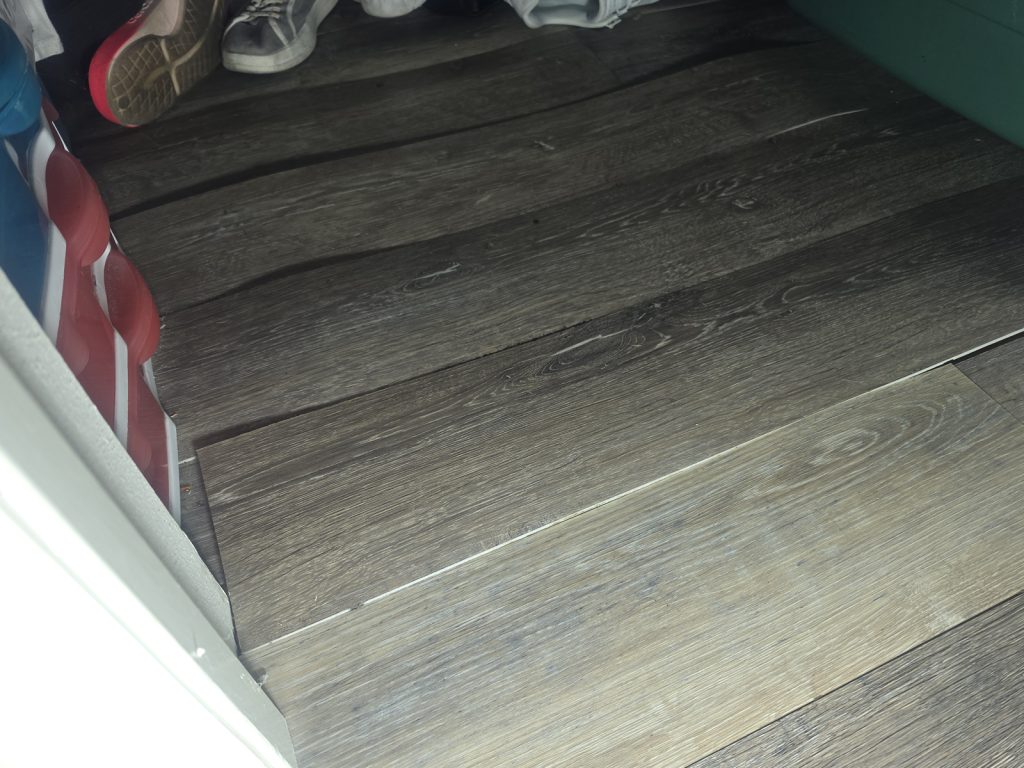 Open joints and distortion observed in the LVP installation within an area affected by elevated moisture conditions. The LVP was installed over engineered hardwood flooring over a concrete substrate.
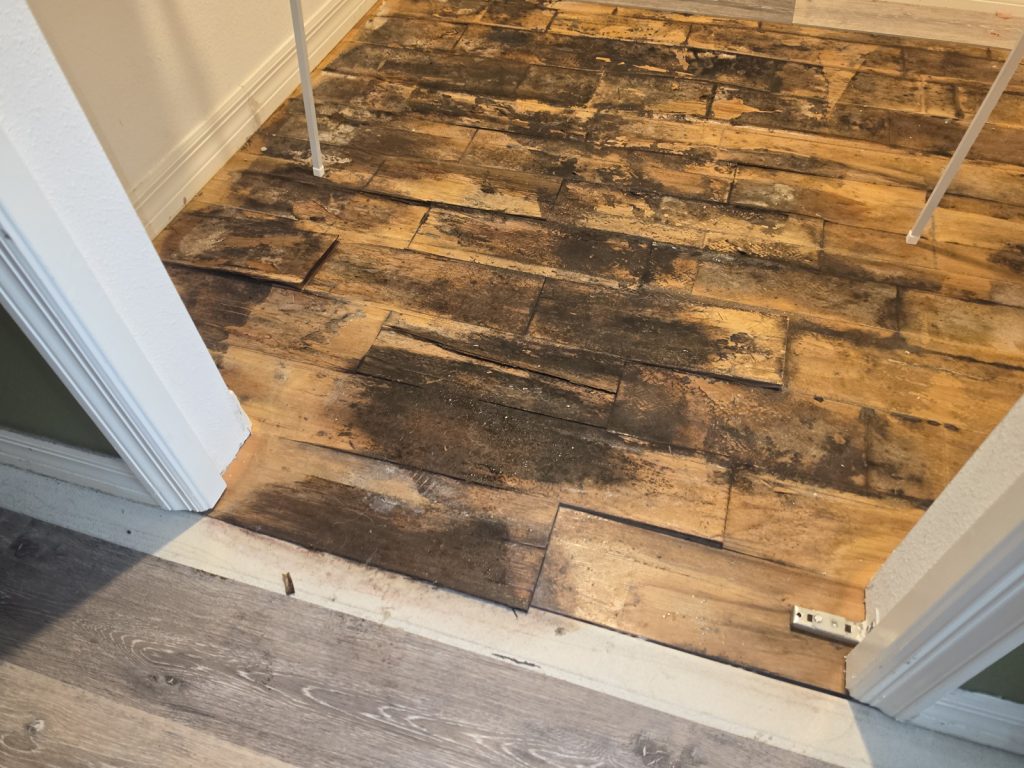 With the affected LVP removed, the covered engineered wood shows severe and unsafe mold growth and wood delamination.
Summary
Buckling Over Wood Substrates Installed Over Concrete is a substrate-related moisture condition in which resilient flooring becomes distorted because of movement, swelling, or deterioration within the supporting wood underlayment. Unlike conventional buckling, the flooring often reflects movement originating below the finished floor. Proper diagnosis requires evaluation of concrete moisture, underlayment condition, moisture entrapment, and all supporting evidence.