
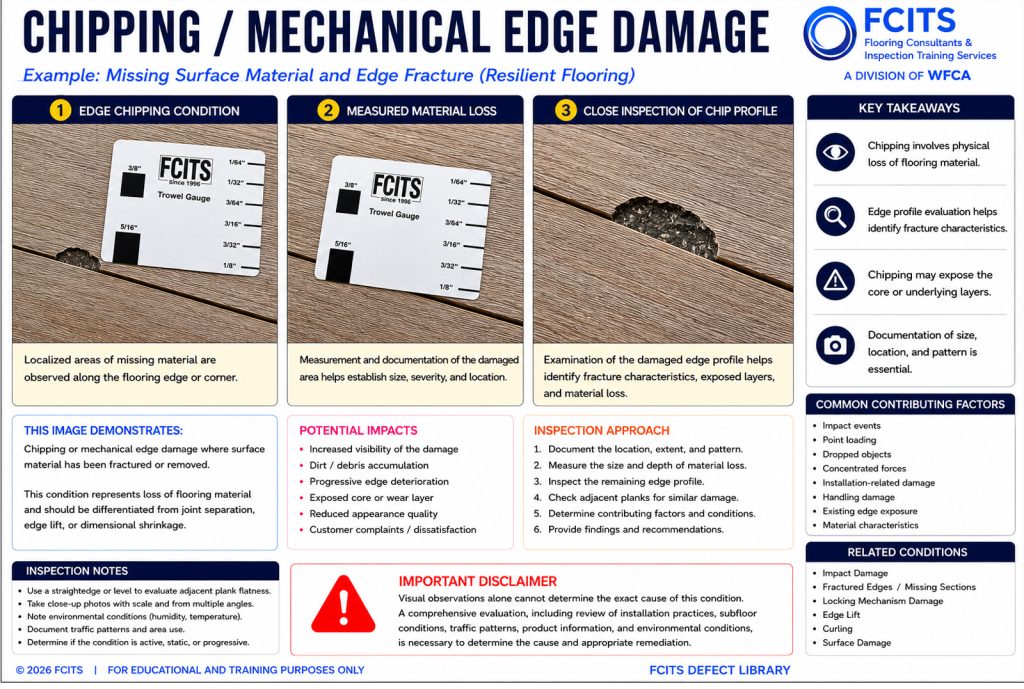
FCITS Defect Library: Chipping (Mechanical Damage)
Also Known As
- Edge Chipping
- Corner Chipping
- Mechanical Chipping
- Impact Damage
- Edge Breakage
- Corner Breakage
- Surface Chipping
Primary Classification
Mechanical Damage Condition
Definition
Chipping is a condition in which a portion of the flooring material is fractured, broken, crushed, or missing from an edge, corner, or surface. The condition may be associated with physical impact, concentrated force, handling, loading, installation activity, service conditions, material characteristics, or other mechanical influences. Chipping may affect corners, edges, bevels, locking mechanisms, decorative layers, wear layers, or exposed core materials. The visible condition alone does not establish when or why the damage occurred.
What Does It Look Like?
- Missing material at plank edges or corners
- Surface chips exposing the core
- Damaged bevels
- Damaged locking profiles
- White stress marks
- Crushed edges
- Impact marks
- Localized or random damage
Degree of Severity
- Minor: Small cosmetic chips with no effect on performance.
- Moderate: Visible chips affecting appearance.
- Severe: Large chips exposing the core or affecting locking performance.
What Causes It?
Multiple contributing factors are common.
Installation-Related Chipping
Common Contributing Factors:
- Rough handling
- Excessive tapping force
- Improper tapping block use
- Cutting damage
Potential Mechanism: Mechanical forces during installation may fracture or damage vulnerable edges or corners.
Transportation / Handling-Related Chipping
Common Contributing Factors:
- Shipping
- Delivery
- Storage
- Packaging deficiencies
Potential mechanism: Transportation, storage, or handling may produce edge or corner damage before installation.
Occupancy-Related Chipping
Common Contributing Factors:
- Furniture movement
- Dropped objects
- Rolling loads
- Appliance movement
Potential mechanism: Concentrated impact or repeated loading may contribute to localized fracture or material loss after installation.
Product-Related Chipping
Common Contributing Factors:
- Brittle material
- Weak edge construction
- Manufacturing damage
]
Potential mechanism: Material characteristics or pre-existing edge irregularities may increase susceptibility to mechanical damage.
What This Condition Does Not Tell You
- A manufacturing defect
- Improper installation
- Product failure
- Occupant abuse
- Warranty eligibility
- Responsibility
Inspection Considerations
- Evaluate damage location, distribution, and severity.
- Inspect for impact marks and white stress marks.
- Examine locking mechanisms and attic stock.
- Review installation history, traffic patterns, and furniture locations.
- Base conclusions on the totality of the available evidence.
Common Misdiagnoses
- All chipped flooring is a manufacturing defect.
- New flooring damage must have occurred during installation.
- All chips affect performance.
- Undamaged attic stock rules out pre-installation damage.
Related Conditions
- Fractured Edges
- Elevated or lifted plank edges
- Locking Mechanism Failure
- Surface Damage
- Gouges
- Scratches
- Abrasion Wear
- Impact Damage
Typical Findings
- Edge and corner chips
- Impact marks
- White stress marks
- Locking mechanism damage
- Localized or random distribution
- Damage near furniture or appliances
- Similar damage in attic stock
Effect on Performance
- May affect appearance
- May expose core materials
- May reduce moisture resistance
- May affect locking performance
- May require repair or replacement
Recommended Documentation
- Overall and close-up photographs
- Edge profile photographs
- Microscopic examination when available
- Attic stock evaluation
- Packaging observations
- Traffic pattern documentation
- Installation history
Is It a Manufacturing Defect?
Not necessarily. Chipping may be associated with handling, transportation, installation activity, service-related impact, material characteristics, or other conditions. A manufacturing-related condition should be considered only after the damage pattern, product construction, available history, and other relevant evidence have been evaluated.
Photo/Video Gallery
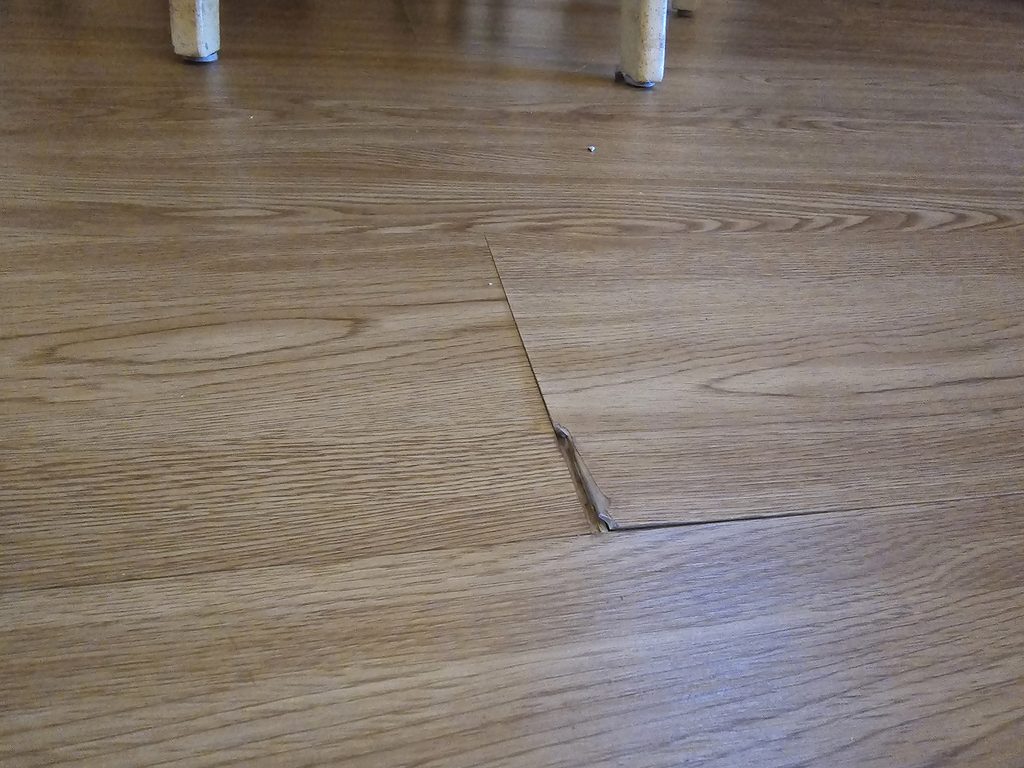
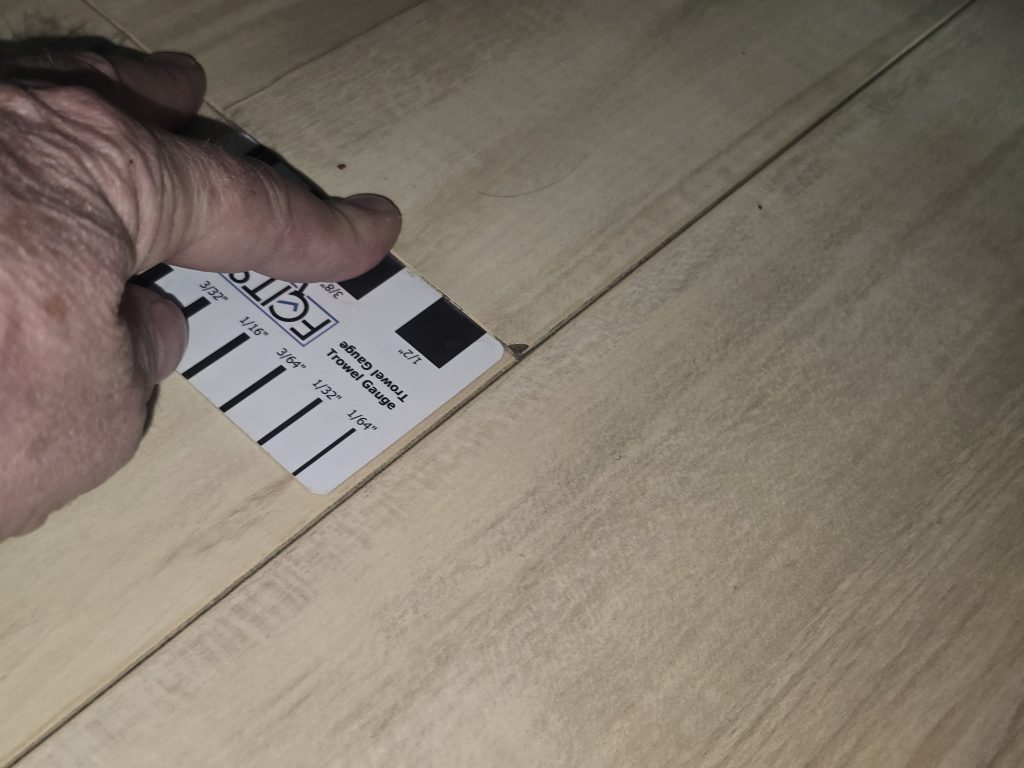 Localized mechanical damage at an elevated plank edge. Raised or exposed edges may be more susceptible to contact, chipping, and progressive material loss.
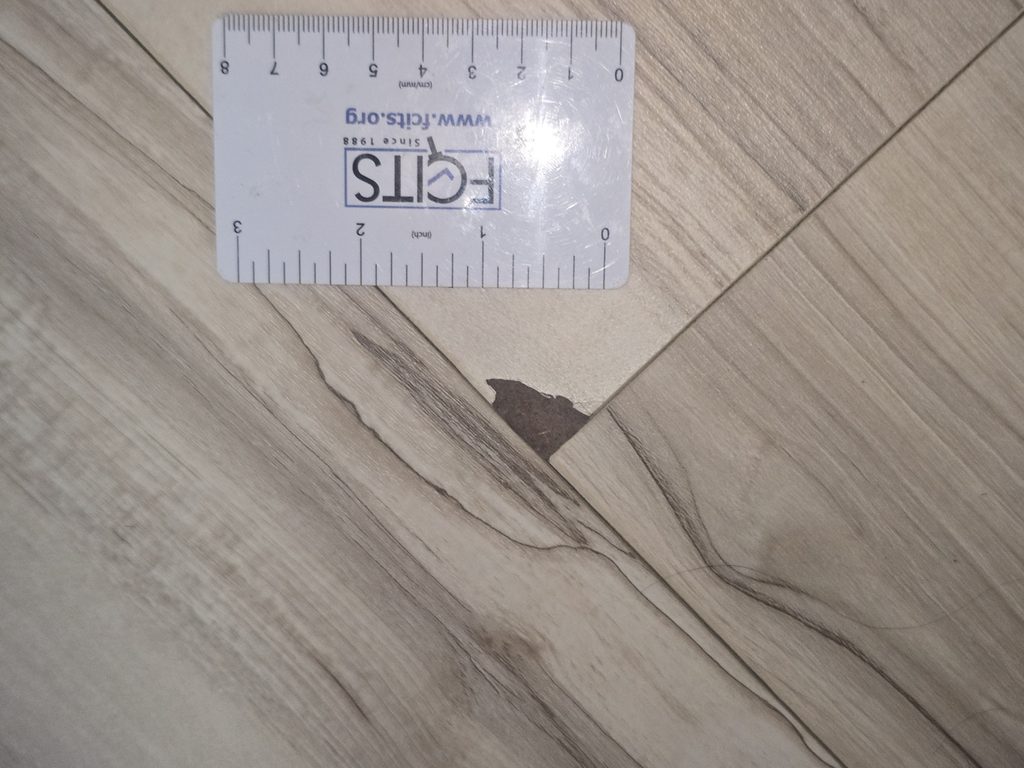
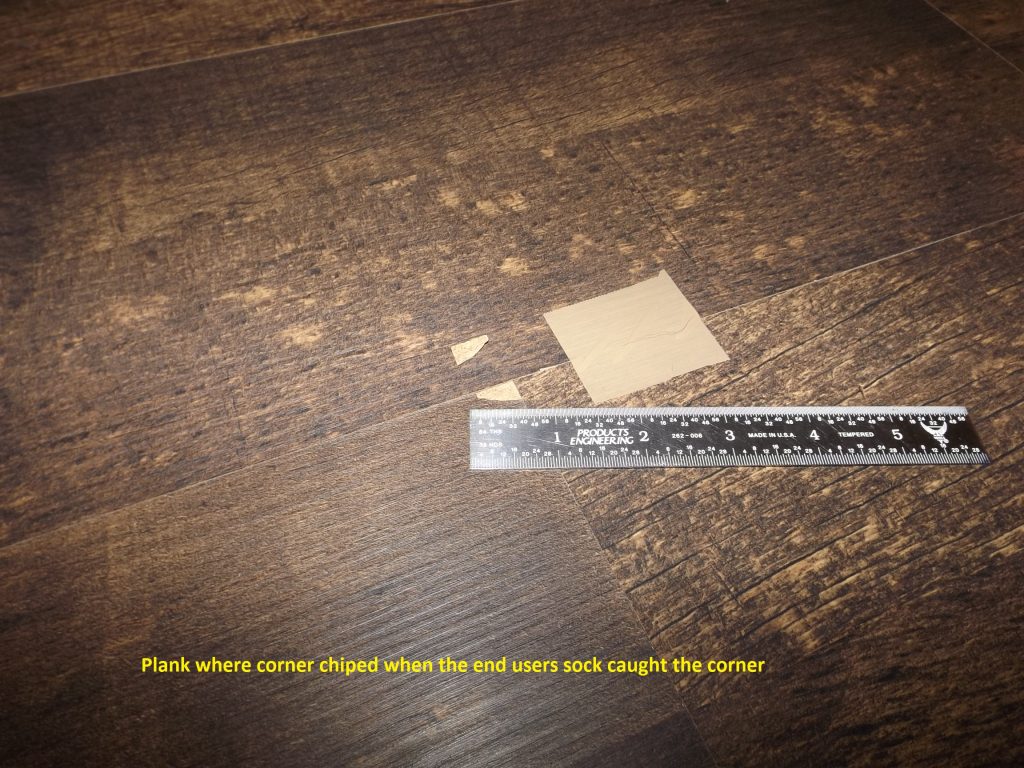
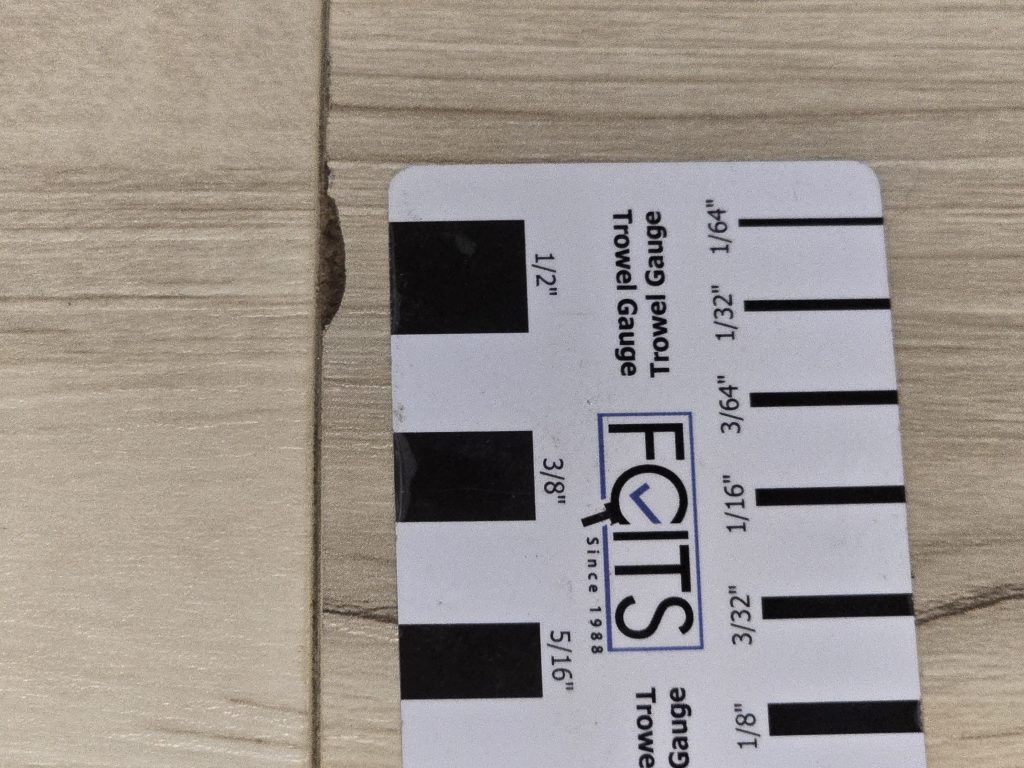 Measurement gauge positioned at a small, localized edge chip to document the size and location of material loss.
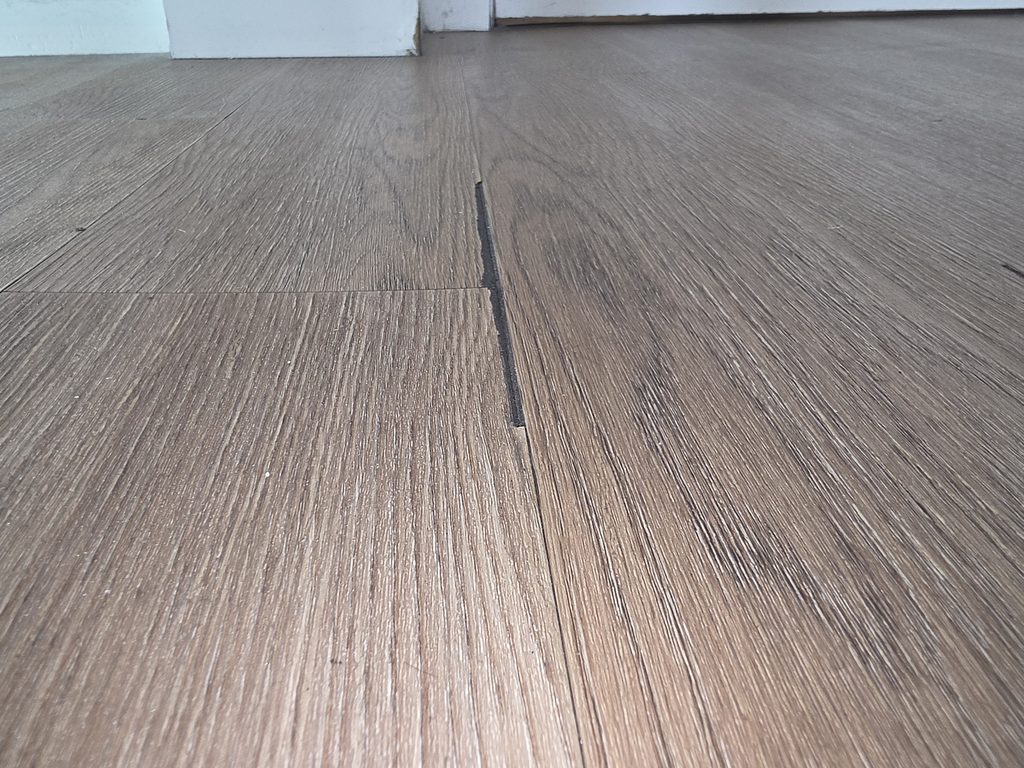
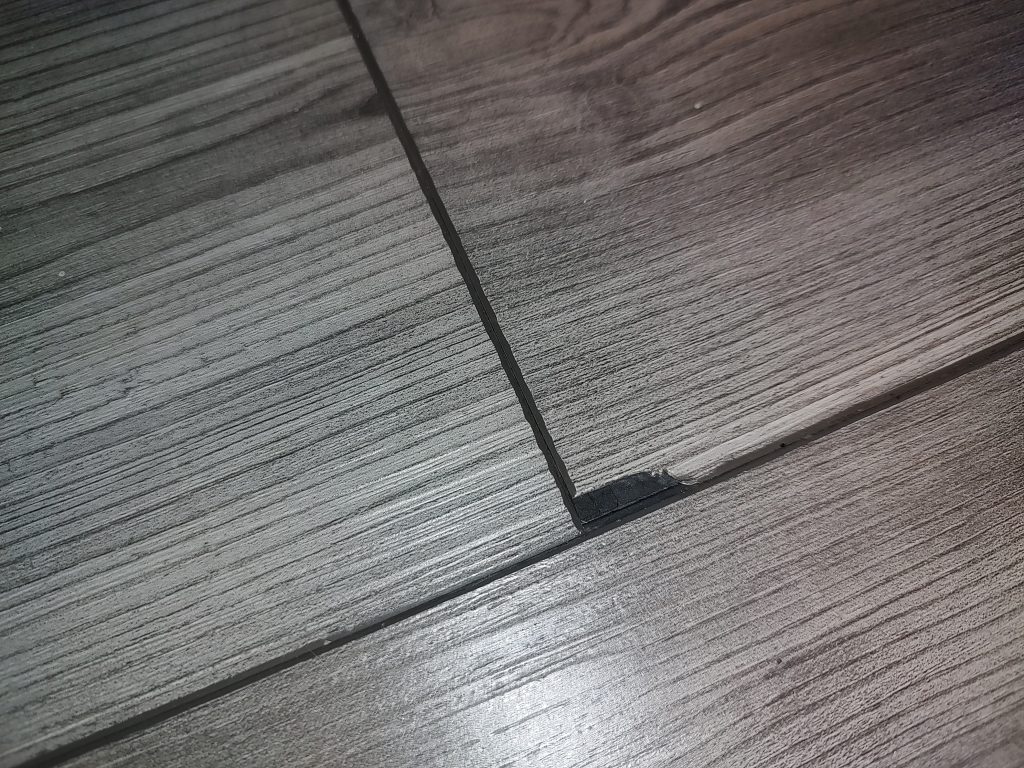
 Low-angle view showing localized edge material loss and an open dark area along the side joint of the installed planks.
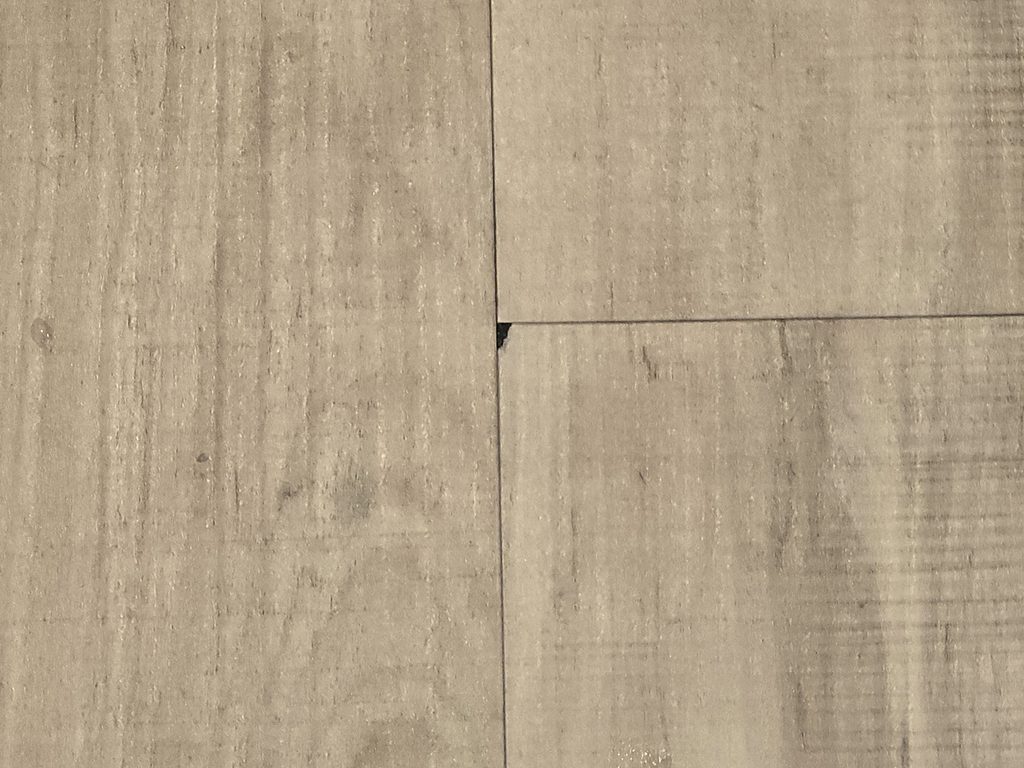
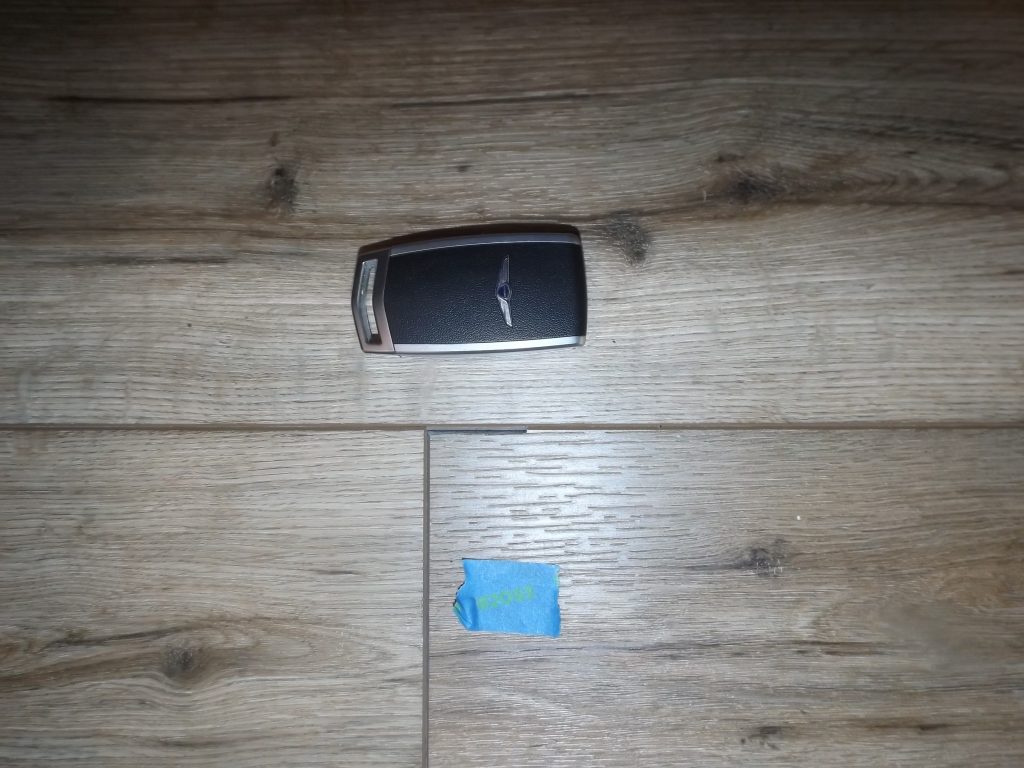
 Overhead view showing localized edge material loss along a plank joint, with a key placed nearby for visual scale.
 Detached surface fragments and a larger separated piece are shown adjacent to the affected plank area, documenting localized loss of flooring material.
Summary
Chipping is an observable condition involving fractured, broken, crushed, or missing flooring material, most commonly at an edge or corner. Potential contributors include handling, transportation, installation activity, service-related impact, material characteristics, manufacturing-related conditions, or combinations of factors. Determining cause requires evaluation of the damage profile, pattern, distribution, severity, product construction, installation and service history, and other supporting evidence. Responsibility should not be assigned from the appearance of a chip alone.