

Defect reference
Adhesion Loss
Bonding / Attachment Loss ConditionA field reference for recognizing, documenting, and evaluating loss of bond in installed flooring.
4Cause categories
3Severity levels
6Test methods & references
16Photos, guides & videos
Recognizing the condition
What does it look like?
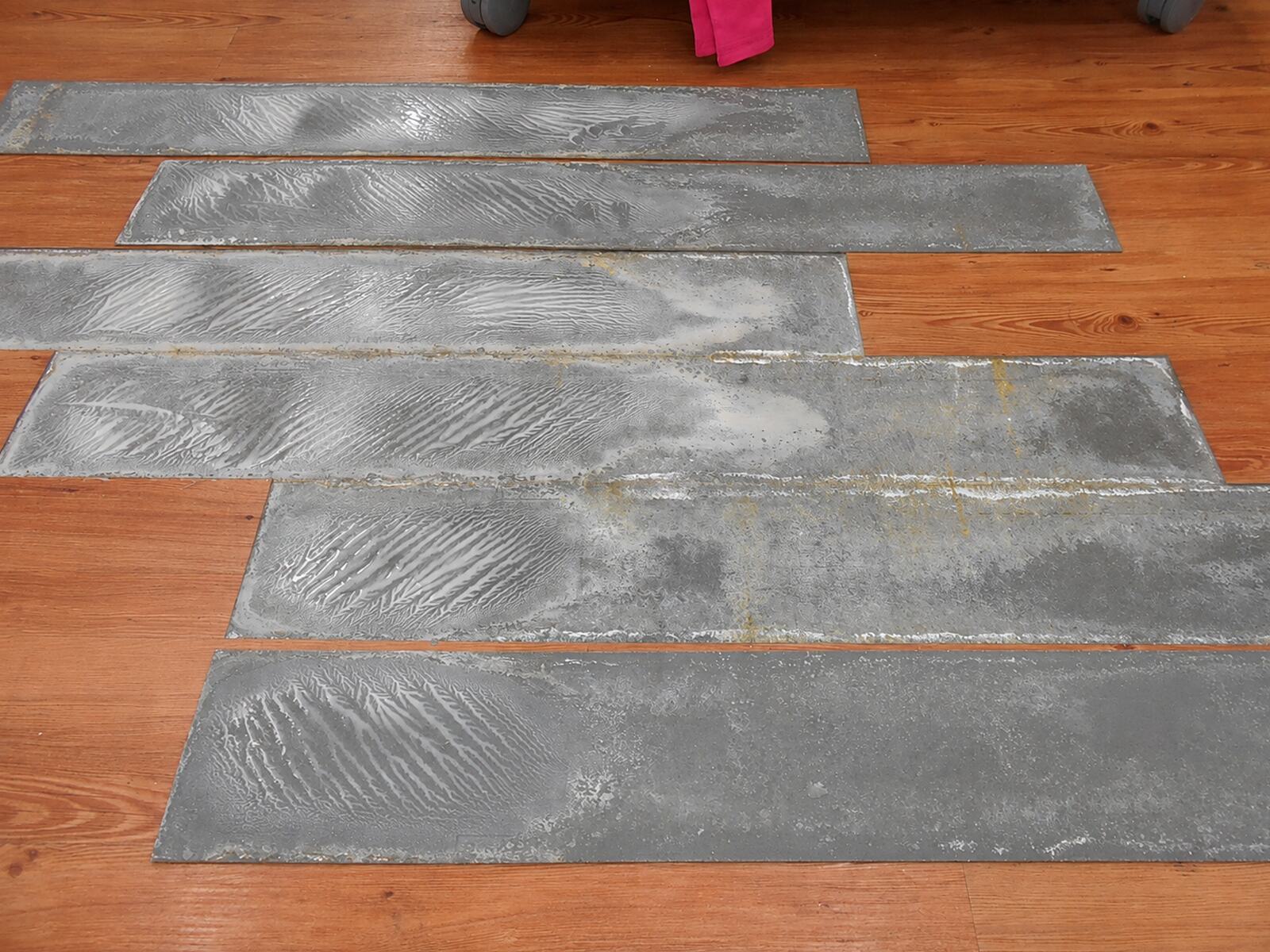
- Loose flooring
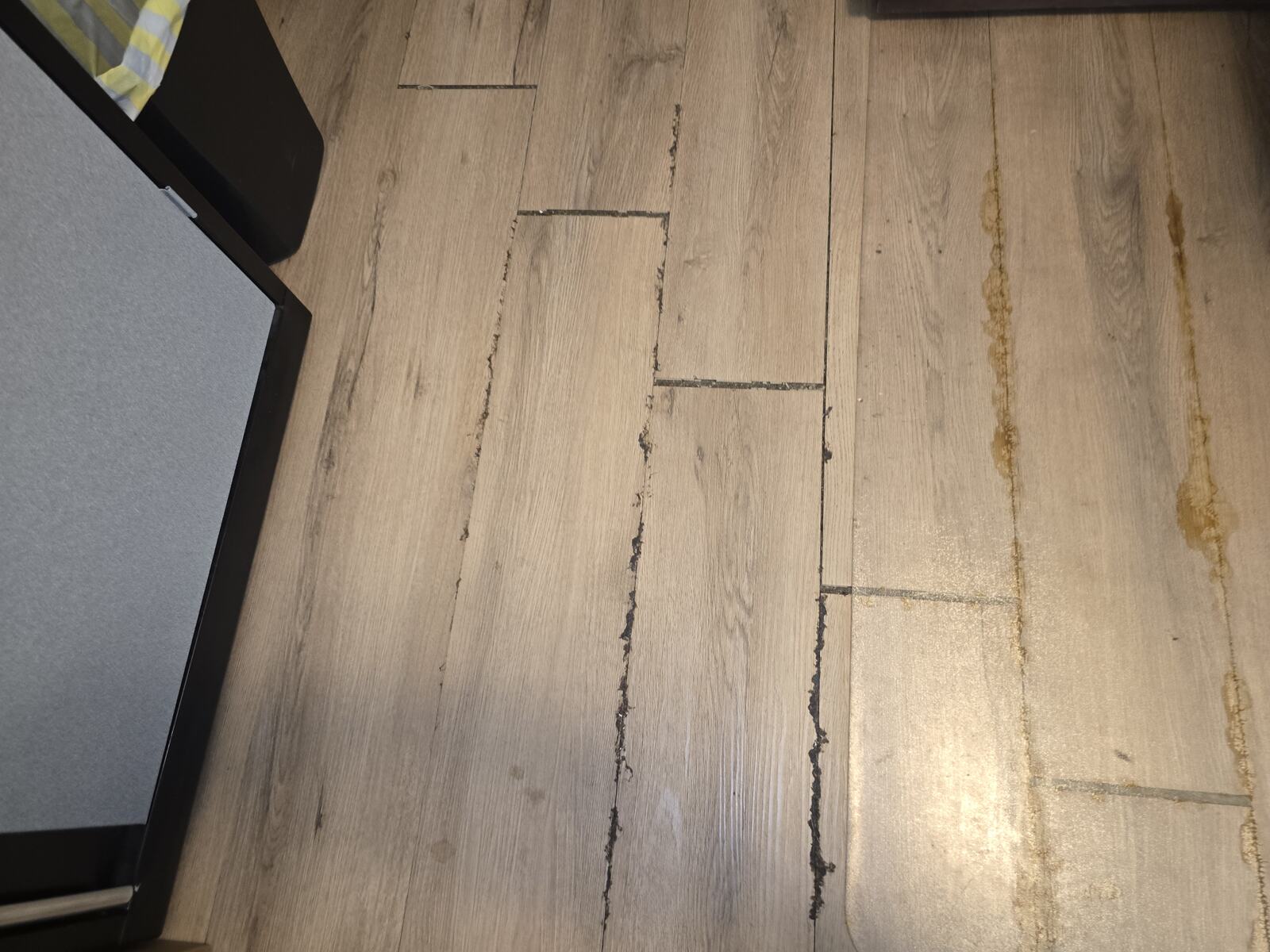
- Glue oozing from joints
- Floor movement
- Hollow sounding areas
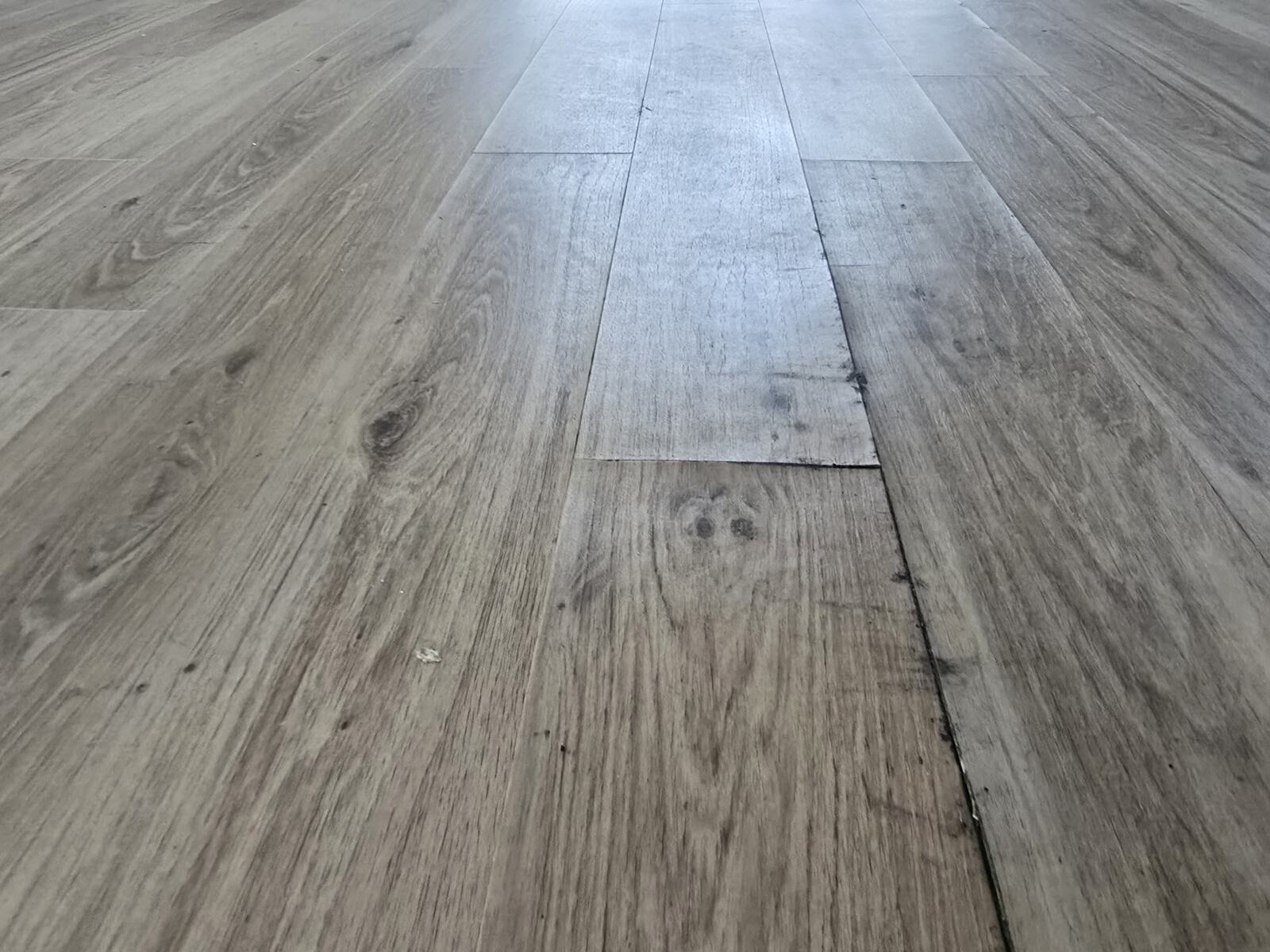
- Edge Lift
- Curling
- Buckling
- Joint separation
- Visible gaps beneath flooring
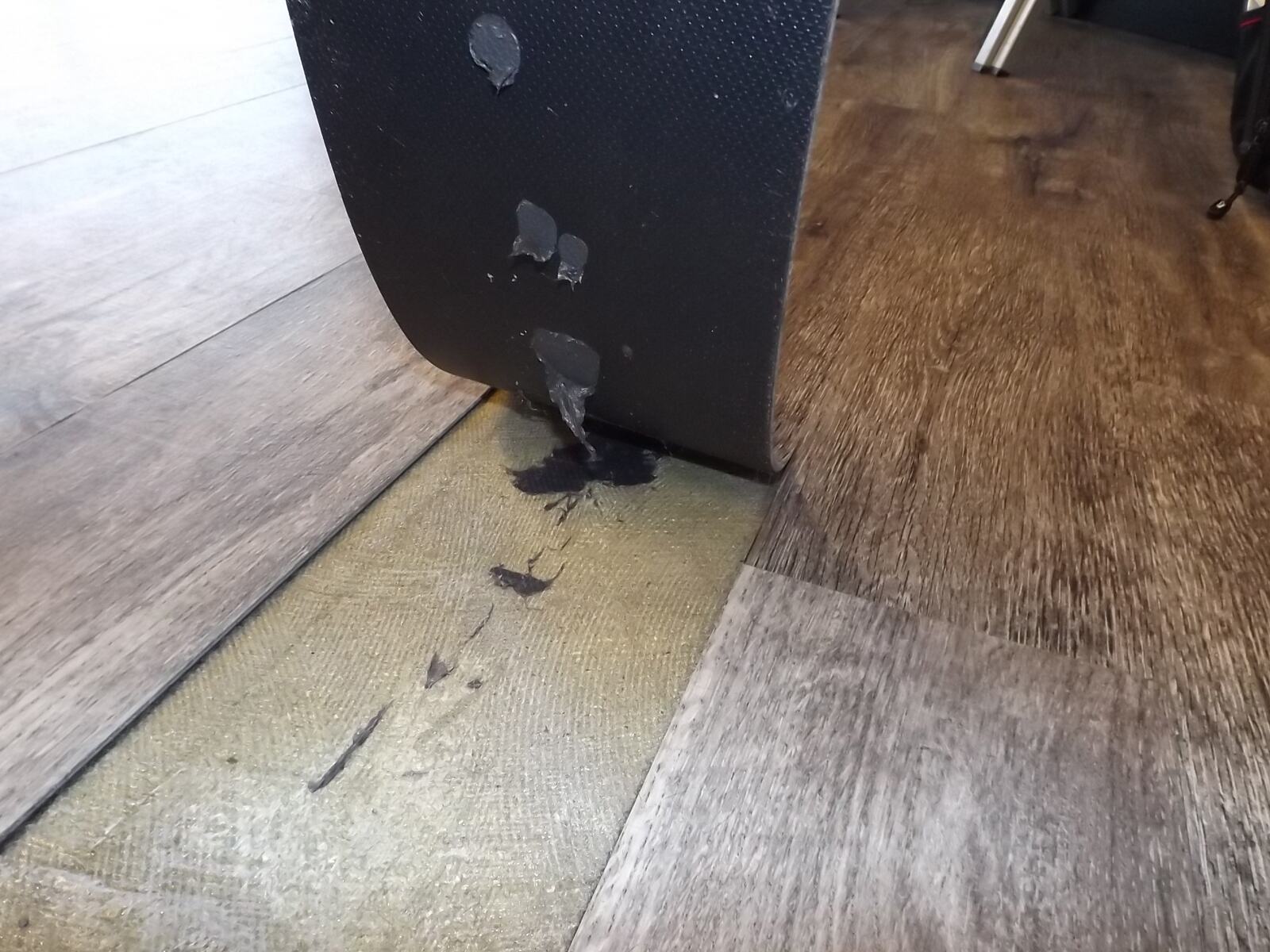
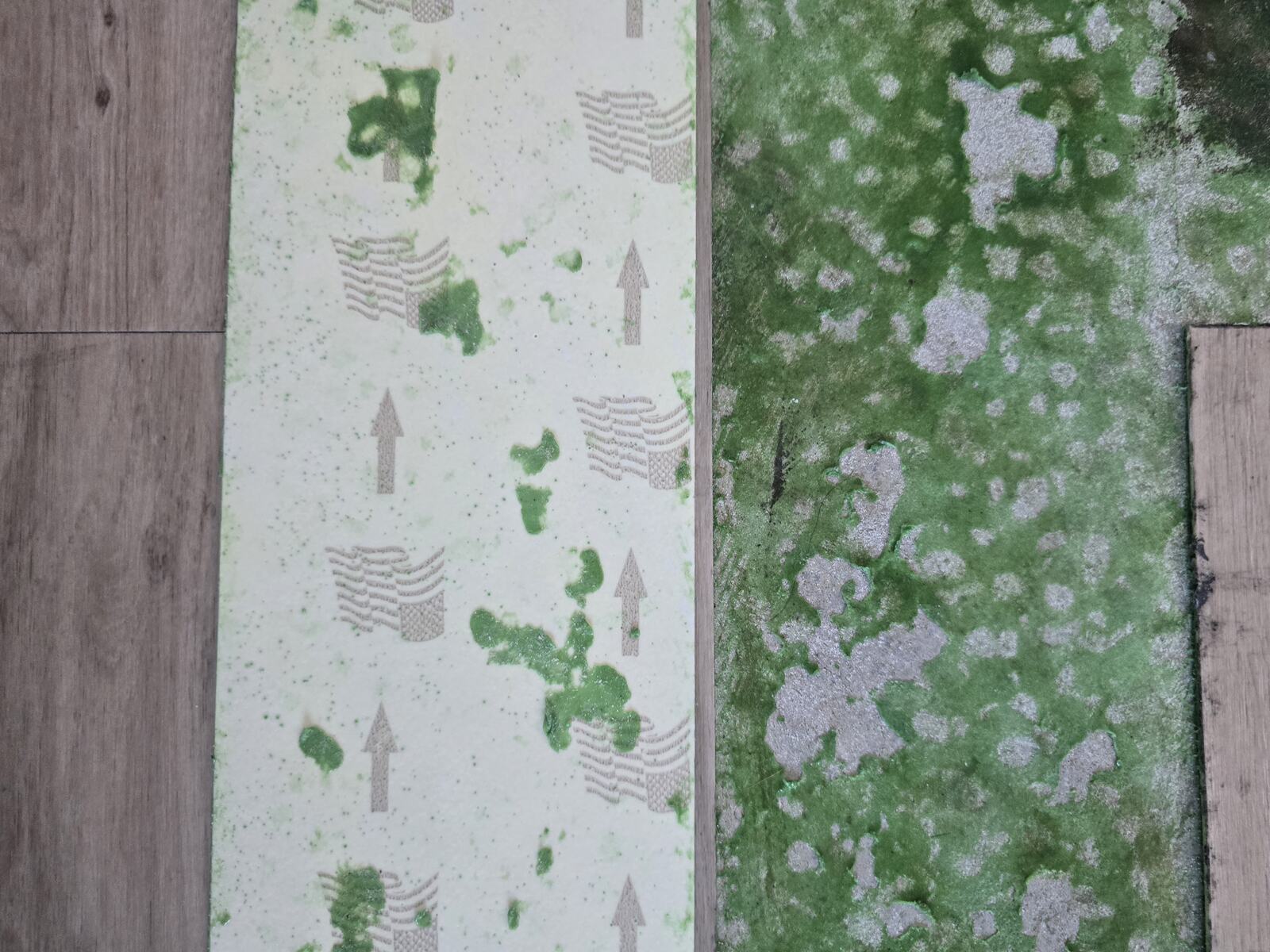
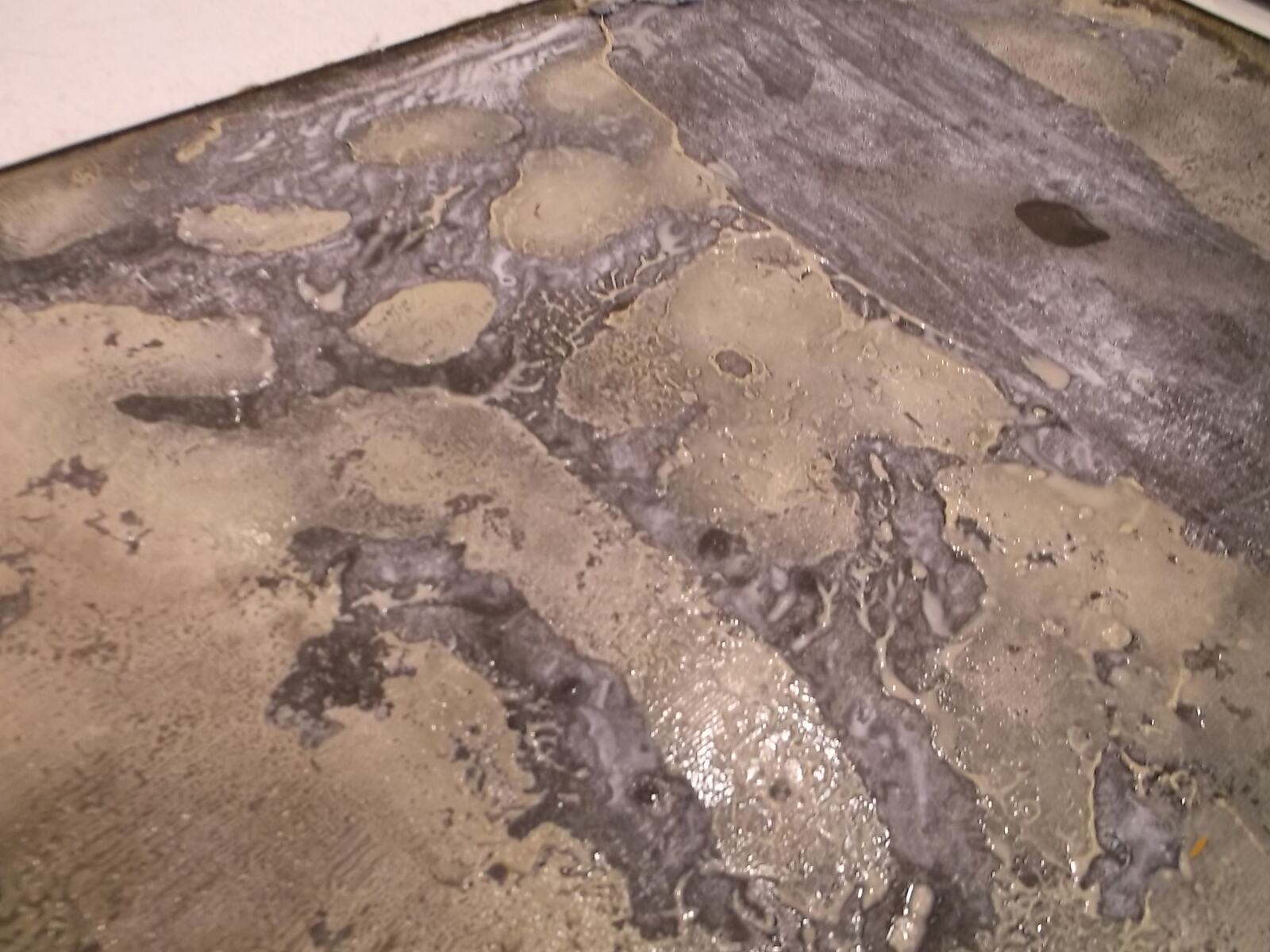
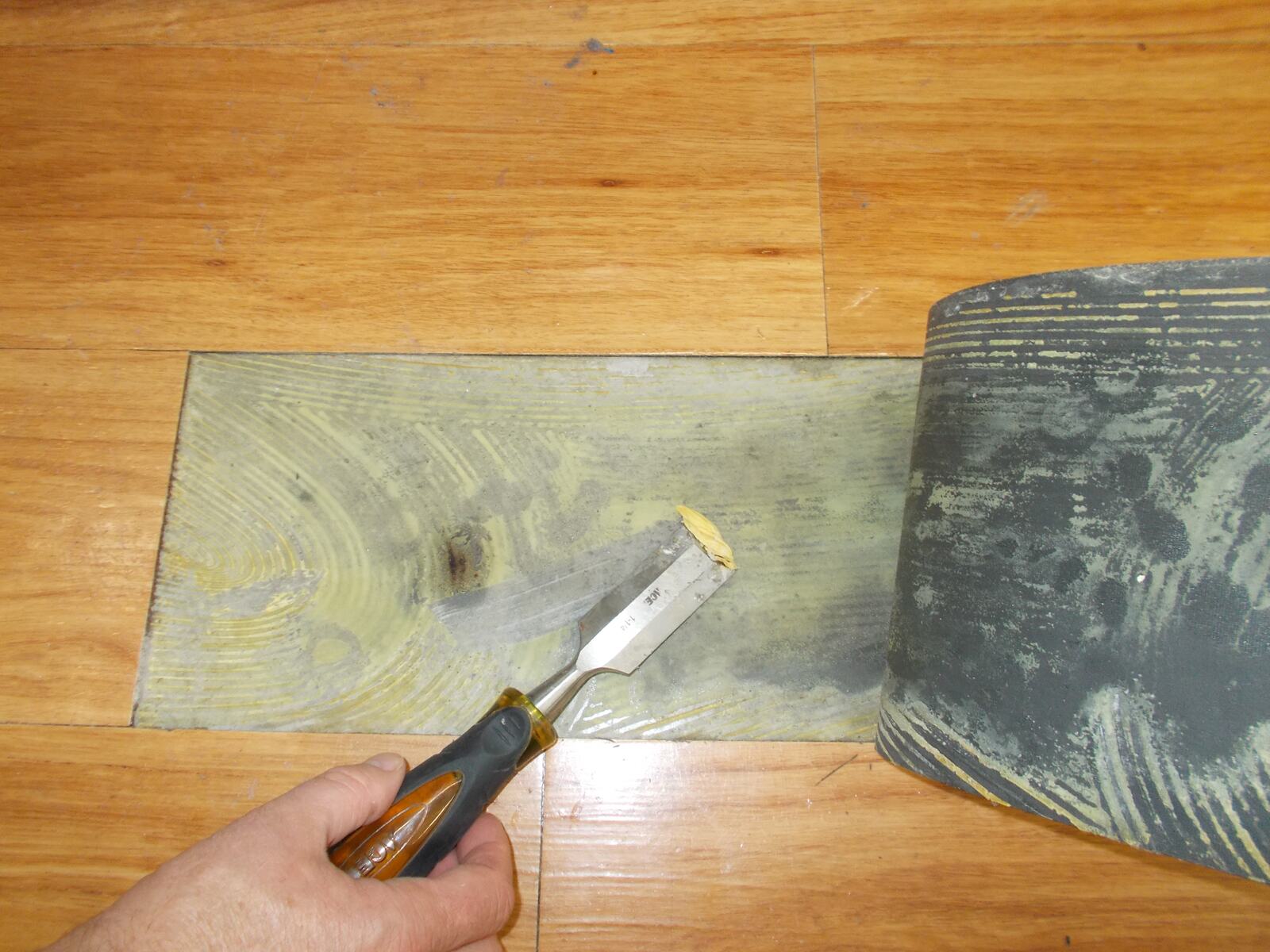
- Loss of adhesive transfer
Some installations may appear normal while significant bond loss exists beneath the surface.
Degree of severity
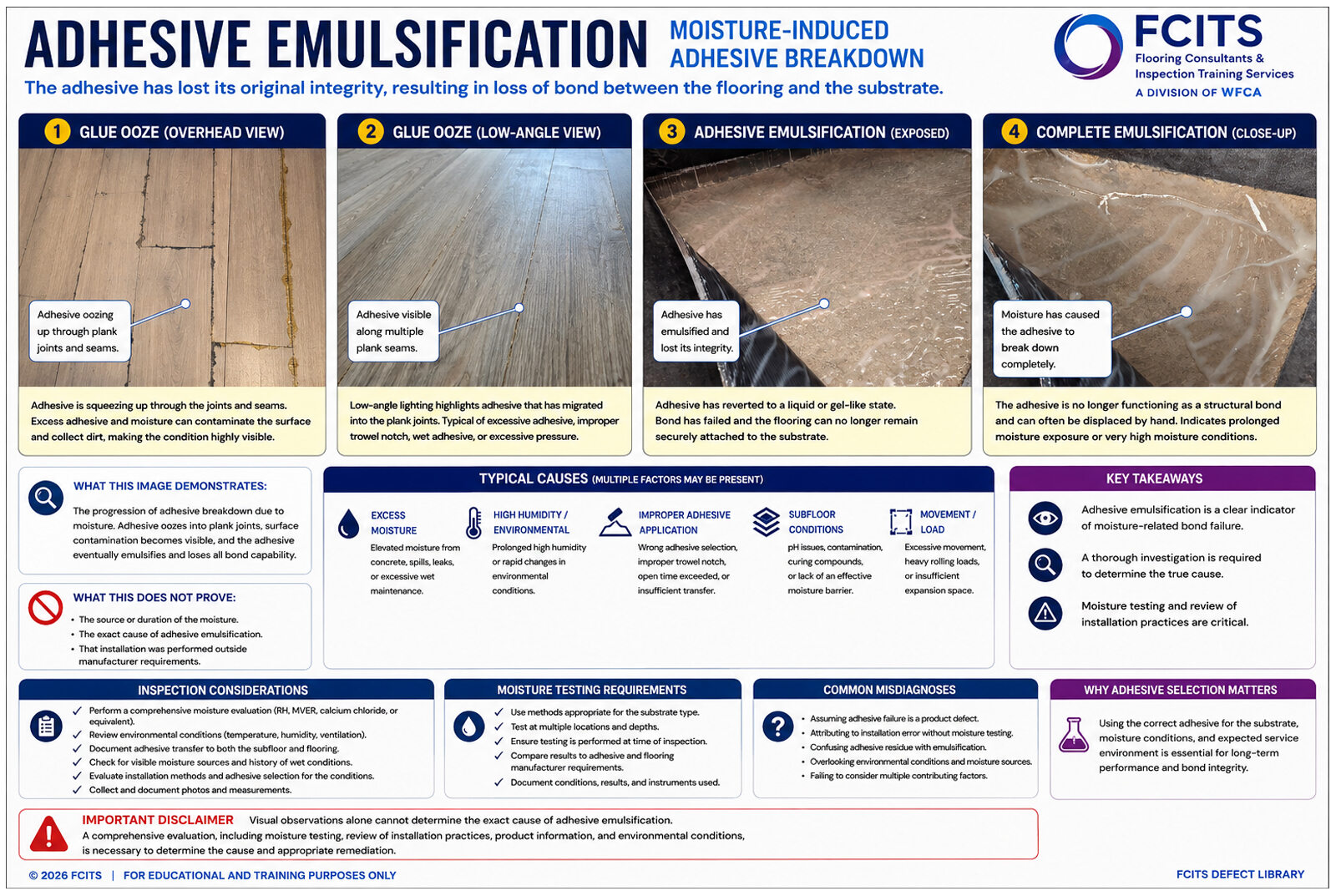
Minor Level 1
Isolated bond loss with little effect on serviceability.
Moderate Level 2
Noticeable movement, hollow sounds, and multiple affected areas.
Severe Level 3
Extensive bond loss with widespread movement and corrective action typically required.
Potential causes
Adhesion loss develops when the bond between the flooring, adhesive, and substrate becomes compromised. Multiple contributing factors are common.
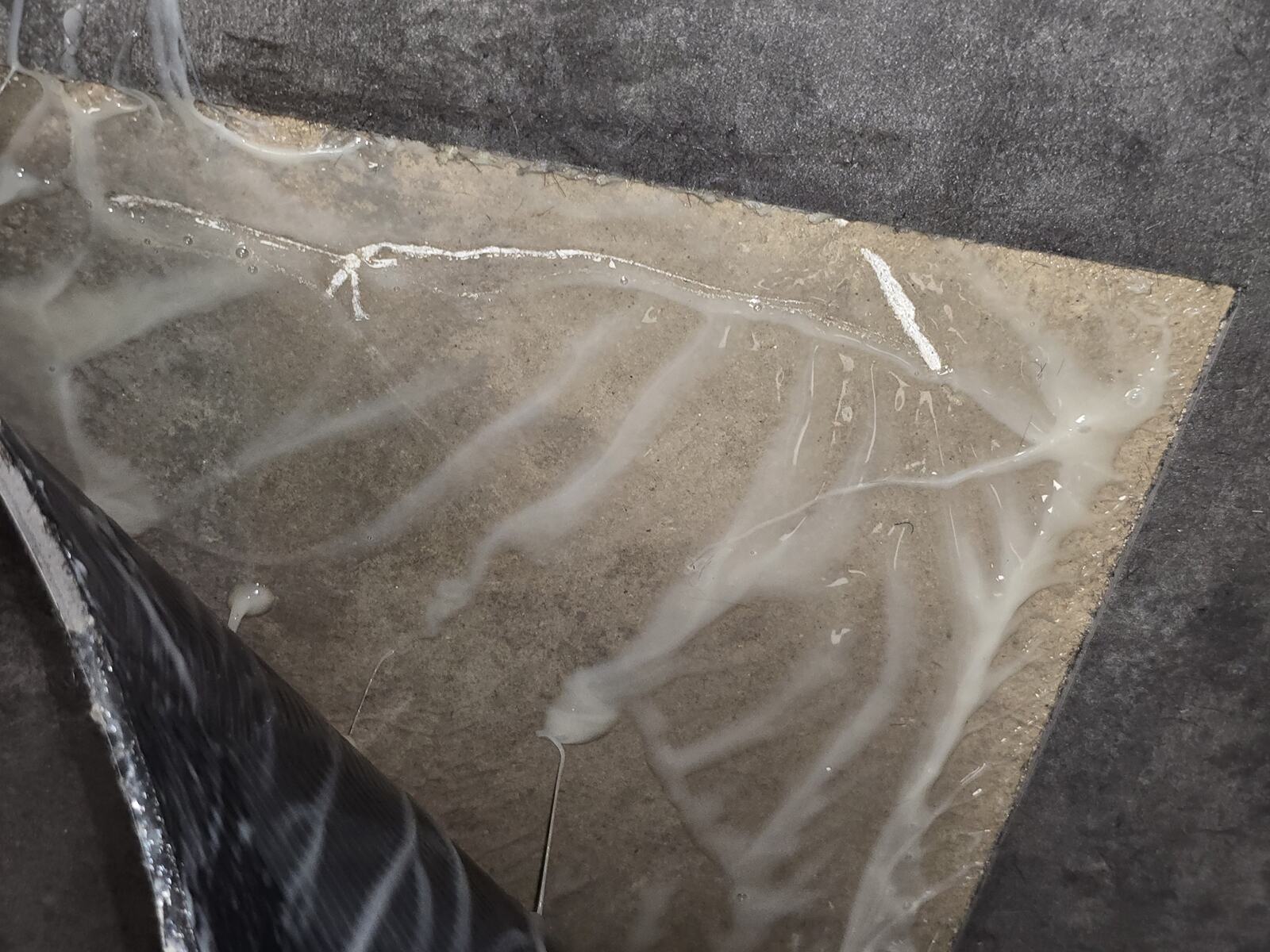
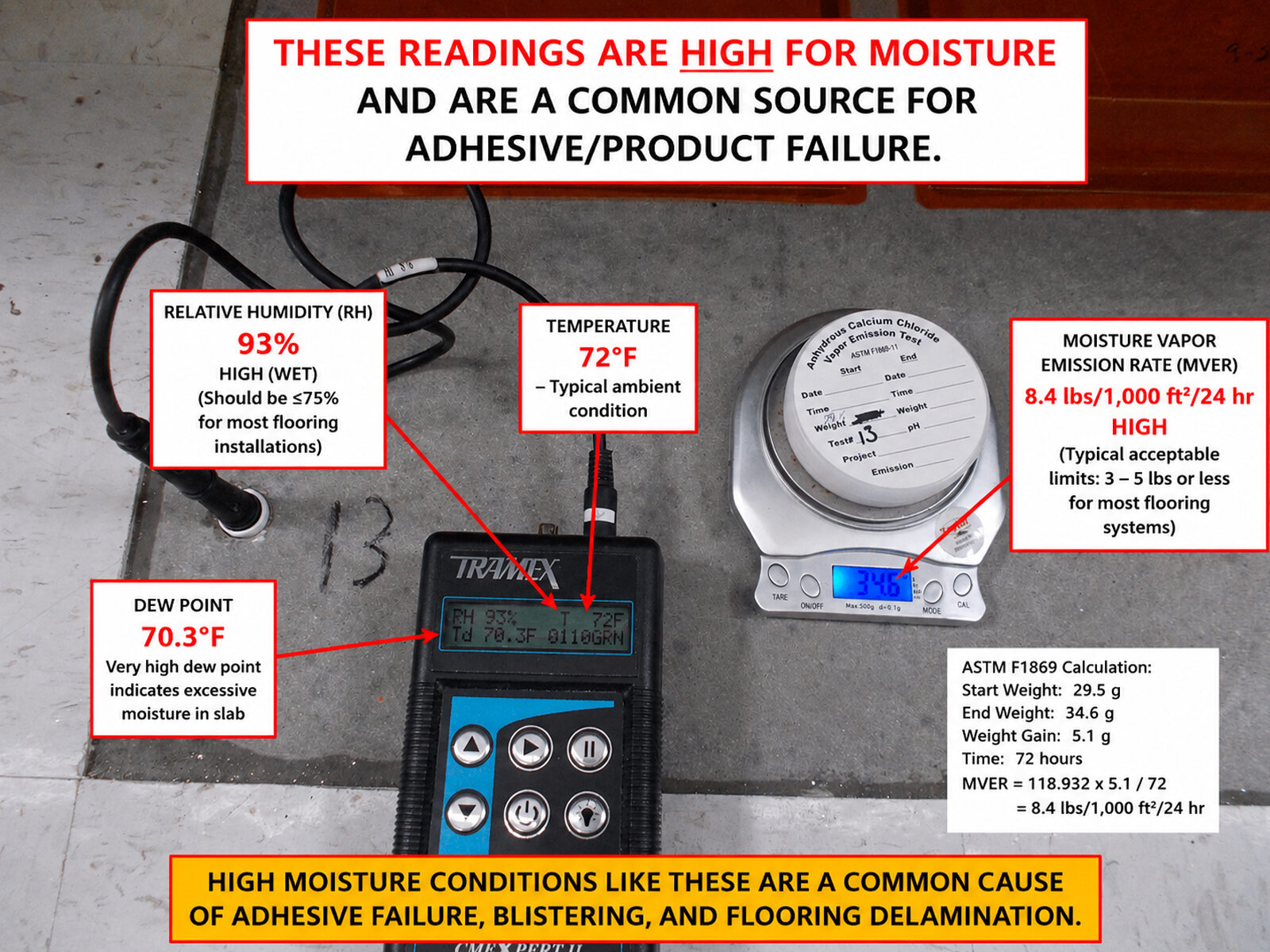
Moisture-Related
Common contributing factors
- Elevated concrete moisture
- High alkalinity
- Leaks or flooding
- Moisture vapor emissions
Why It Happens
Moisture may soften, emulsify, or weaken the adhesive system and reduce bond strength.
Installation-Related
Common contributing factors
- Incorrect adhesive
- Poor coverage
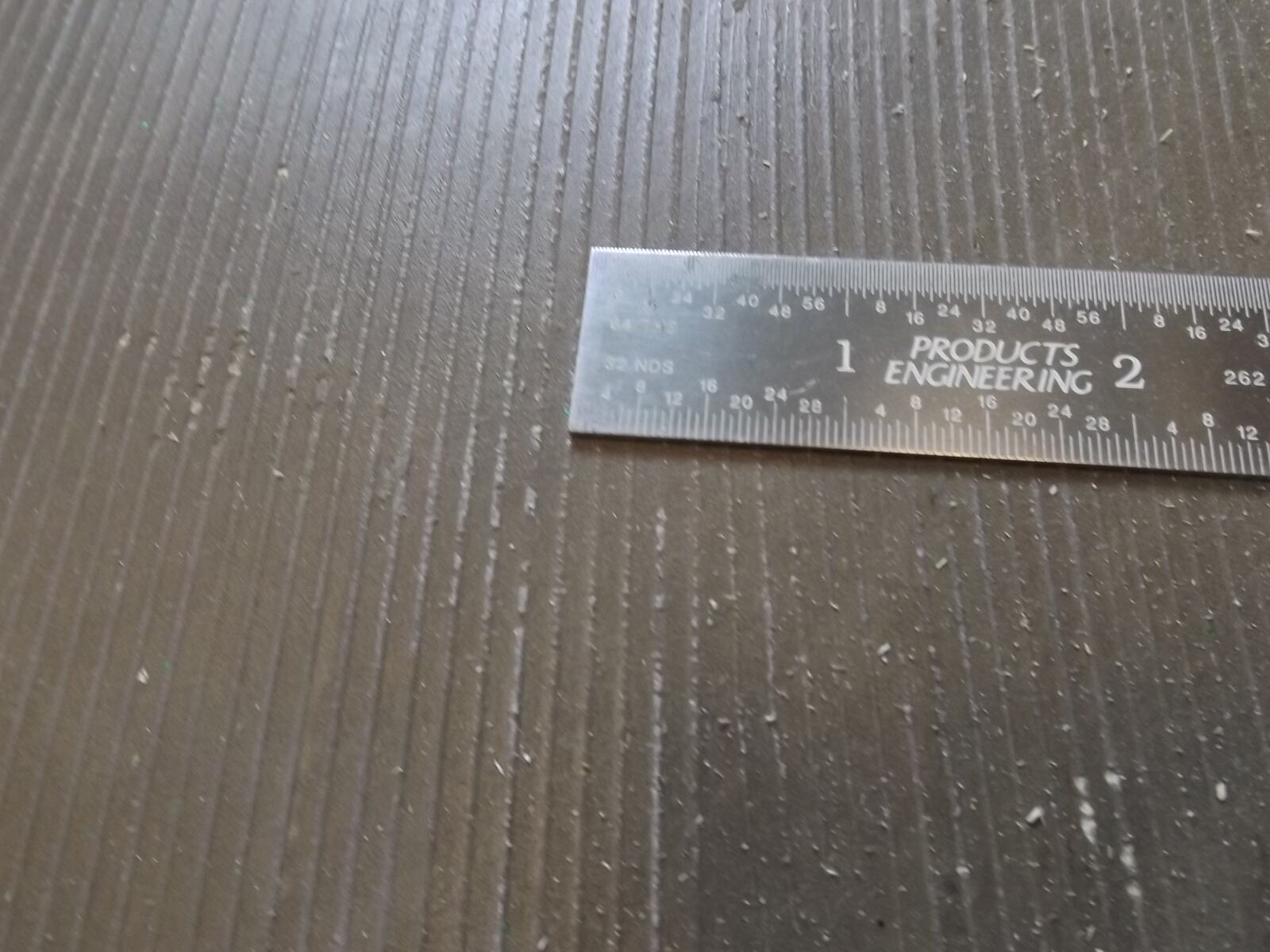
- Improper trowel notch
- Improper open/working time
- Improper rolling
Why It Happens
Improper installation may prevent a durable adhesive bond from developing.

Substrate-Related
Common contributing factors
- Dust
- Paint
- Weak concrete
- Failed patch
- Curing compounds
Why It Happens
Contaminated or weak substrates may prevent adequate adhesion.
Adhesive-Related
Common contributing factors
- Expired adhesive
- Improper storage
- Product incompatibility
- Manufacturing variation
Why It Happens
Adhesive characteristics may reduce bond performance under service conditions.
Inspection & evaluation
Inspection considerations
- Identify the bond-loss interface.
- Map affected areas.
- Evaluate adhesive transfer and coverage.
- Document trowel ridge condition.
- Evaluate flatness where movement exists.
- Screen for moisture and perform ASTM testing when appropriate.
- Document ambient conditions.
- Compare observations with manufacturer instructions.
- Perform destructive evaluation when authorized.
- Base conclusions on the totality of the available evidence.
The primary objective is to determine where the bond failed before determining why it failed.
What this condition does not tell you
- A manufacturing defect
- Excessive moisture
- Improper installation
- Responsibility
Is it a manufacturing defect?
Not necessarily.
Moisture, contamination, substrate preparation, installation practices, environmental influences, and adhesive characteristics should be evaluated before considering a manufacturing-related concern.
Typical findings
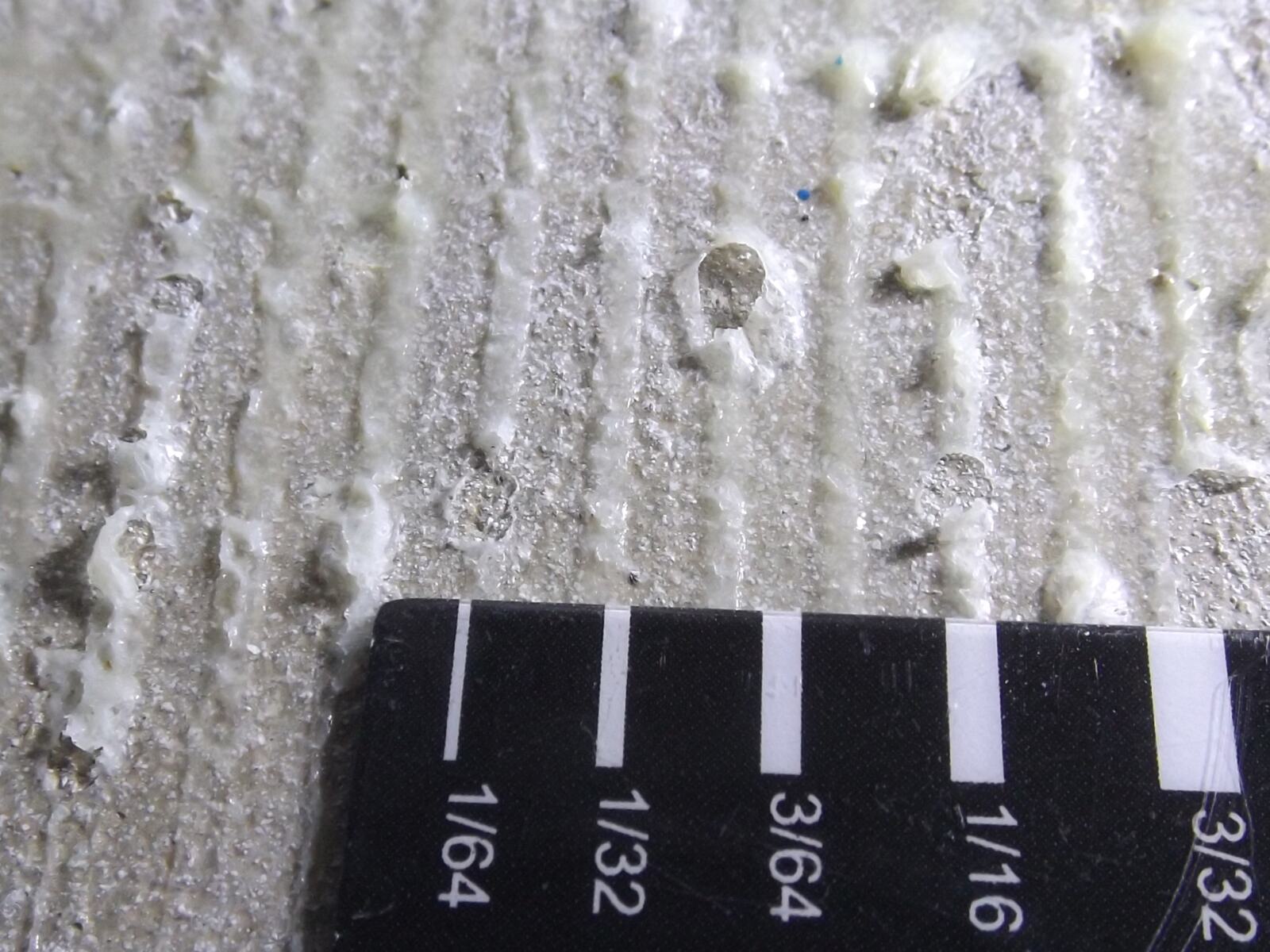
- Loss of adhesive transfer
- Adhesive softening
- Musty odors
- Localized or widespread bond loss
- Visible trowel patterns
- Surface contamination
Effect on performance
- Affect appearance
- Create flooring movement
- Increase edge wear
- Contribute to curling or buckling
- Require repair or replacement
Recommended documentation
- Overall photographs
- Bond interface photographs
- Adhesive transfer
- Coverage
- Moisture test results
- Environmental conditions
- Destructive testing photographs
- Manufacturer installation instructions
Common misdiagnoses
Misdiagnosis
All adhesion loss is caused by moisture.
Misdiagnosis
Hollow sounds automatically indicate adhesion loss.
Misdiagnosis
The adhesive failed, therefore it is defective.
Related conditions
Applicable test methods & industry references
ASTMF710
ASTM F710
ASTMF2170
ASTM F2170
ASTMF1869
ASTM F1869
ASTMF3191
ASTM F3191 (when applicable)
When applicable
ANSI
Applicable ANSI standards
NWFA
NWFA Installation Guidelines (wood flooring)
Additional considerations
Adhesion Loss vs. similar conditions
Adhesion Loss vs. Hollow Sounds: Hollow sounds may occur with or without bond loss.
Adhesion Loss vs. Delamination: Delamination is failure within the flooring product; adhesion loss occurs at or within the bonding system.
Adhesion Loss vs. Telegraphing: Telegraphing reflects substrate irregularities and does not by itself establish bond loss.
Additional forensic consideration
Determine the bond-loss interface first. The location of bond loss often provides more useful information than the presence of bond loss itself.
Field photographs, guides & videos
Summary
Adhesion Loss is a bonding condition in which the connection between the flooring, adhesive, and substrate becomes compromised. Determining causation requires identifying the bond-loss interface and evaluating moisture, substrate conditions, installation practices, adhesive characteristics, environmental influences, and all other contributing factors. No single observation should be relied upon to determine causation. Conclusions should be based upon the totality of the available evidence together with applicable manufacturer requirements and industry standards.