
FCITS Defect Library: Adhesion Loss
Also Known As
- Bond Loss
- Loss of Bond
- Adhesive Release
- Adhesive Debonding
- Flooring Delamination from Substrate
- Adhesive Breakdown
Primary Classification
Bonding / Attachment Loss Condition
Definition
Adhesion Loss is a condition in which the bond between a flooring product, adhesive, and substrate becomes weakened, compromised, or lost, resulting in partial or complete separation of the flooring from the substrate.
The condition may develop immediately following installation or after months or years of service. Adhesion loss may affect isolated areas or large portions of an installation and can be associated with substrate conditions, moisture-related influences, installation practices, environmental exposure, adhesive characteristics, or multiple contributing factors acting together.
Adhesion loss is a symptom of a bonding system that is no longer performing as intended. The presence of bond loss alone should not be interpreted as evidence of a specific cause or assign responsibility without further evaluation.
What Does It Look Like?
- Loose flooring
- Glue oozing from joints
- Floor movement
- Hollow sounding areas
- Edge Lift
- Curling
- Buckling
- Joint separation
- Visible gaps beneath flooring
- Loss of adhesive transfer.
Some installations may appear normal while significant bond loss exists beneath the surface.
Degree of Severity
- Minor: Isolated bond loss with little effect on serviceability.
- Moderate: Noticeable movement, hollow sounds, and multiple affected areas.
- Severe: Extensive bond loss with widespread movement and corrective action typically required.
What Causes It?
Adhesion loss develops when the bond between the flooring, adhesive, and substrate becomes compromised. Multiple contributing factors are common.
Moisture-Related
Common Contributing Factors
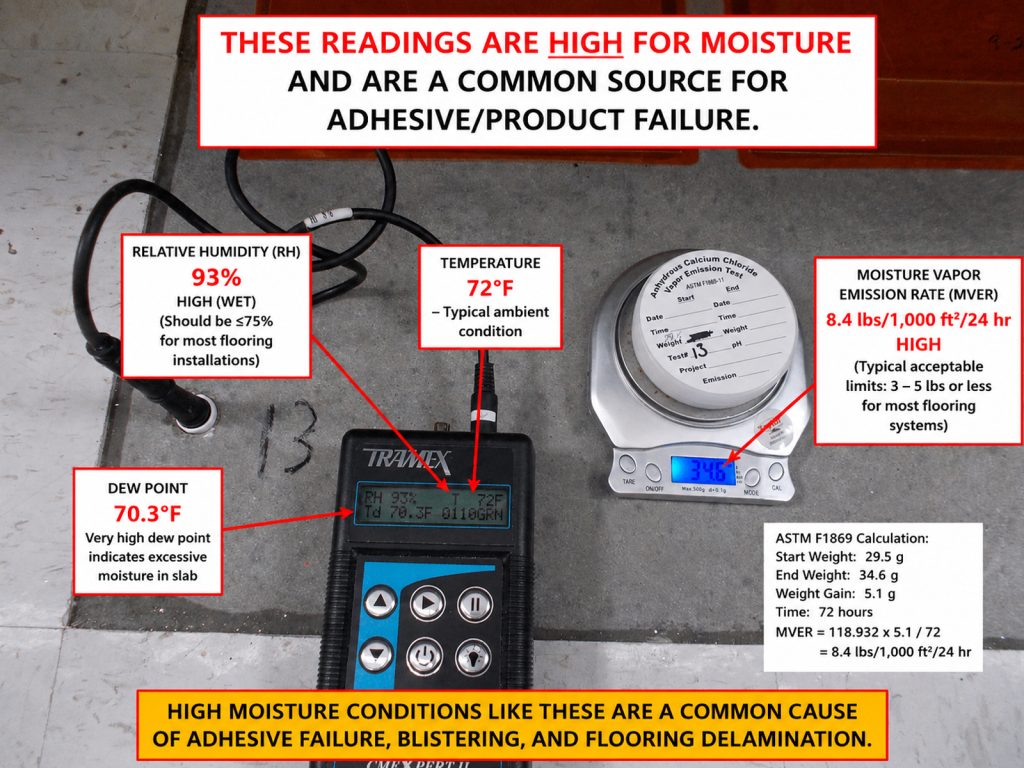
- Elevated concrete moisture
- High alkalinity
- Leaks or flooding
- Moisture vapor emissions
Why it Happens:
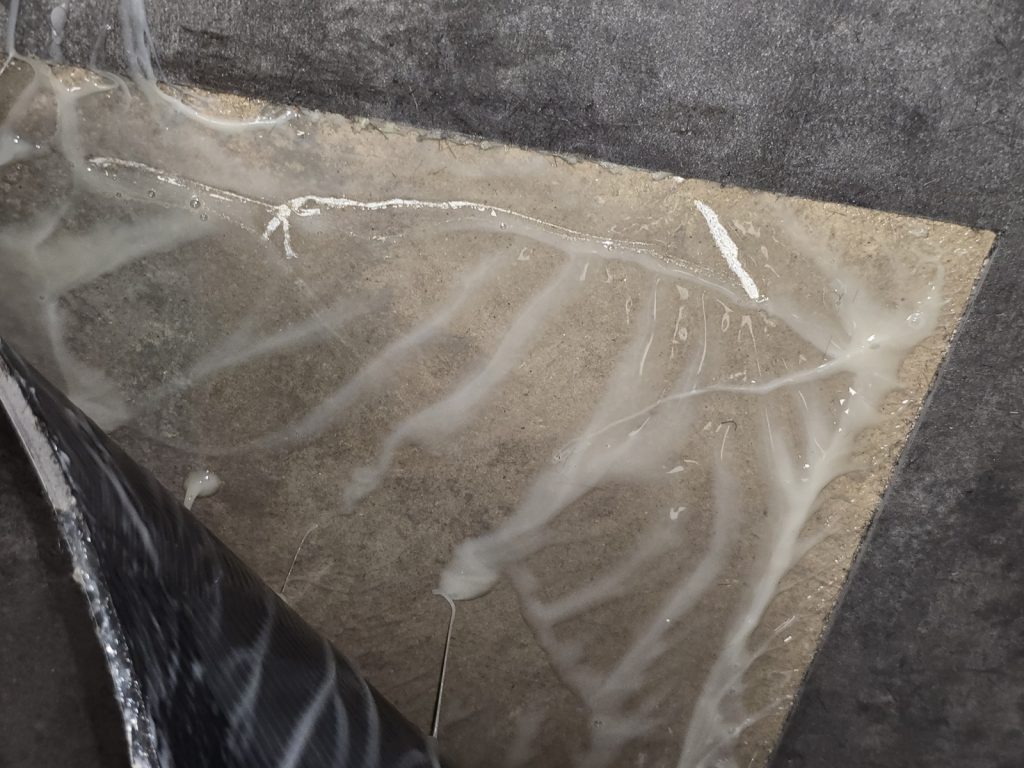
Moisture may soften, emulsify, or weaken the adhesive system and reduce bond strength.
Installation Related
Common Contributing Factors
- Incorrect adhesive
- Poor coverage
- Improper trowel notch
- Improper open/working time
- Improper rolling
Why it Happens:
Improper installation may prevent a durable adhesive bond from developing.

Substrate-Related
Common Contributing Factors
- Dust
- Paint
- Weak concrete
- Failed patch
- Curing compounds
Why it Happens:
Contaminated or weak substrates may prevent adequate adhesion.
Adhesive Relate
Common Contributing Factors
- Expired adhesive
- Improper storage
- Product incompatibility
- Manufacturing variation
Why it Happens:
Adhesive characteristics may reduce bond performance under service conditions.
What This Condition Does Not Tell You
- A manufacturing defect
- Excessive moisture
- Improper installation
- Responsibility
Inspection Considerations
The primary objective is to determine where the bond failed before determining why it failed.
- Identify the bond-loss interface.
- Map affected areas.
- Evaluate adhesive transfer and coverage.
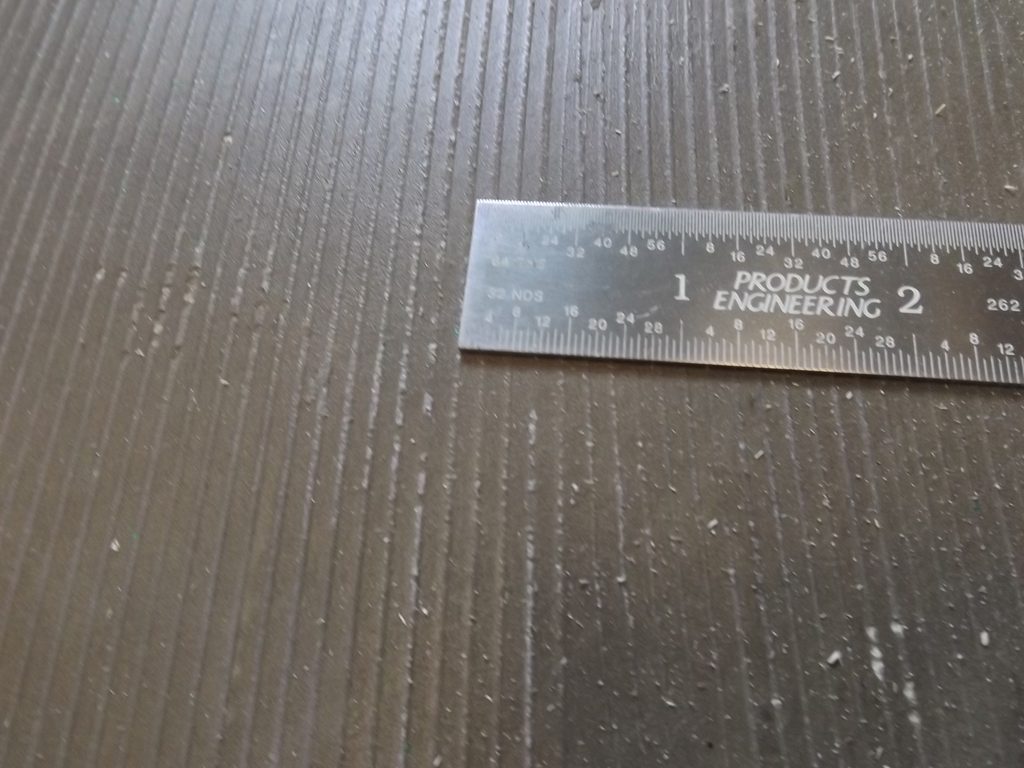
- Document trowel ridge condition.
- Evaluate flatness where movement exists.
- Screen for moisture and perform ASTM testing when appropriate.
- Document ambient conditions.
- Compare observations with manufacturer instructions.
- Perform destructive evaluation when authorized.
- Base conclusions on the totality of the available evidence.
Common Misdiagnoses
- All adhesion loss is caused by moisture.
- Hollow sounds automatically indicate adhesion loss.
- The adhesive failed, therefore it is defective.
Related Conditions
- Hollow Sounds
- Edge Lift
- Curling
- Buckling
- Delamination
- Telegraphing
- Excessive Vertical Deflection
Typical Findings
- Loss of adhesive transfer
- Adhesive softening
- Musty odors
- Localized or widespread bond loss
- Visible trowel patterns
- Surface contamination
Effect on Performance
- Affect appearance
- Create flooring movement
- Increase edge wear
- Contribute to curling or buckling
- Require repair or replacement
Recommended Documentation
- Overall photographs
- Bond interface photographs
- Adhesive transfer
- Coverage
- Moisture test results
- Environmental conditions
- Destructive testing photographs
- Manufacturer installation instructions
Adhesion Loss vs. Similar Conditions
Adhesion Loss vs. Hollow Sounds: Hollow sounds may occur with or without bond loss.
Adhesion Loss vs. Delamination: Delamination is failure within the flooring product; adhesion loss occurs at or within the bonding system.
Adhesion Loss vs. Telegraphing: Telegraphing reflects substrate irregularities and does not by itself establish bond loss.
Additional Forensic Consideration
Determine the bond-loss interface first. The location of bond loss often provides more useful information than the presence of bond loss itself.
Is It a Manufacturing Defect?
Not necessarily. Moisture, contamination, substrate preparation, installation practices, environmental influences, and adhesive characteristics should be evaluated before considering a manufacturing-related concern.
Applicable Industry Standards & References
- ASTM F710
- ASTM F2170
- ASTM F1869
- ASTM F3191 (when applicable)
- Applicable ANSI standards
- NWFA Installation Guidelines (wood flooring)
Photo/Video Gallery
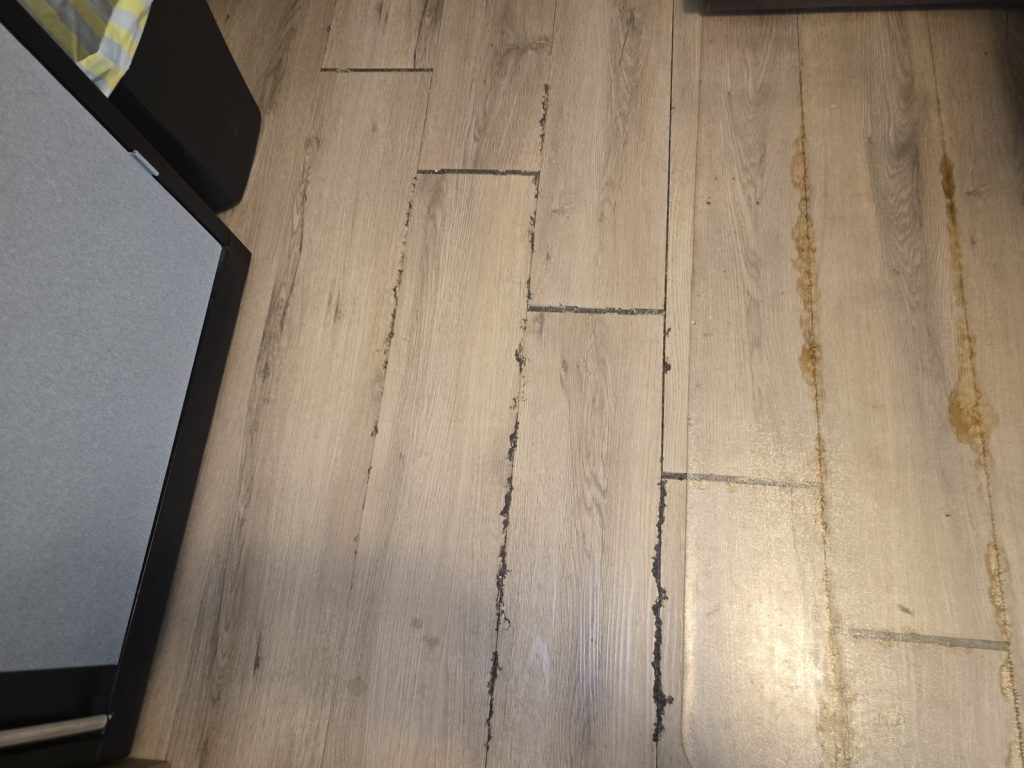 Adhesive visible along multiple plank joints and seams, showing migration of adhesive to the flooring surface.
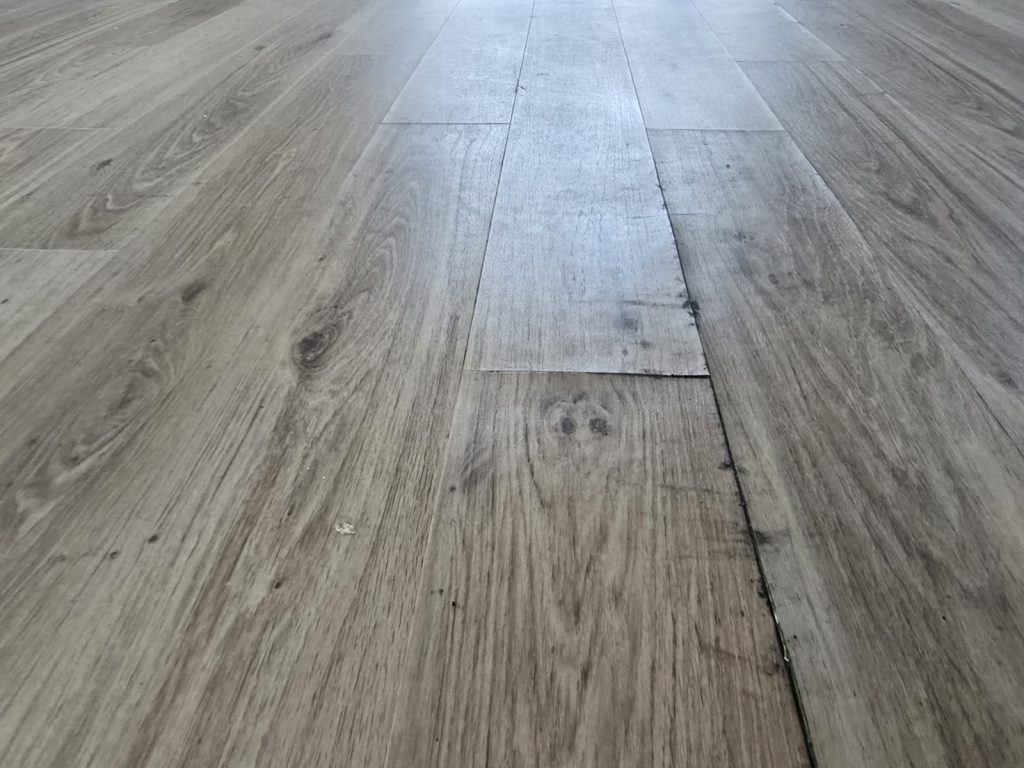 Low-angle view showing localized edge lift and movement at plank joints associated with loss of bond and glue ooze.
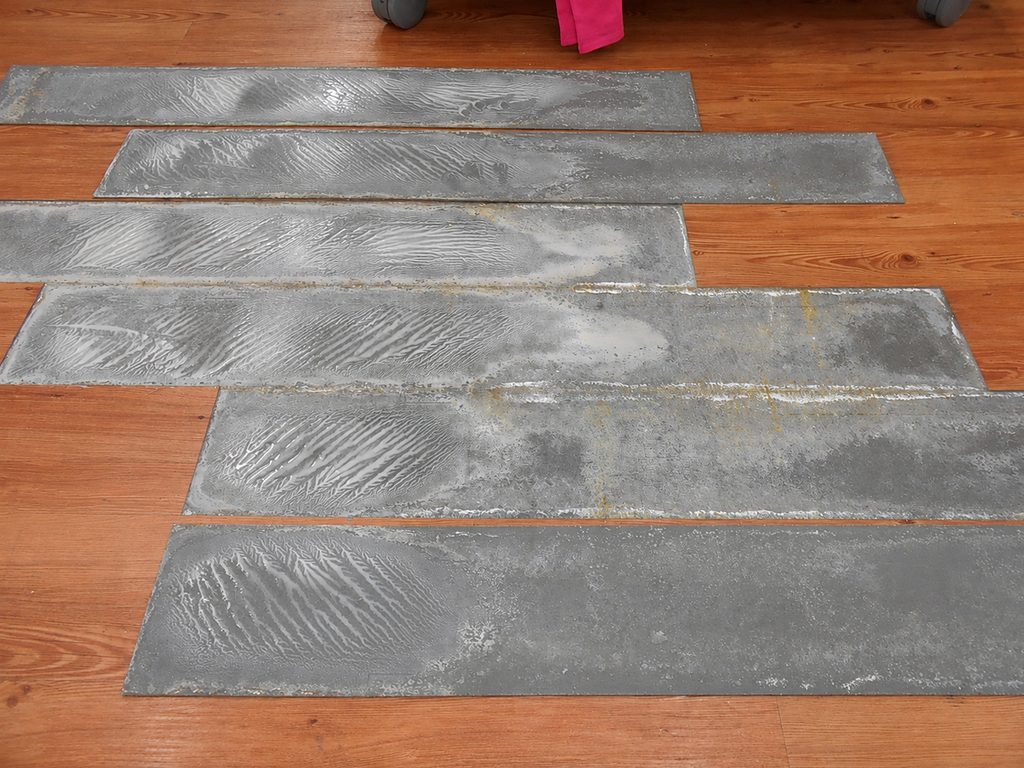
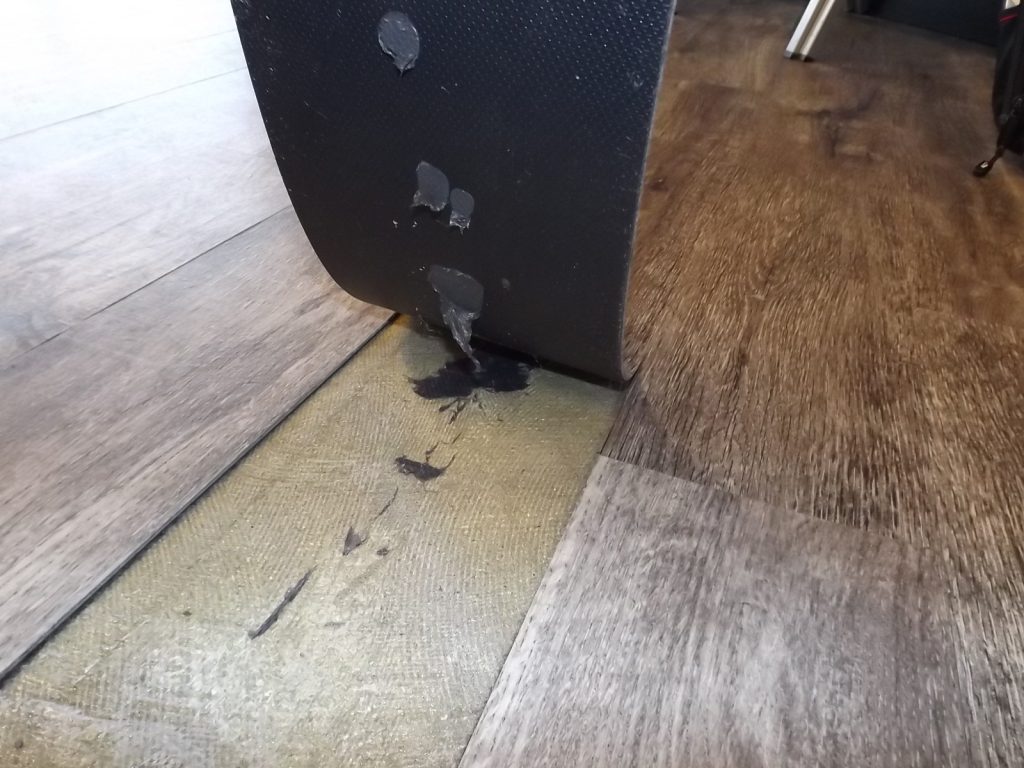 Planks releasing from the adhesive due to incompatibility between the adhesive and the plank backing. In this installation, an incorrect adhesive was used; the flooring manufacturer requires a specific pressure-sensitive adhesive for this particular plank style.
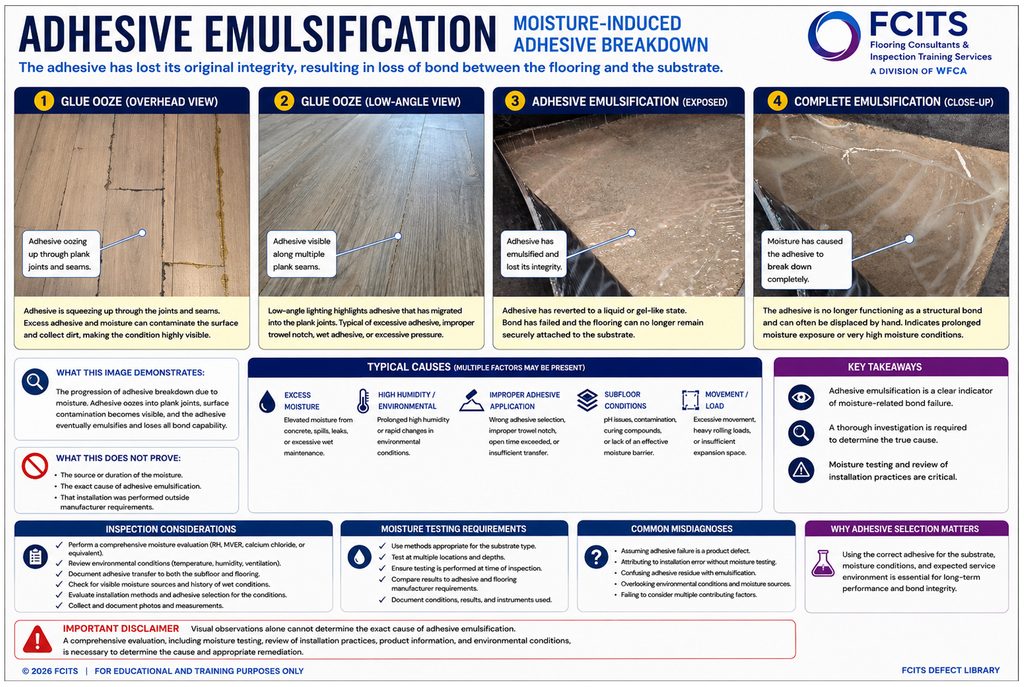
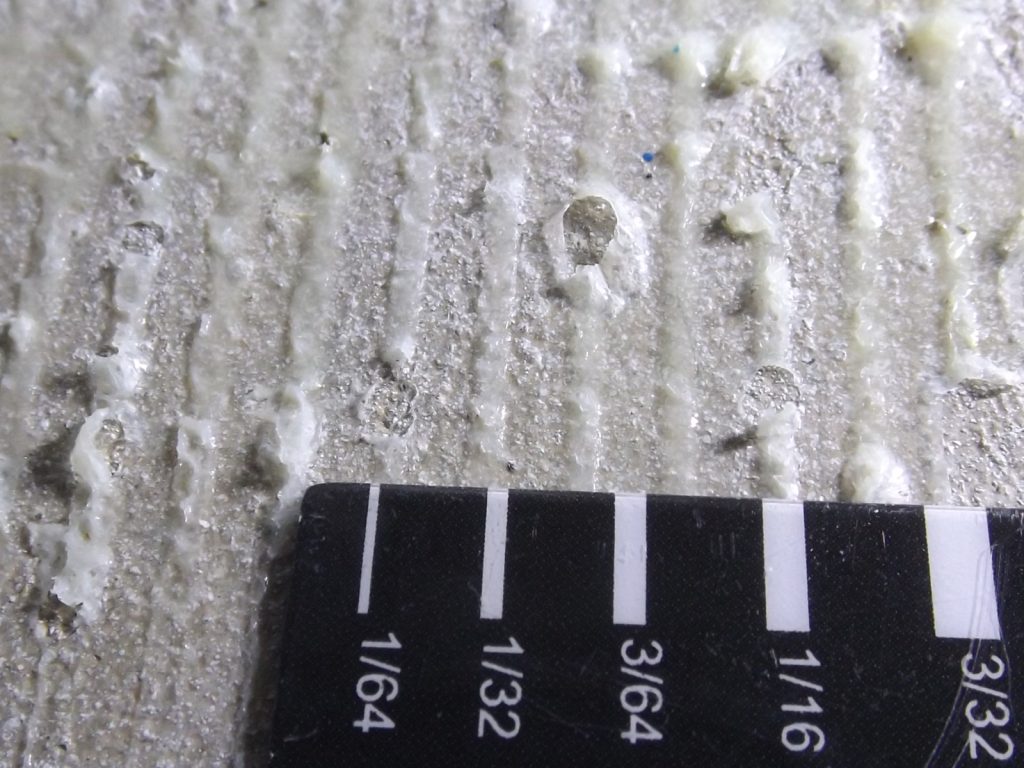
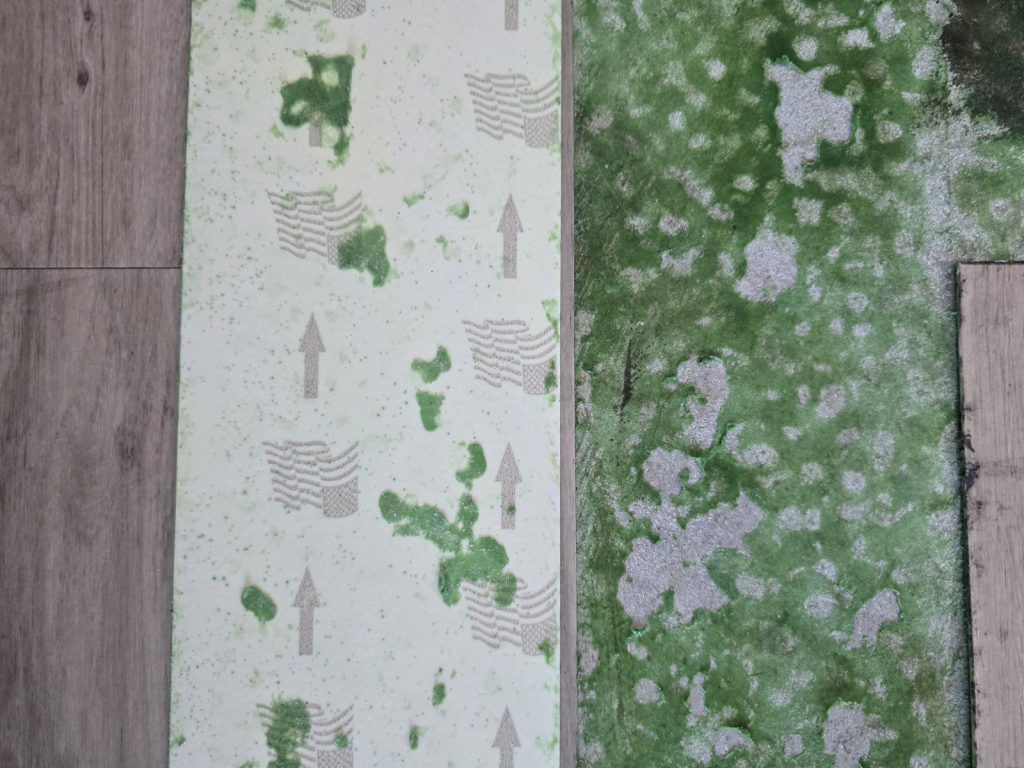 Early-stage adhesive emulsification has resulted in adhesion loss between the flooring and the substrate.
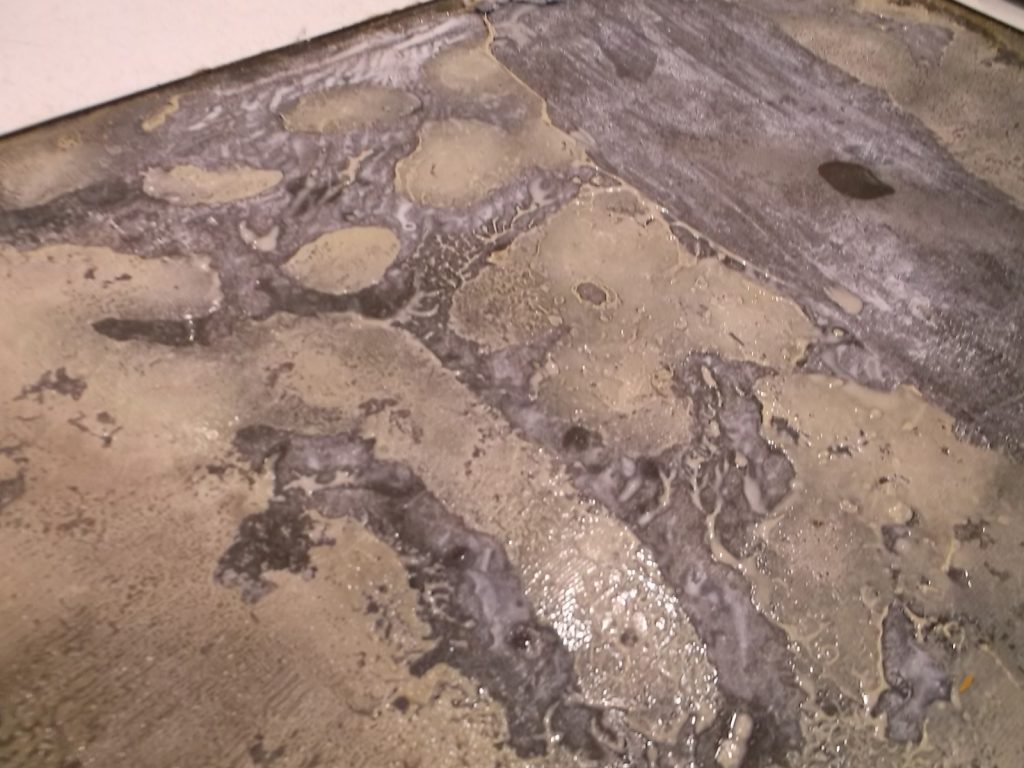 Close-up of softened and displaced adhesive at the bond interface, showing loss of normal adhesive structure due to moisture.
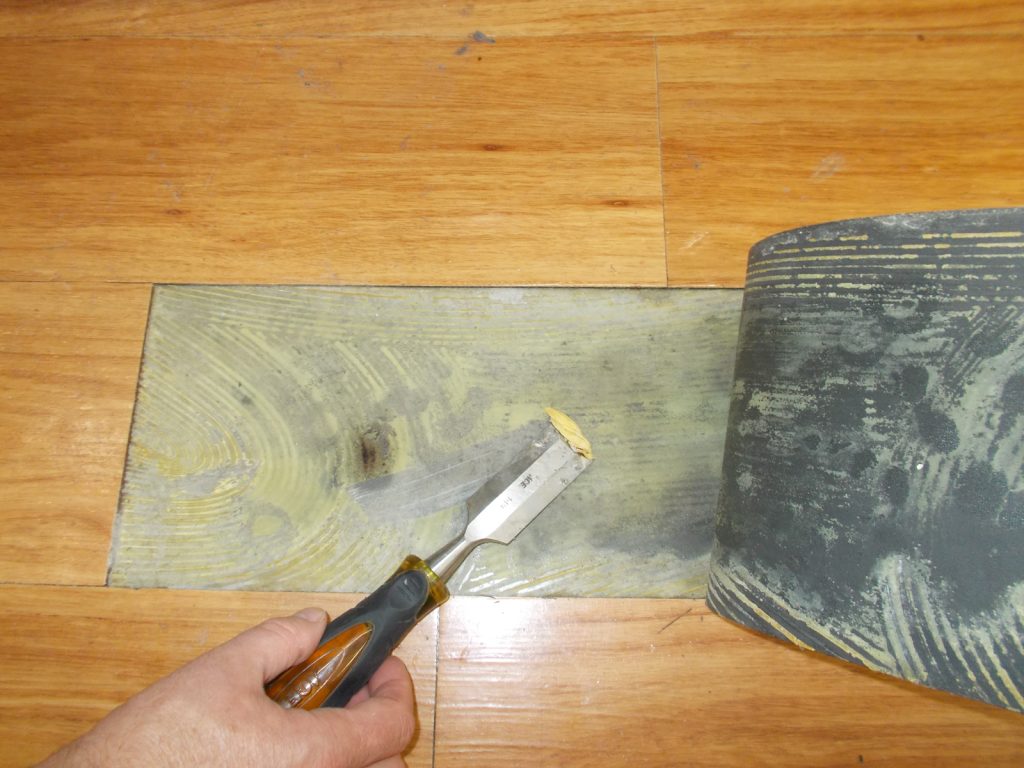 Mid-stage adhesive emulsification has resulted in adhesion loss between the flooring and the substrate.
Summary
Adhesion Loss is a bonding condition in which the connection between the flooring, adhesive, and substrate becomes compromised. Determining causation requires identifying the bond-loss interface and evaluating moisture, substrate conditions, installation practices, adhesive characteristics, environmental influences, and all other contributing factors. No single observation should be relied upon to determine causation. Conclusions should be based upon the totality of the available evidence together with applicable manufacturer requirements and industry standards.