
FCITS Defect Library: Buckling
Also Known As
- Floor Buckling
- Tenting
- Heaving
- Uplift
- Floor Lift
- Floor Doming
- Raised Flooring
- Loss of Plane
Primary Classification
Dimensional / Distortion Condition
Definition
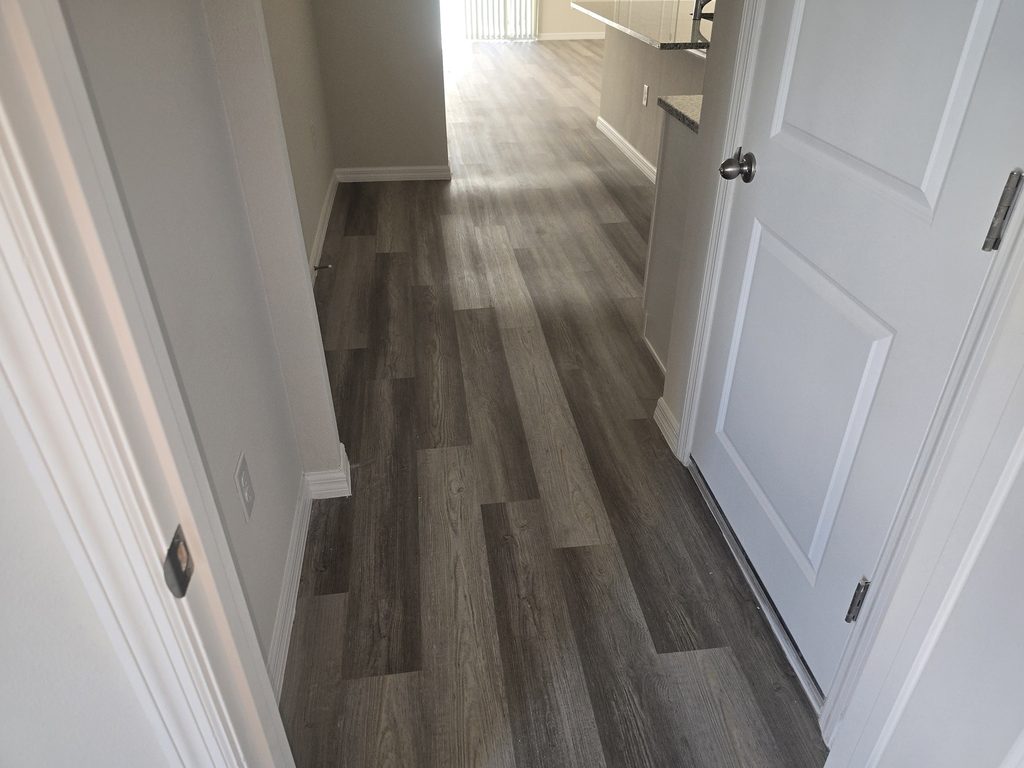
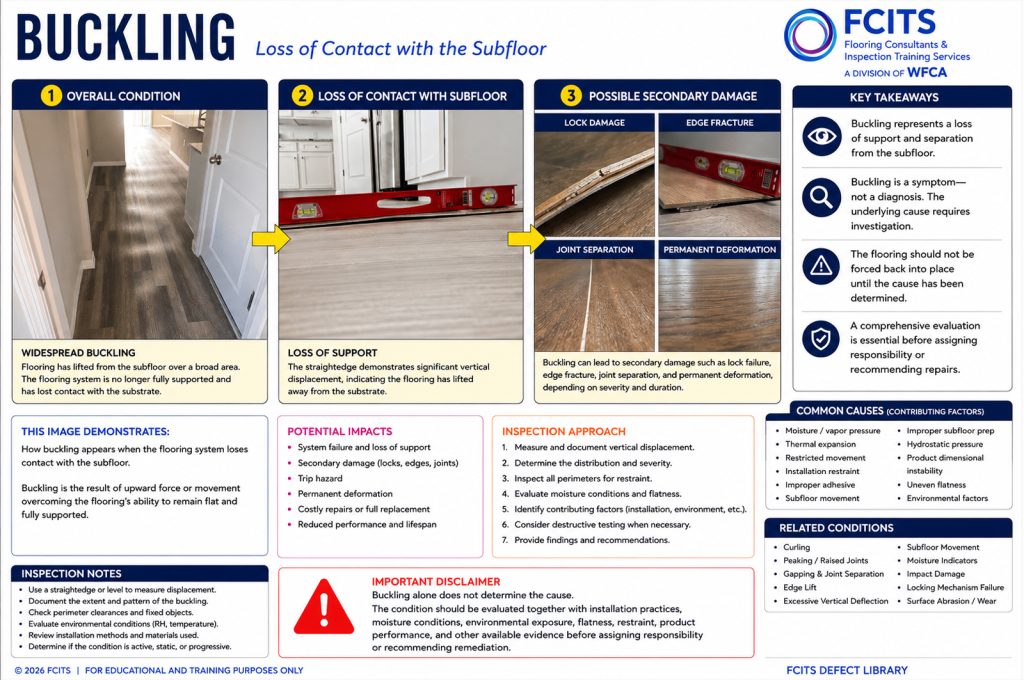
Buckling is a condition in which portions of a flooring system become elevated above the surrounding floor, creating a broad loss of plane. Unlike localized conditions such as Edge Lift, Vertical Displacement, or Raised Joints, buckling typically affects larger areas of the flooring assembly and may involve multiple flooring components. Buckling is an observable condition rather than a diagnosis. Although it may be associated with expansion restraint, moisture-related dimensional change, structural movement, installation characteristics, support conditions, or product-related factors, the raised flooring itself does not identify the underlying cause.
What Does It Look Like?
- Floor is lifting
- Floor is buckled
- Floor is tenting
- Floor is humped
- Floor is domed
- Broad raised areas
- Loss of contact with the substrate
- Progressive distortion
- Multiple flooring components affected
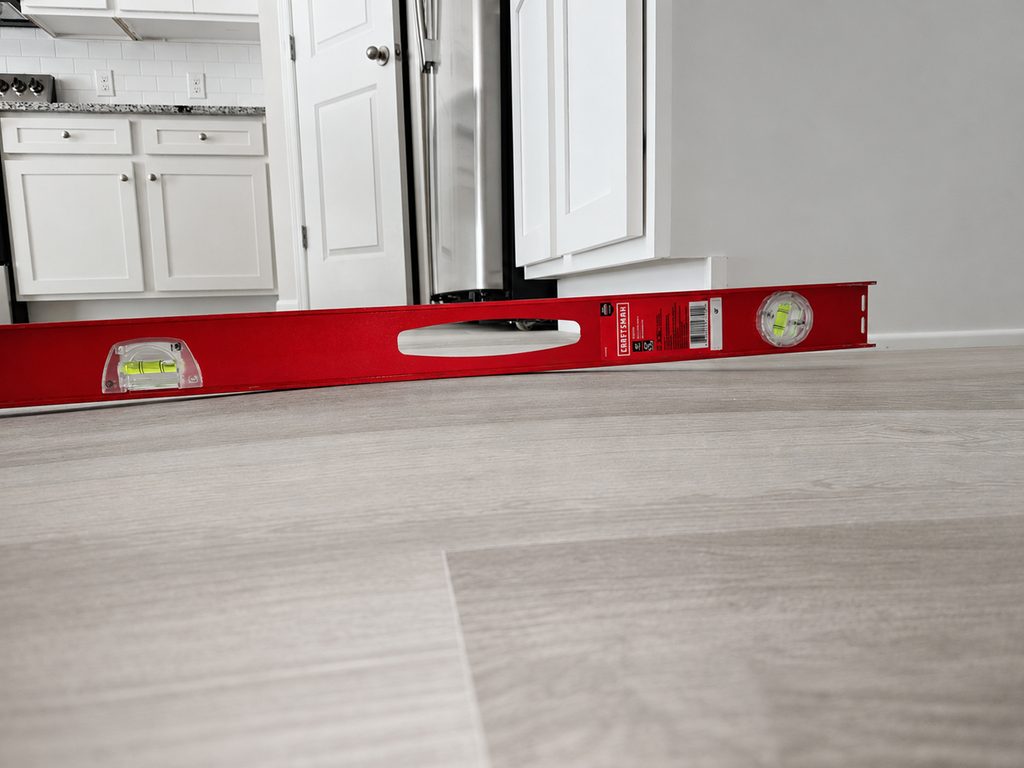
Degree of Severity
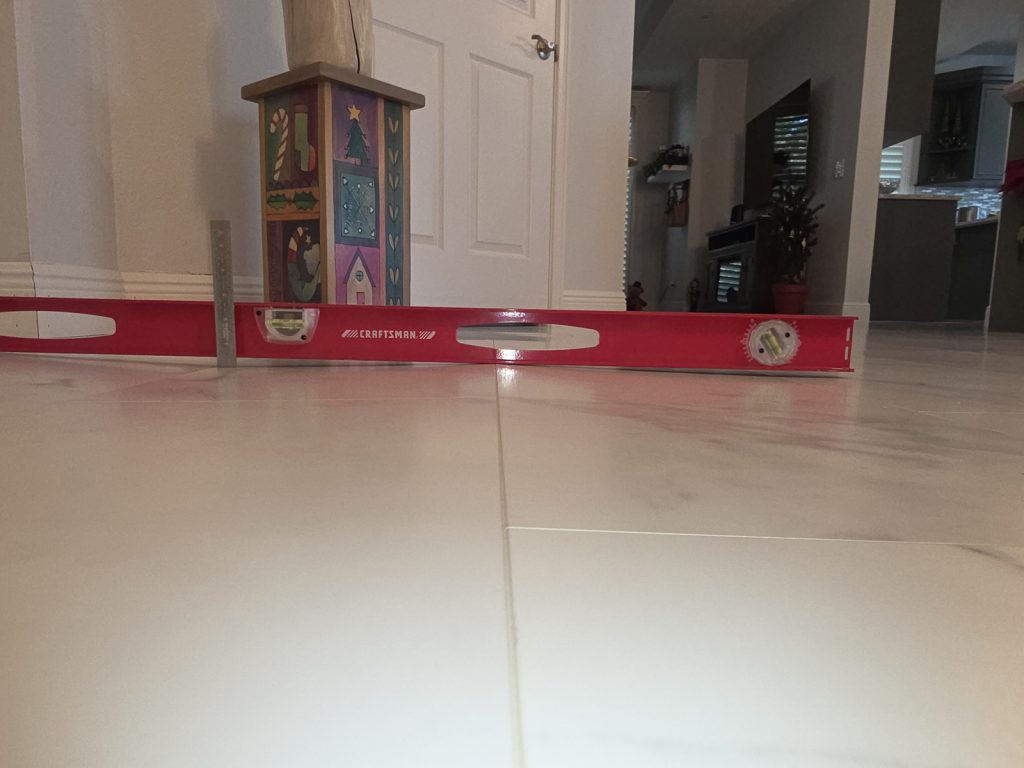
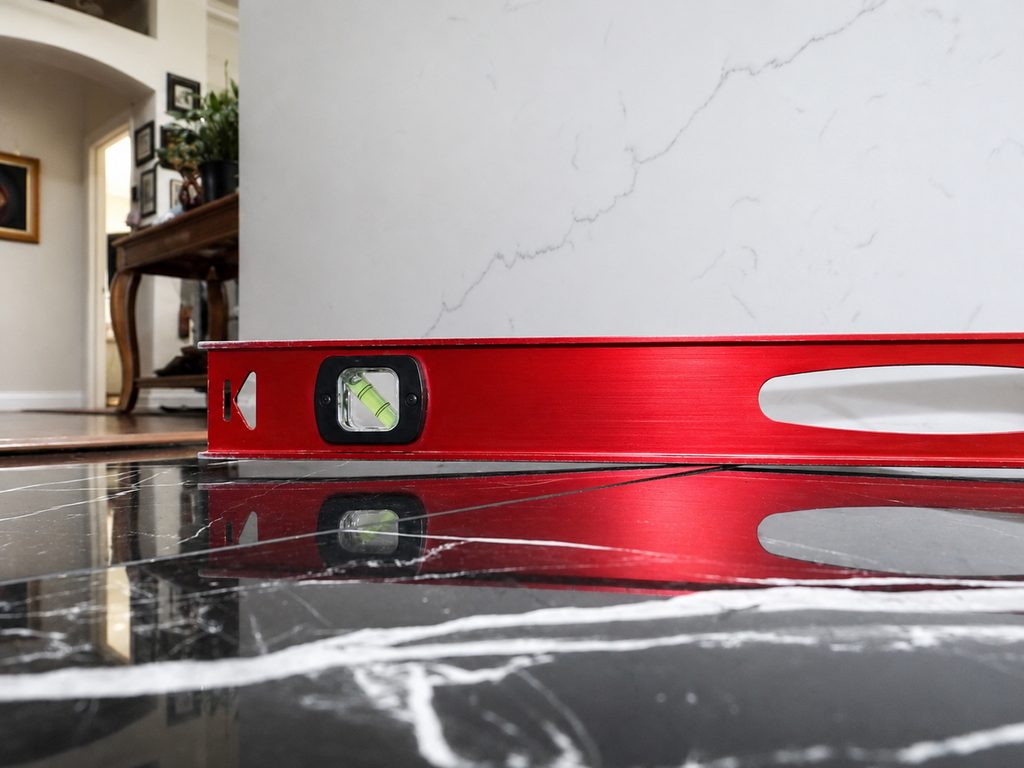
- Minor: Less than approximately 1/4 in. (6 mm); localized loss of plane; minimal effect on serviceability.
- Moderate: Approximately 1/4–1 in. (6–25 mm); clearly visible elevation; multiple flooring components affected.
- Severe: Greater than approximately 1 in. (25 mm); significant loss of plane; trip hazard potential; corrective action typically required.
What Causes It?
- Expansion Restraint-Related Buckling – Common contributing factors: tight perimeter conditions, inadequate expansion space, fixed objects, improper transitions. Mechanism: restraint prevents normal dimensional movement, allowing compressive forces generated by moisture, temperature, or other dimensional changes to accumulate until the flooring lifts to relieve stress.
- Thermal-Related Buckling – Common contributing factors: direct sunlight, solar heat gain, elevated surface temperatures, HVAC interruption, excessive temperature fluctuations. Mechanism: thermal expansion produces dimensional change within the flooring system. When thermal movement exceeds the available space for expansion—or combines with restraint, moisture, or other contributing factors—the flooring may buckle or tent.
- Moisture-Related Buckling – Common contributing factors: moisture intrusion, elevated moisture vapor emission, water exposure, elevated humidity. Mechanism: moisture-related dimensional change creates stresses that exceed the flooring system’s ability to remain flat.
- Structural / Support-Related Buckling – Common contributing factors: structural movement, substrate movement, settlement, support deficiencies. Mechanism: movement within the supporting structure transfers into the flooring system.
- Product Stability-Related Buckling – Common contributing factors: dimensional instability, manufacturing variation, differential expansion. Mechanism: inconsistent dimensional behavior contributes to broad loss of plane.
- Installation-Related Buckling – Common contributing factors: inadequate expansion provisions, improper substrate preparation, improper installation methods. Mechanism: installation deficiencies create stress concentrations that later develop into buckling.
- Floating Floor Considerations: Buckling is commonly associated with restricted movement, inadequate expansion provisions, excessive dimensional change, or combinations of multiple factors.
- Glue-Down Floor Considerations: May be associated with moisture-related expansion, bond-related concerns, substrate influences, structural movement, or product instability.
What This Condition Does Not Tell You
- A manufacturing defect
- Improper installation
- Product failure
- Warranty eligibility
- Responsibility
- The specific mechanism responsible
Inspection Considerations
- Evaluate distribution pattern, expansion provisions, perimeter conditions, moisture influences, structural conditions, flatness, deflection, product dimensions, and installation characteristics.
- Differentiate Buckling from Edge Lift, Curling, Peaking, and Vertical Displacement.
- If replacement flooring develops similar buckling in the same location, investigate the underlying mechanism rather than the replacement flooring.
- Base conclusions on the totality of the available evidence.
Common Misdiagnoses
- All raised flooring is buckling.
- Buckling automatically indicates installation error.
- Buckling always indicates a manufacturing defect.
- Replacing affected flooring permanently resolves the condition.
Related Conditions
- Peaking and Raised Joints
- Edge Lift
- Curling
- Vertical Displacement
- Excessive Vertical Deflection
- Gapping and Joint Separation
- Locking Mechanism Failure
- Fractured Edges / Missing Sections
Typical Findings
- Broad elevated areas
- Loss of plane
- Tenting
- Evidence of restraint
- Moisture-related distortion
- Structural influence
- Progressive worsening
- Associated joint distress
Is It a Manufacturing Defect?
Not necessarily. While manufacturing-related dimensional instability may contribute in certain situations, Buckling is more commonly associated with expansion restraint, moisture-related dimensional change, structural movement, support conditions, installation characteristics, or multiple interacting factors.
Effect on Performance
- May affect appearance
- May create trip hazards
- May reduce serviceability
- May increase stresses on flooring components
- May require corrective action
Recommended Documentation
- Height measurements
- Floor plan mapping
- Expansion space observations
- Perimeter observations
- Moisture measurements
- Environmental conditions
- Flatness measurements
- Structural observations
- Representative photographs
- Distribution mapping
Photo/Video Gallery
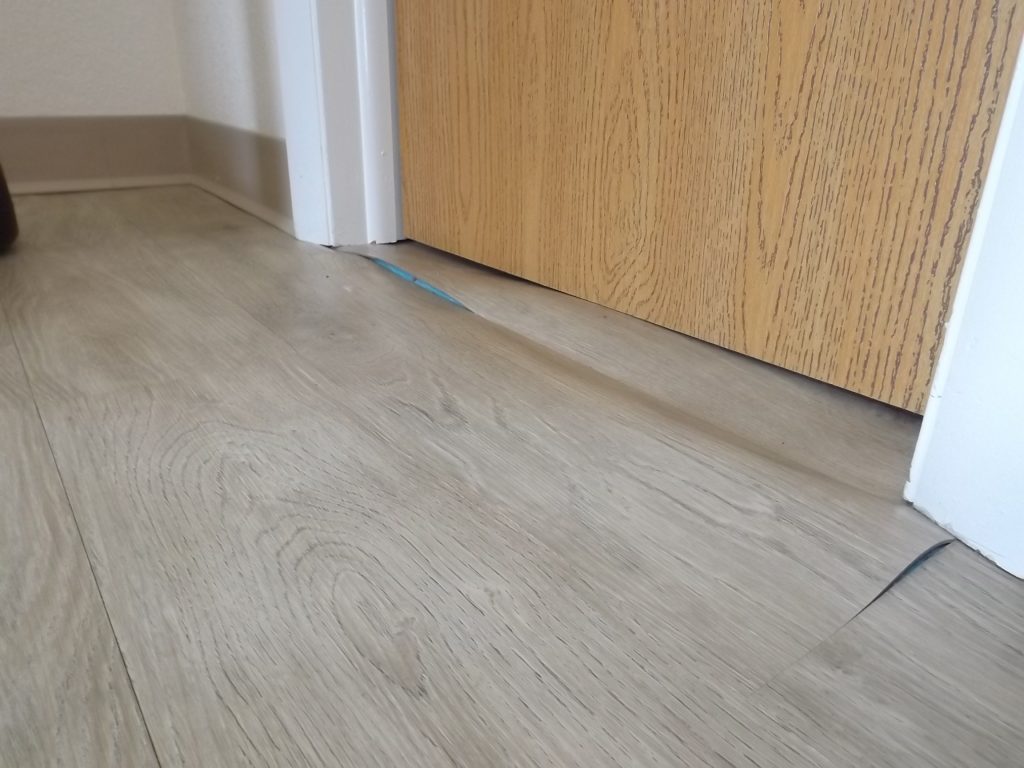 Raised flooring observed at a doorway, illustrating localized elevation and loss of plane at the transition area.
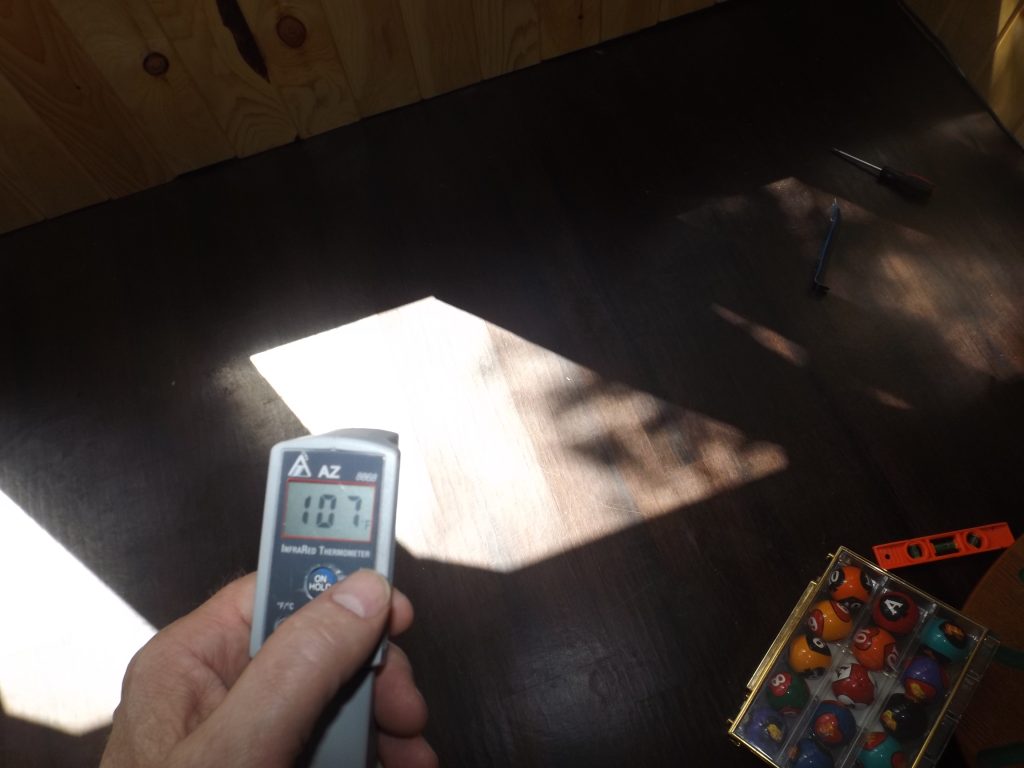 Surface temperature measurement of approximately 107°F documented within an area exposed to direct sunlight.
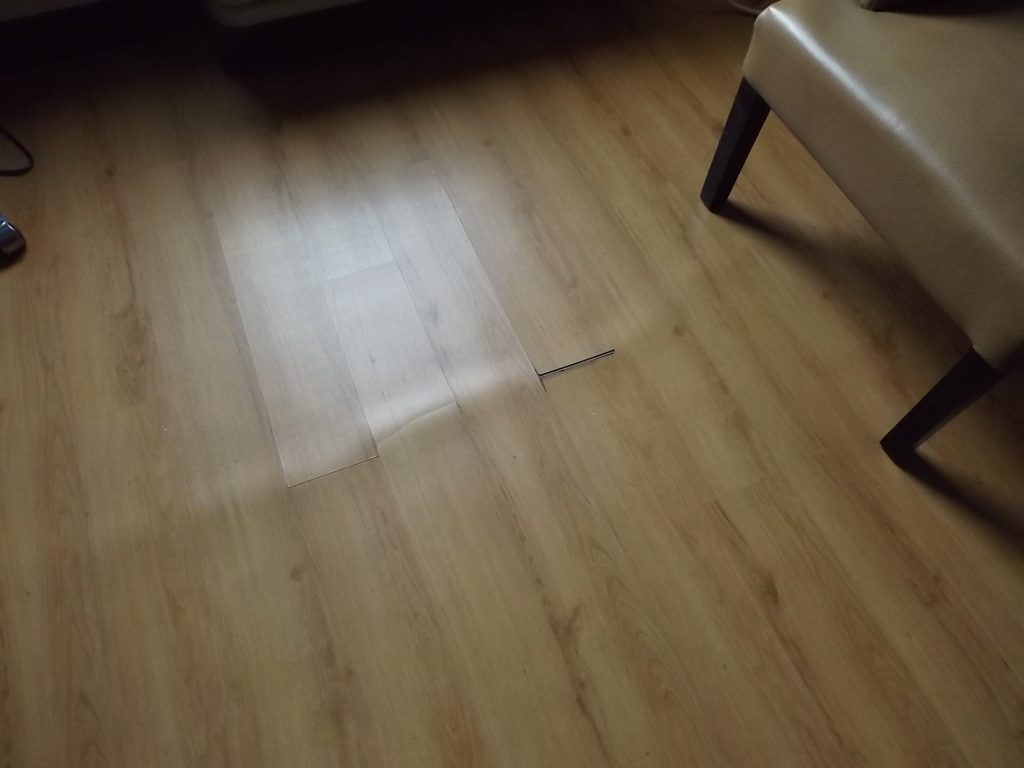 Broad raised section of flooring visible across multiple planks, with separation from the surrounding floor plane.
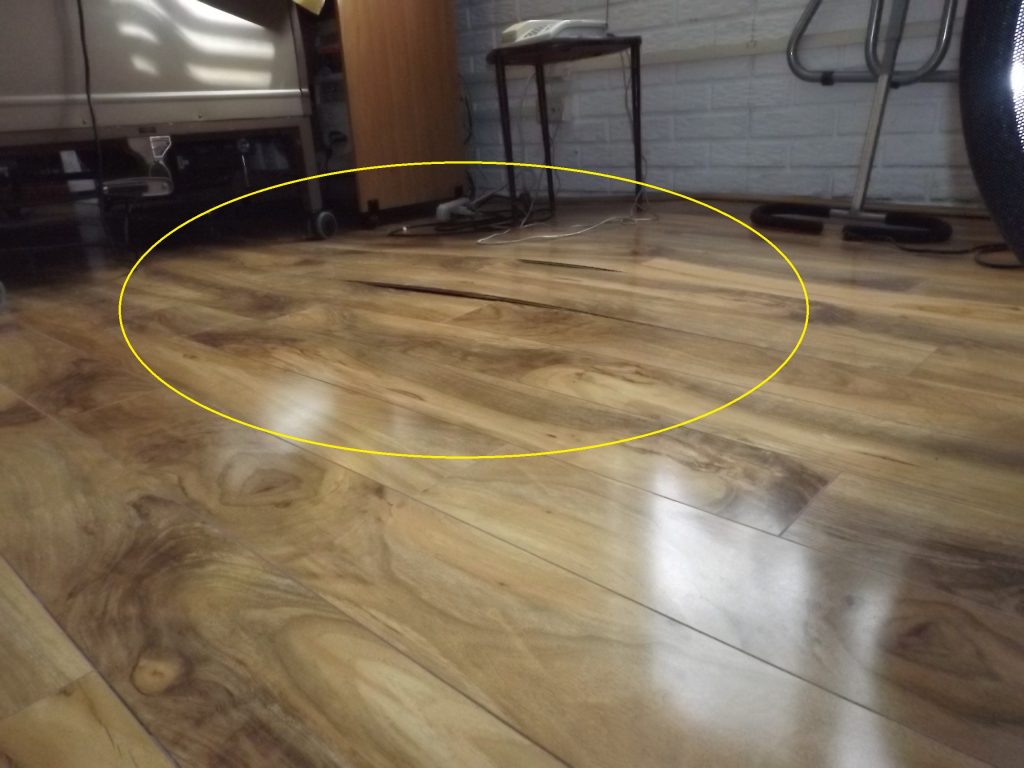 Low-angle view showing multiple planks elevated above the surrounding flooring surface within the affected area.
Summary
Buckling is a dimensional and distortion-related observation involving broad loss of plane within a flooring system. Unlike localized conditions such as Edge Lift, Vertical Displacement, or Raised Joints, buckling typically affects larger areas of the flooring assembly and often involves multiple flooring components. While buckling may be associated with expansion restraint, thermal-related, moisture-related dimensional change, structural influences, support-related conditions, installation characteristics, product instability, or other contributing factors, the presence of buckling alone does not establish causation or responsibility. Determining why buckling developed requires evaluation of restraint conditions, environmental influences, structural characteristics, movement patterns, installation conditions, and other supporting evidence. Responsibility should be determined based upon the totality of the available evidence rather than any single observation.