

Resilient flooring · Defect reference
Blisters Bubbles & Bulges
Condition / SymptomA field reference for recognizing, documenting, and evaluating localized raised areas in resilient flooring.
8Cause categories
3Severity levels
8Photos, guides & videos
Recognizing the condition
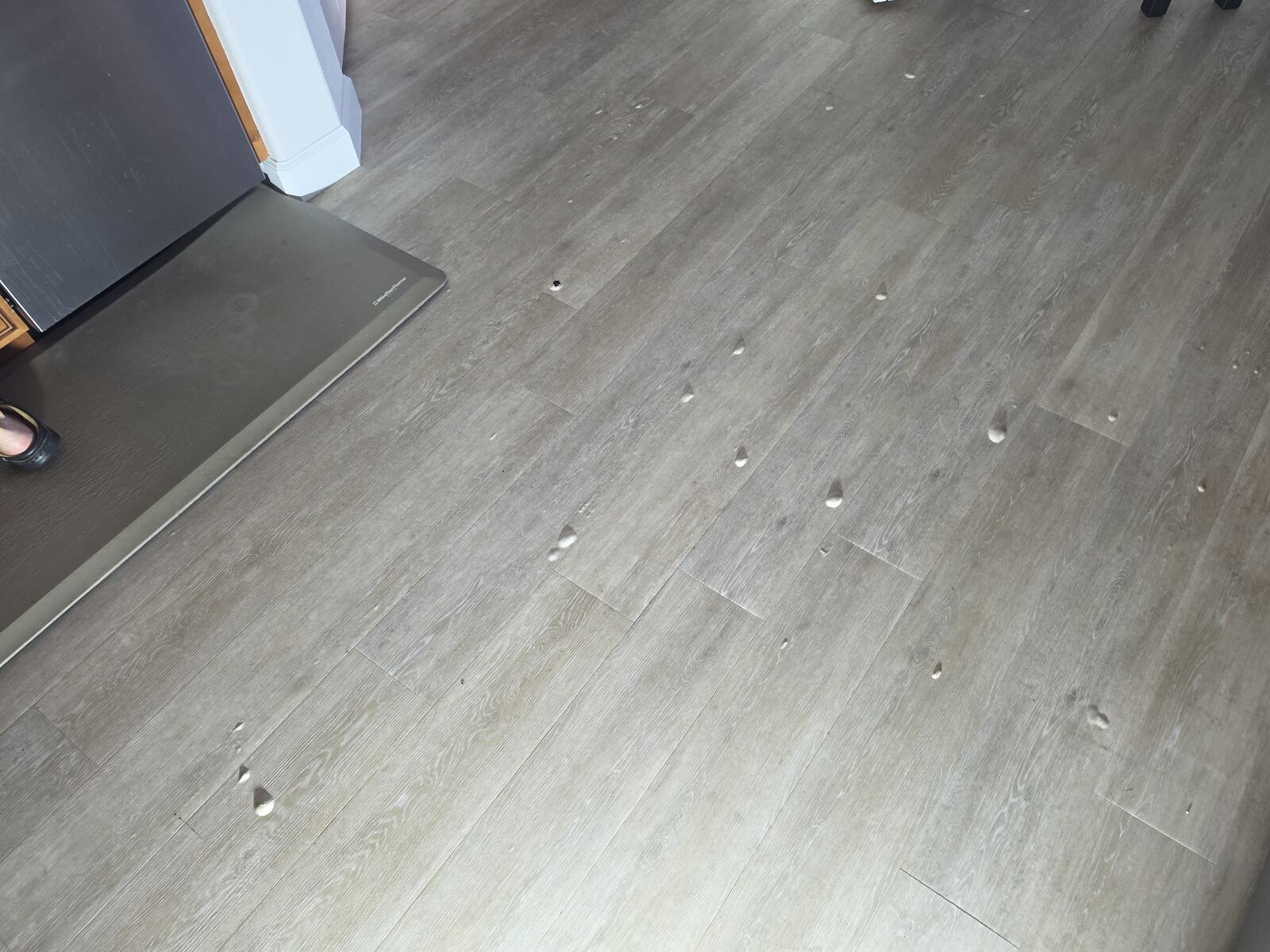
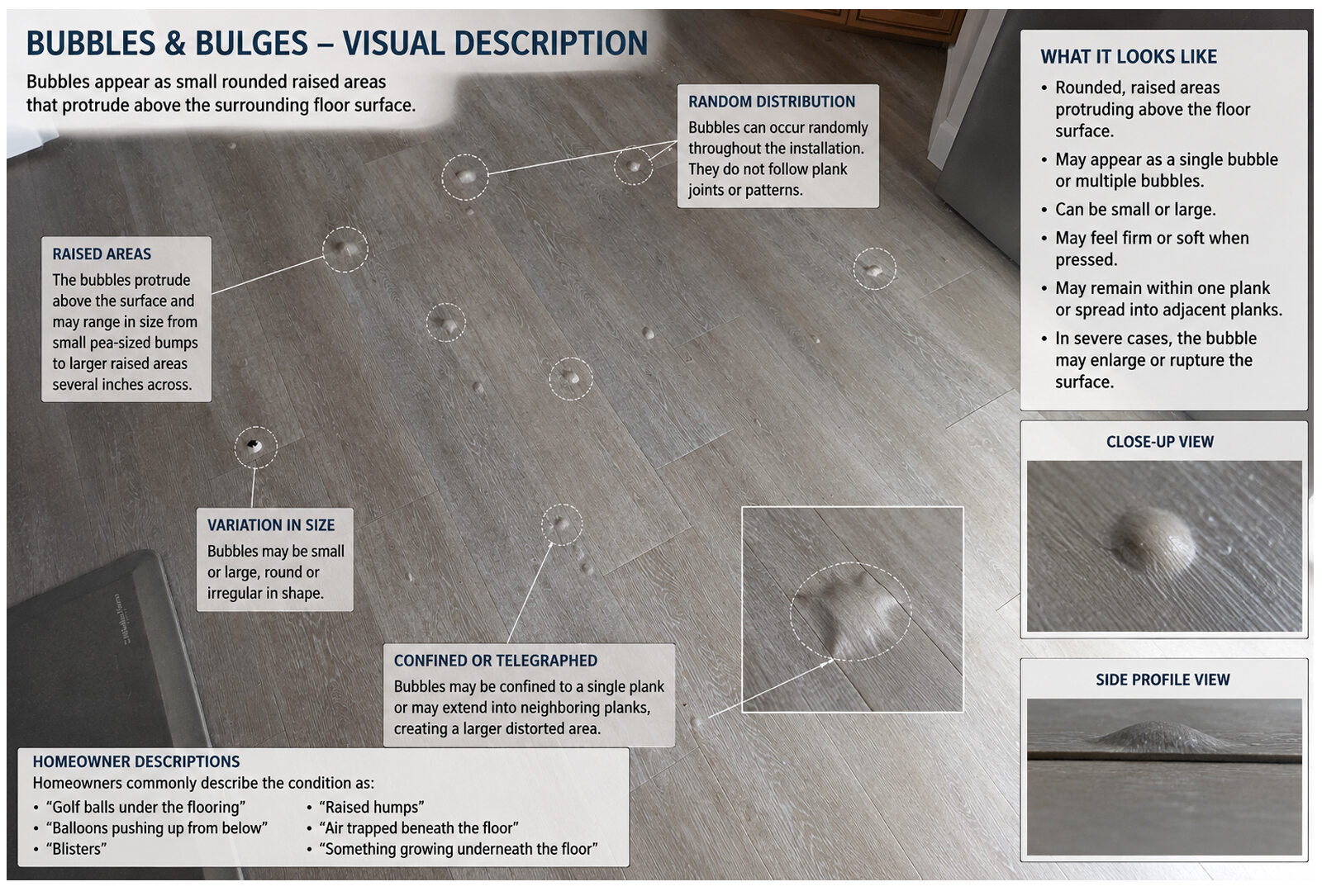
What does it look like?
- Rounded protrusions
- Localized humps
- Randomly distributed raised areas
- Distortion extending into adjacent flooring
- Surface rupture in severe cases
Homeowners frequently describe the condition as:
- "Bubbles in the floor"
- "Golf balls under the floor"
- "Raised spots"
- "Blisters"
- "Humps"
- "Something pushing up from underneath"
Conditions originating beneath one location may become visible across adjacent planks or tiles.
Degree of severity
Minor Level 1
Visible under reflected lighting with little effect on serviceability.
Moderate Level 2
Easily visible and noticeable underfoot.
Severe Level 3
Significant distortion, rupture, or permanent deformation affecting appearance and serviceability.
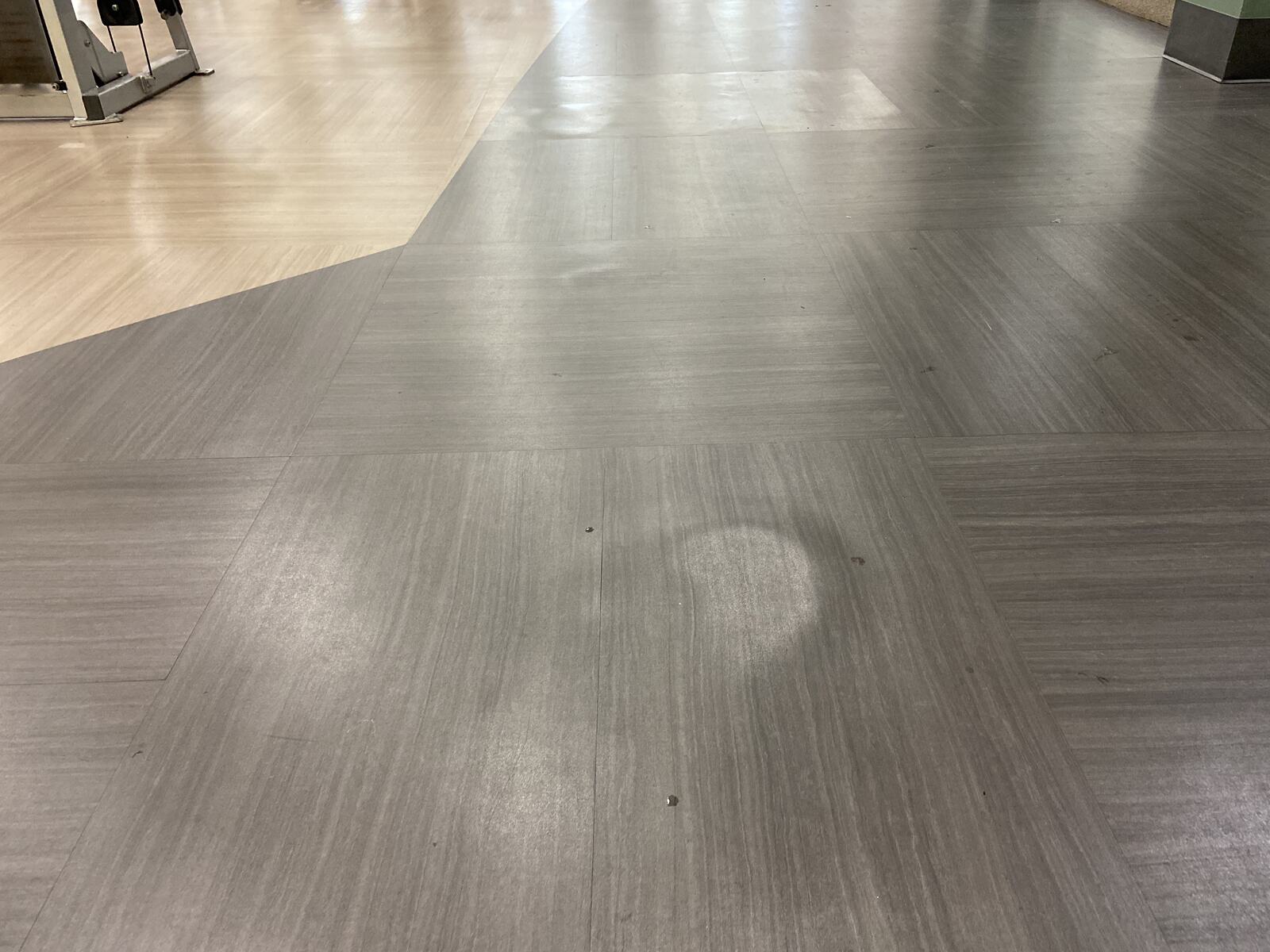
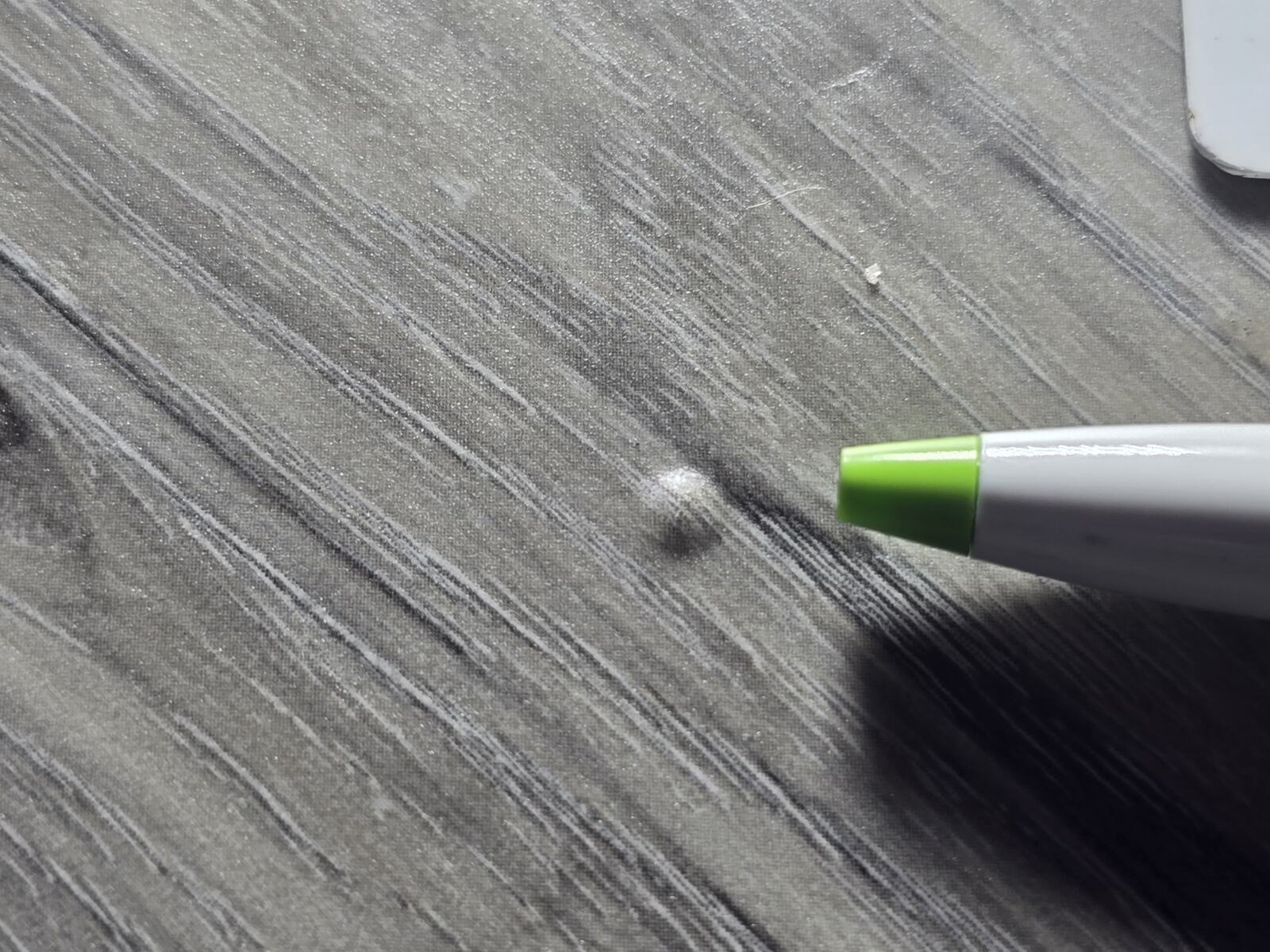
Field photographs
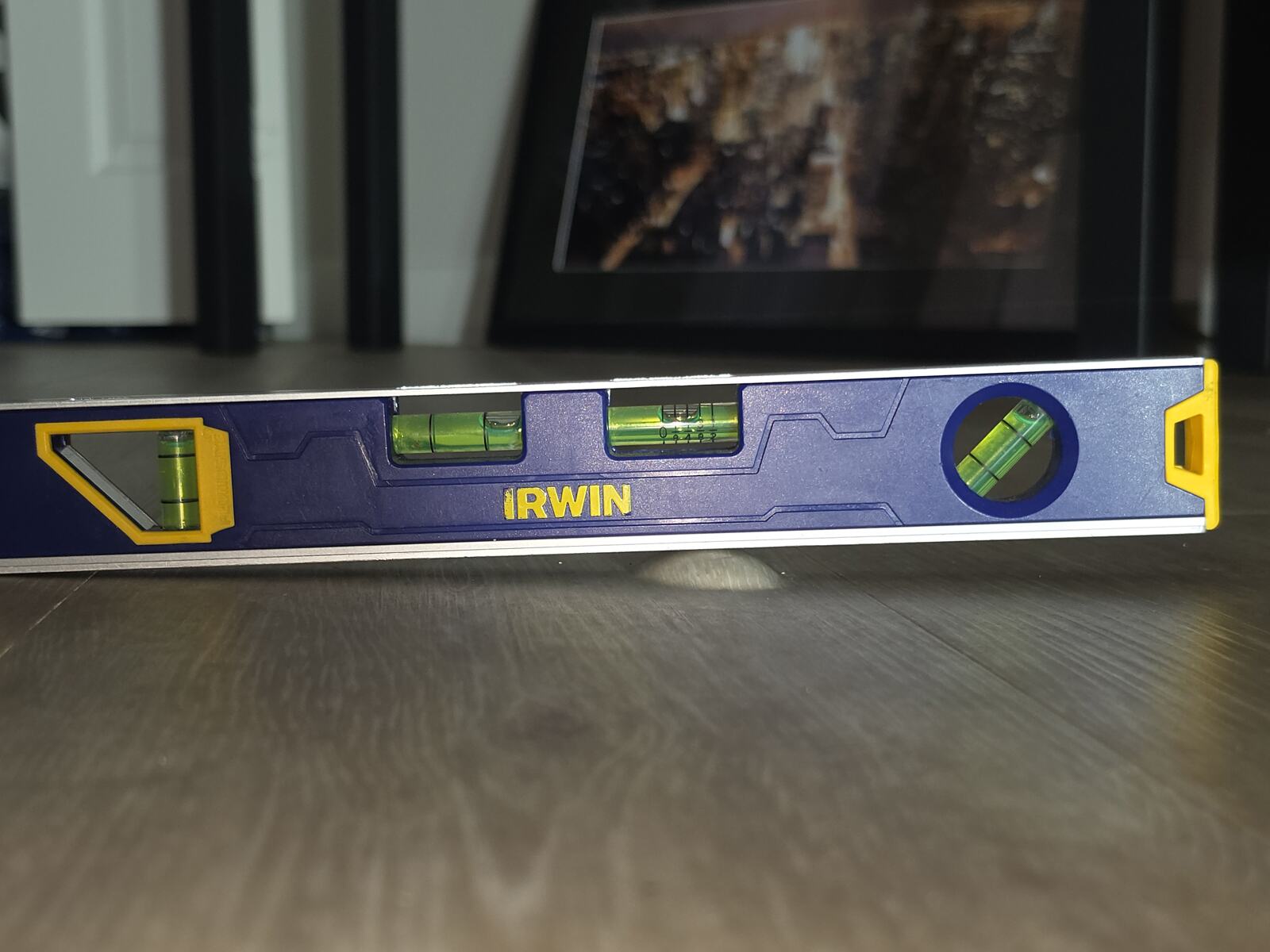
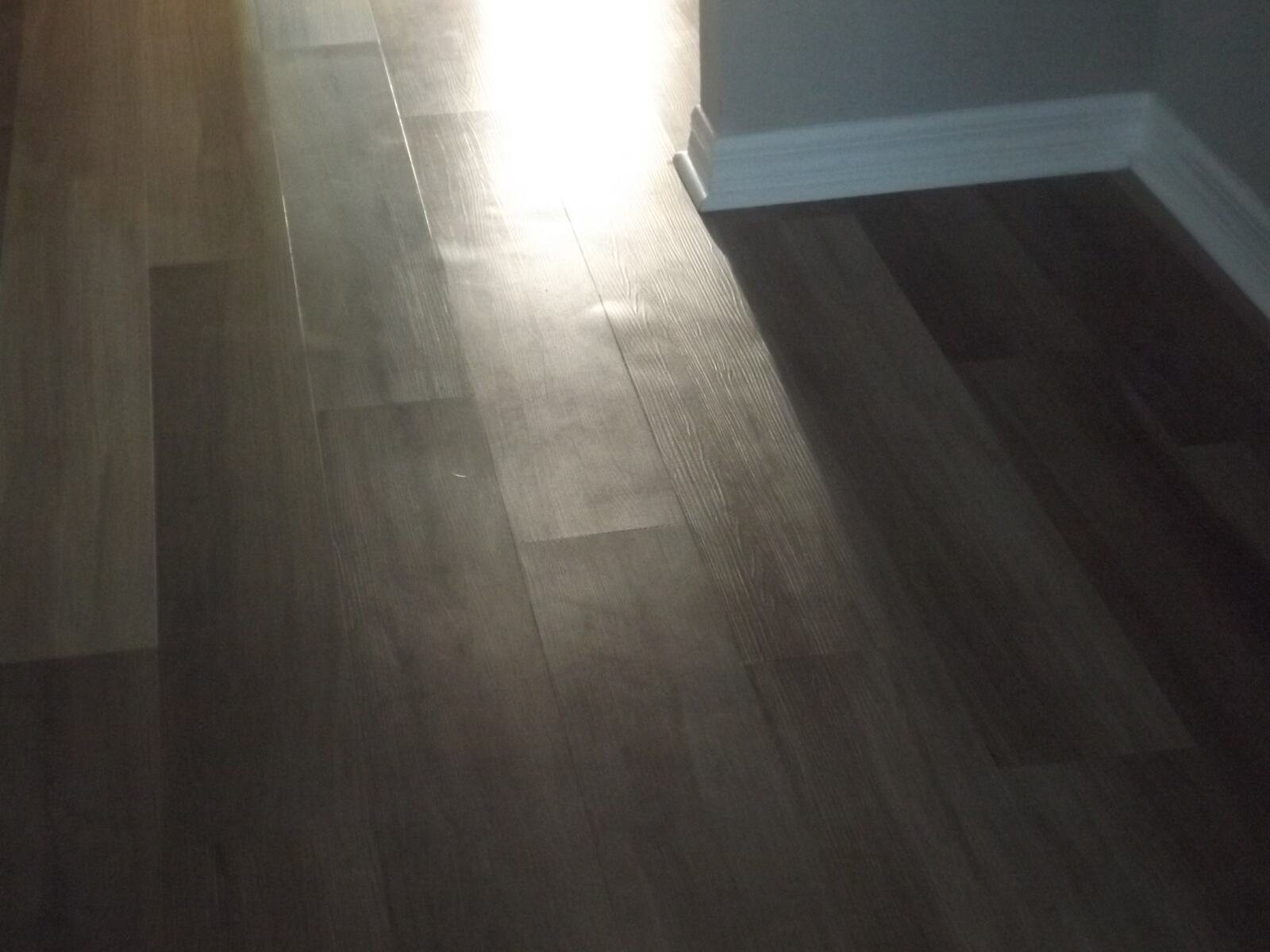
Potential causes
Bubbles & Bulges are frequently associated with more than one contributing factor.
Moisture-Related Conditions
Common contributing factors
- Elevated moisture
- Moisture migration
- Foamed cores
Mechanism
Moisture contributes to localized expansion.
Vapor Pressure
Common contributing factors
- Concrete moisture vapor
- Impermeable flooring
- Trapped vapor
Mechanism
Pressure beneath flooring creates localized distortion.
Gas Generation / Off-Gassing
Common contributing factors
- Manufacturing off-gassing
- Adhesive reactions
- Organic decomposition
Mechanism
Accumulated gases create localized bulging.
Substrate Preparation Material Failure
Common contributing factors
- Released patching compounds
- Released feather finish
- Failed levelers
Mechanism
Loss of support contributes to deformation.
Manufacturing Irregularities
Common contributing factors
- Voids
- Incomplete bonding
- Material inconsistencies
- Trapped air
- Contamination between the layers
Mechanism
Construction irregularities contribute to raised areas.
Thermal Influences
Common contributing factors
- Elevated temperatures
- Temperature fluctuations
Mechanism
Thermal stress contributes to localized expansion.
Chemical Exposure
Common contributing factors
- Solvents
- Contaminants
- Incompatible chemicals
Mechanism
Chemical interaction alters material properties.
Underfloor Conditions
Common contributing factors
- Debris
- Trapped air
- Protrusions
- Substrate irregularities
Mechanism
Conditions beneath the floor telegraph through the flooring.
Inspection & evaluation
Inspection considerations
- Evaluate moisture, substrate, product construction and distribution.
- Inspect patching compounds and levelers.
- Document ambient conditions.
- Compare attic stock.
- Consider destructive testing.
The visible limits of the distortion do not necessarily represent the actual limits of the underlying cause.
What this condition does not tell you
- A manufacturing defect
- An installation defect
- A moisture-related failure
- Responsibility
- The specific mechanism responsible
Is it a manufacturing defect?
Not necessarily.
The appearance alone is insufficient to determine responsibility.
Typical findings
- Rounded protrusions
- Random distribution
- Elevated moisture readings
- Foamed cores
- Distortion across adjacent planks
- Released patching compounds
Effect on performance
- May affect appearance
- May create uneven walking surfaces
- May increase surface damage
- May stress locking mechanisms
- May reduce serviceability
Recommended documentation
- Wide-angle photographs
- Close-up photographs
- Straightedge measurements
- Moisture readings
- Ambient conditions
- Product identification
- Destructive testing
- Attic stock comparisons
Common misdiagnoses
Misdiagnosis
Subfloor protrusions
Misdiagnosis
Manufacturing blisters
Misdiagnosis
Impact damage
Misdiagnosis
Telegraphing
Misdiagnosis
Buckling
Misdiagnosis
Curling
Related conditions
Field videos
Summary
Blisters, Bubbles & Bulges are localized raised distortions within resilient flooring. Potential contributors include moisture, vapor pressure, gas accumulation, substrate preparation failures, manufacturing irregularities, thermal influences, chemical exposure, and underfloor conditions. Proper diagnosis requires evaluation of the flooring system, substrate, environmental conditions, and supporting evidence.