

Resilient flooring · Defect reference
Curling
Dimensional / Surface Deformation ConditionA field reference for recognizing, documenting, and evaluating curling in resilient plank and tile installations.
4Cause categories
3Severity levels
3Test methods & references
22Photos, guides & videos
Recognizing the condition
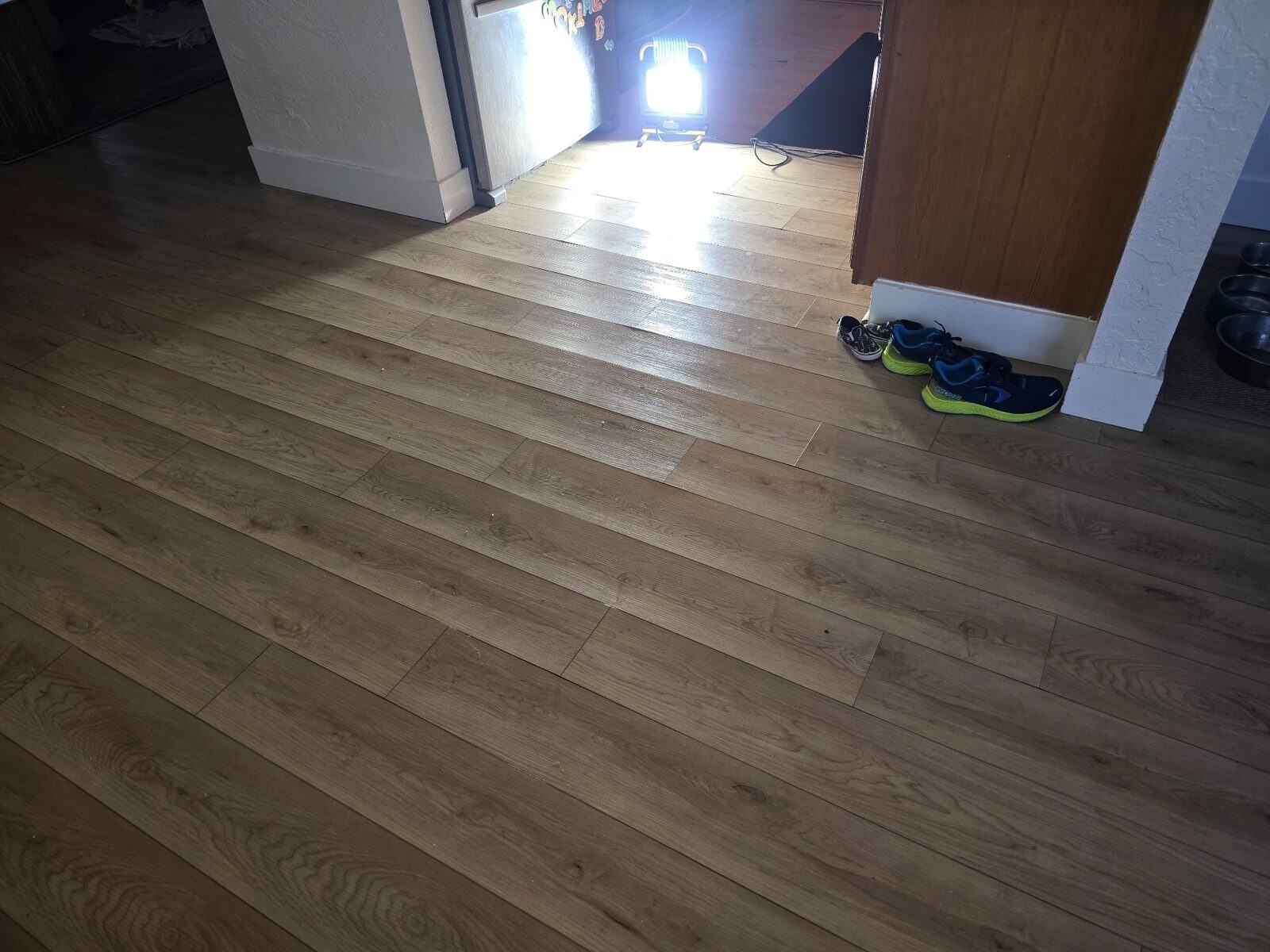
What does it look like?
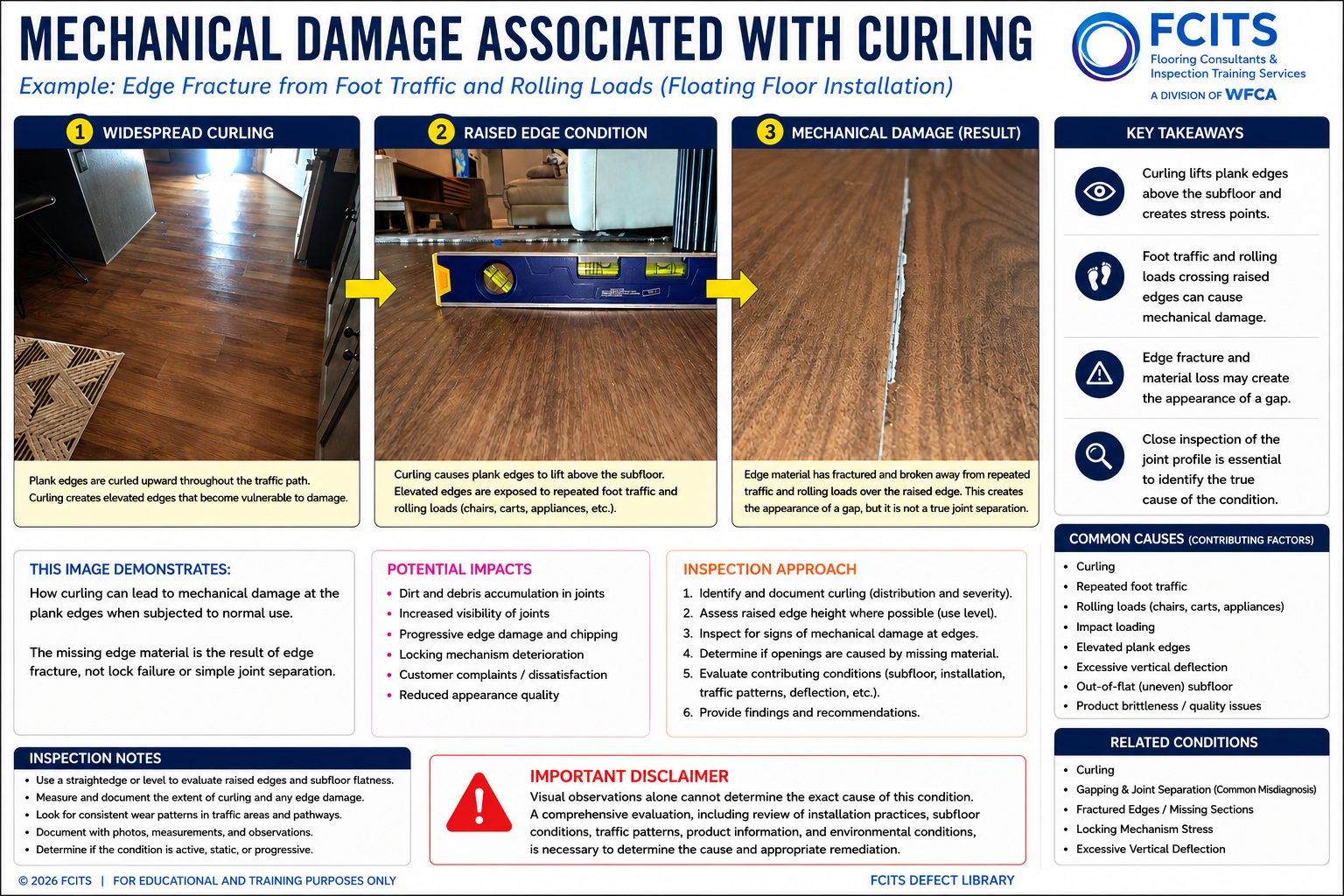
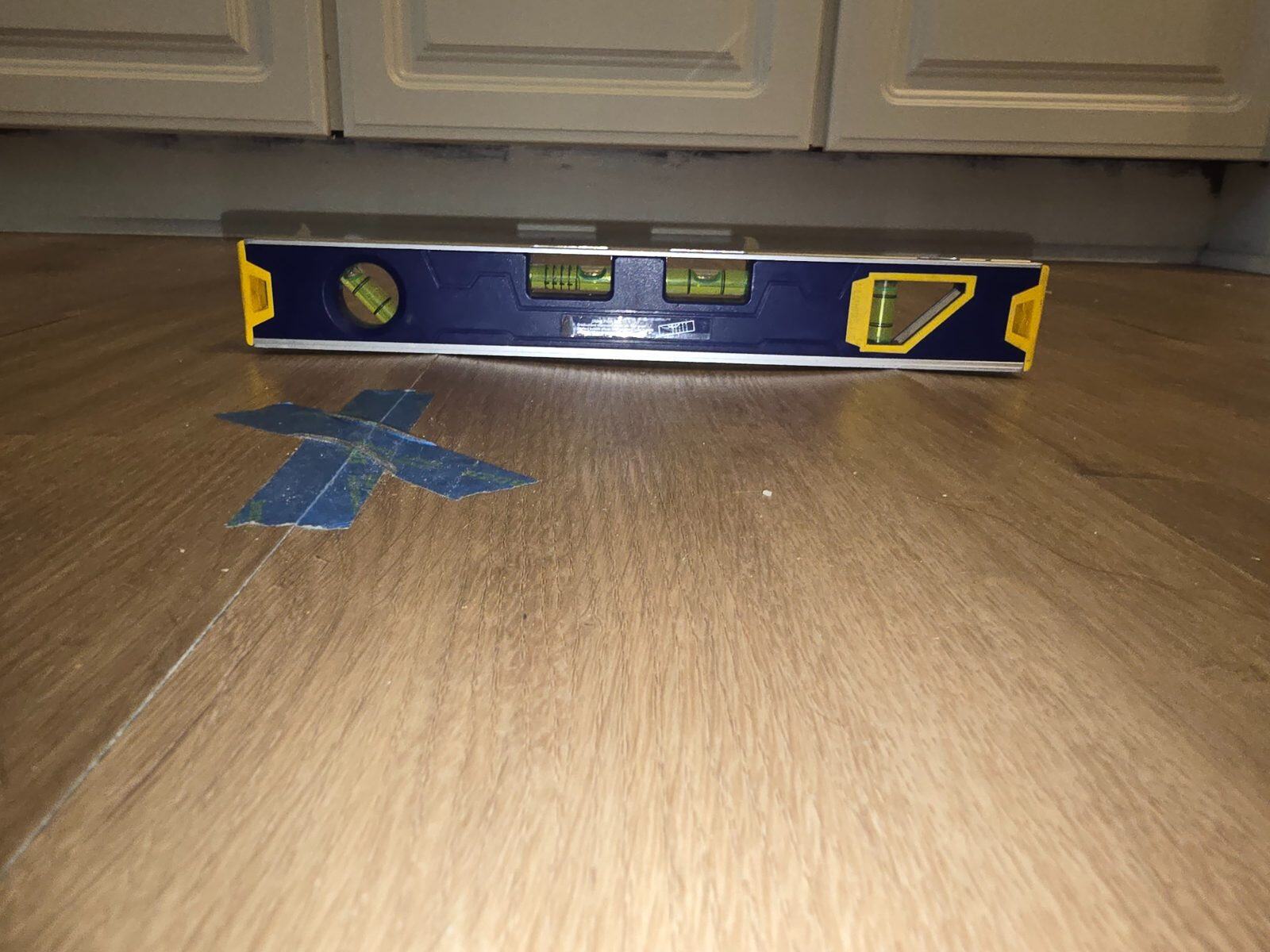
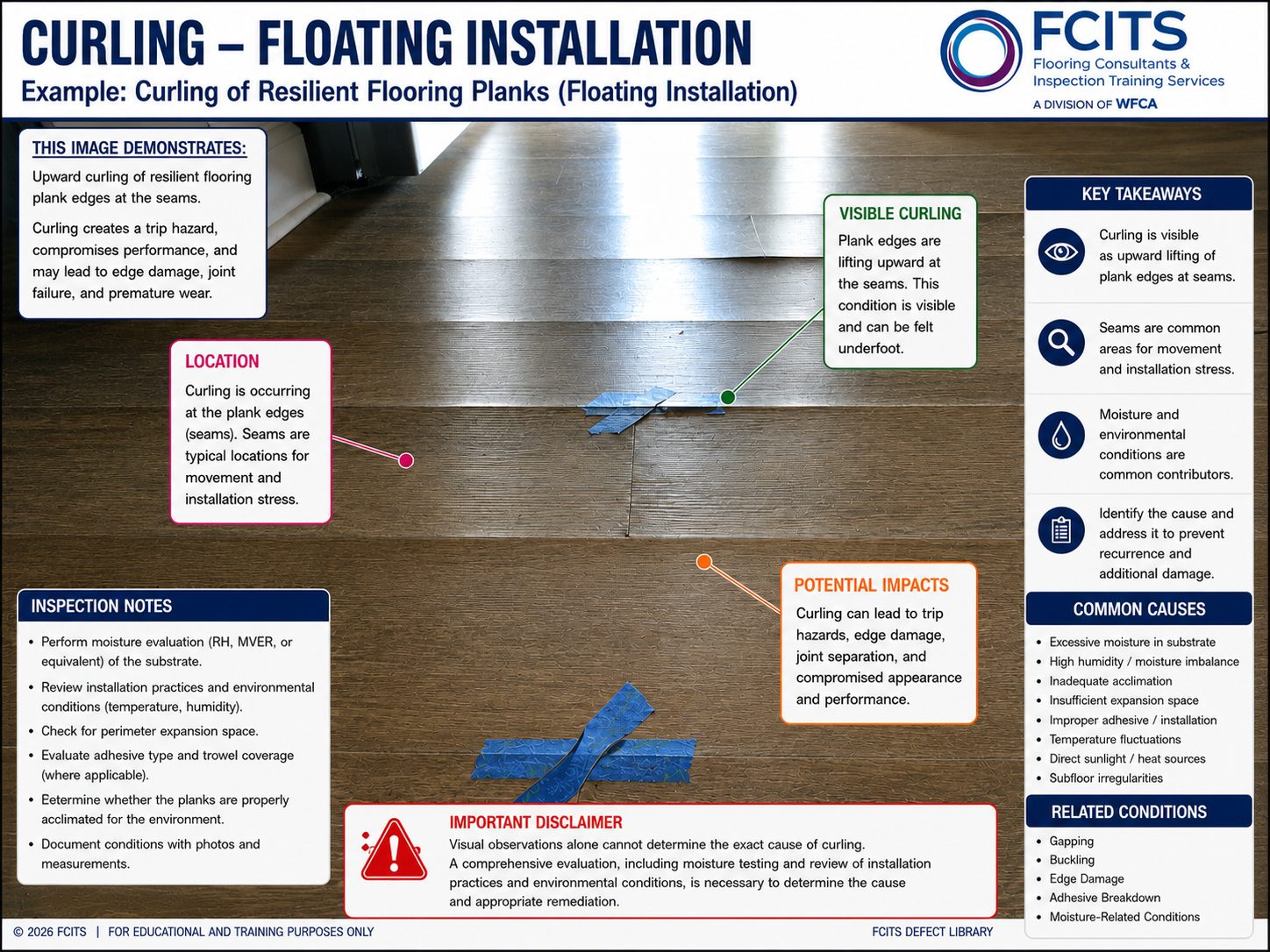
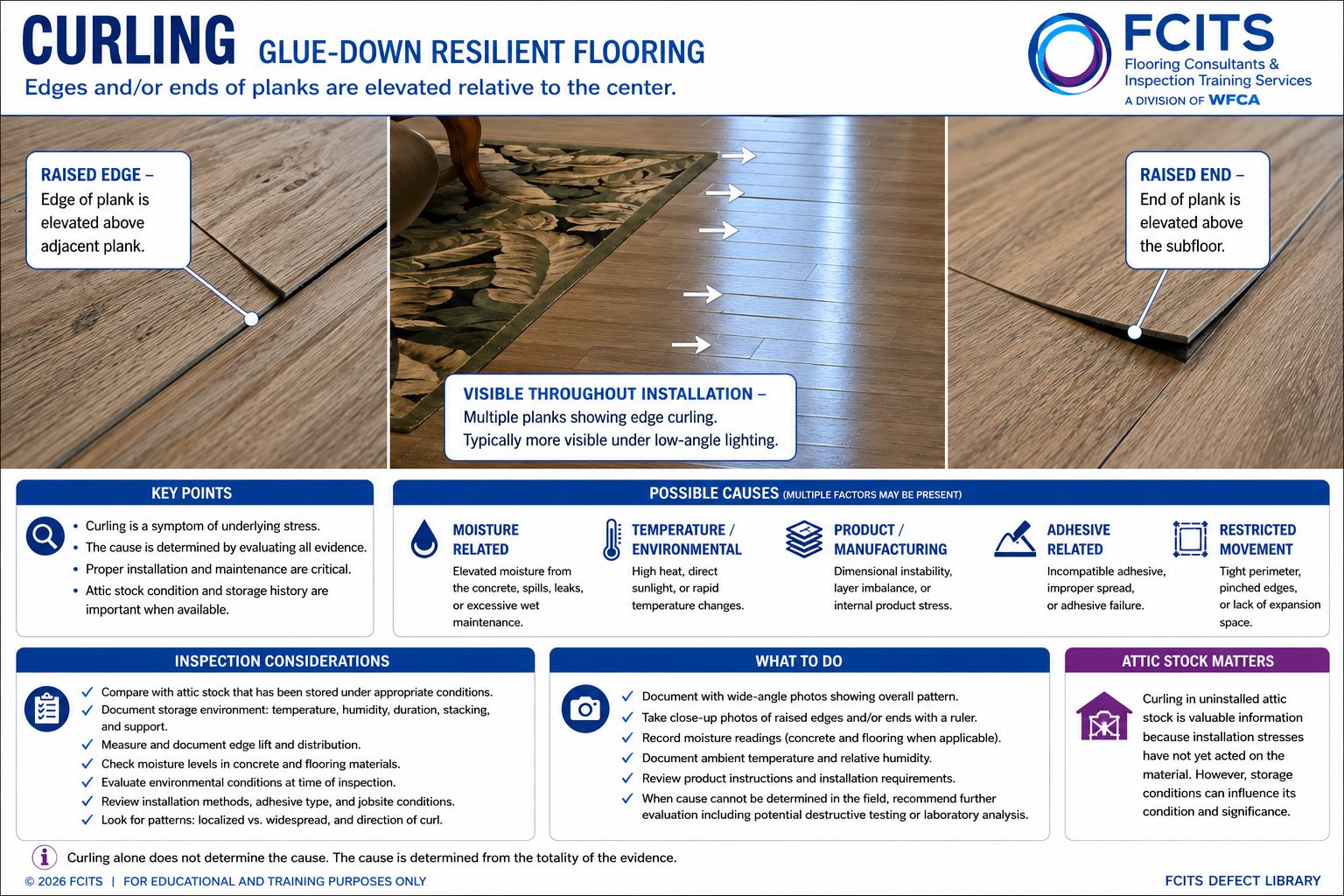
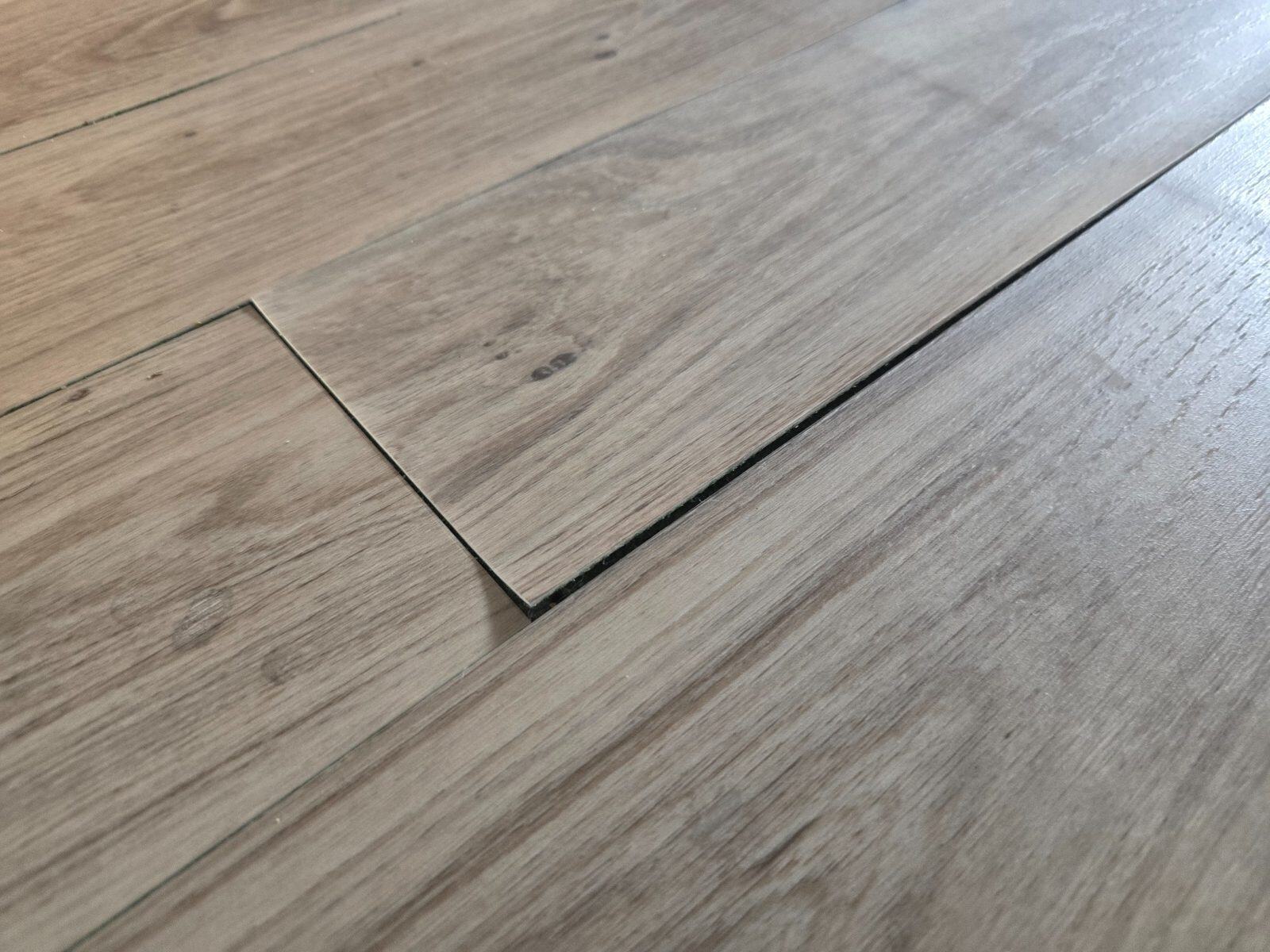
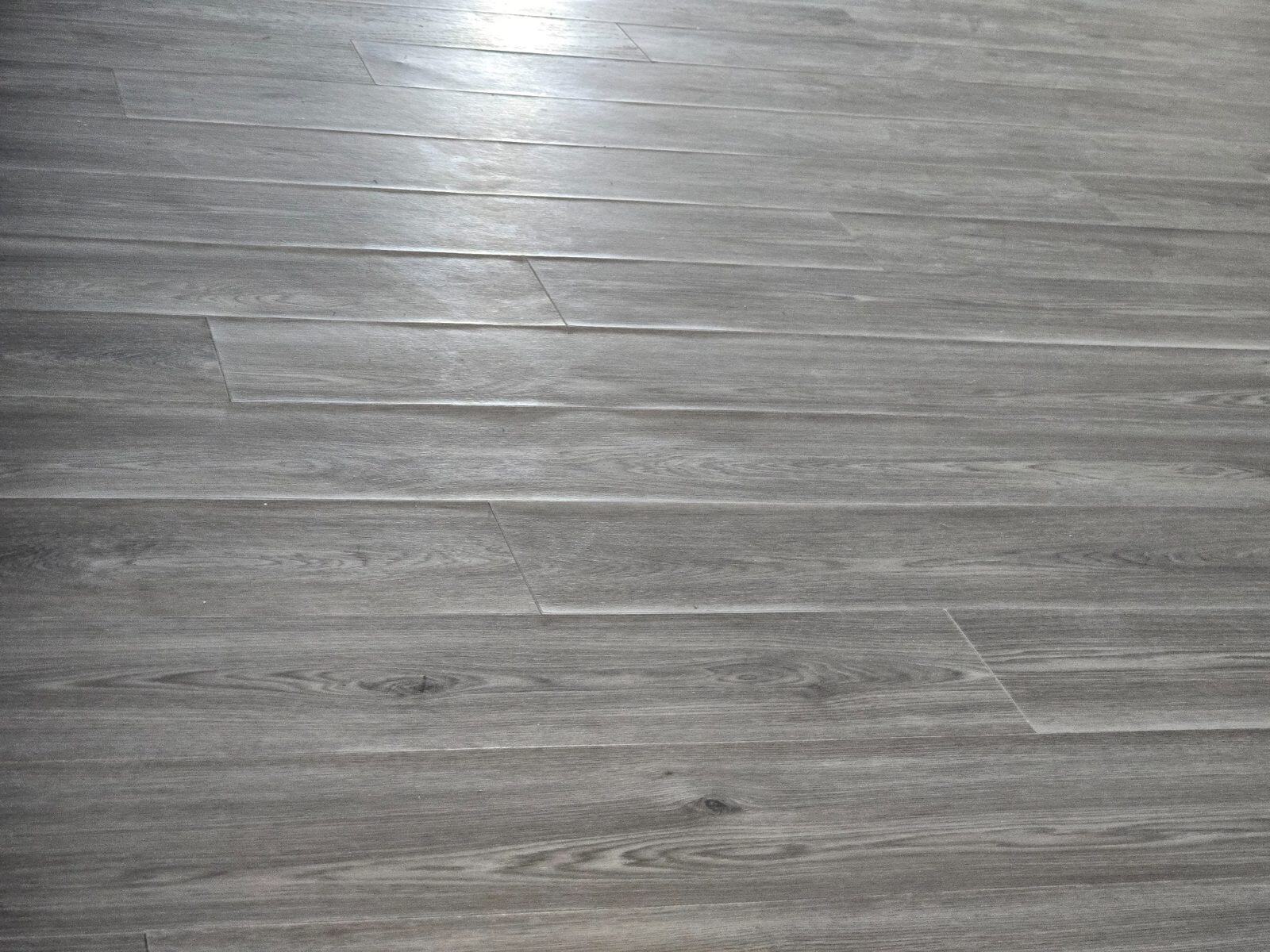
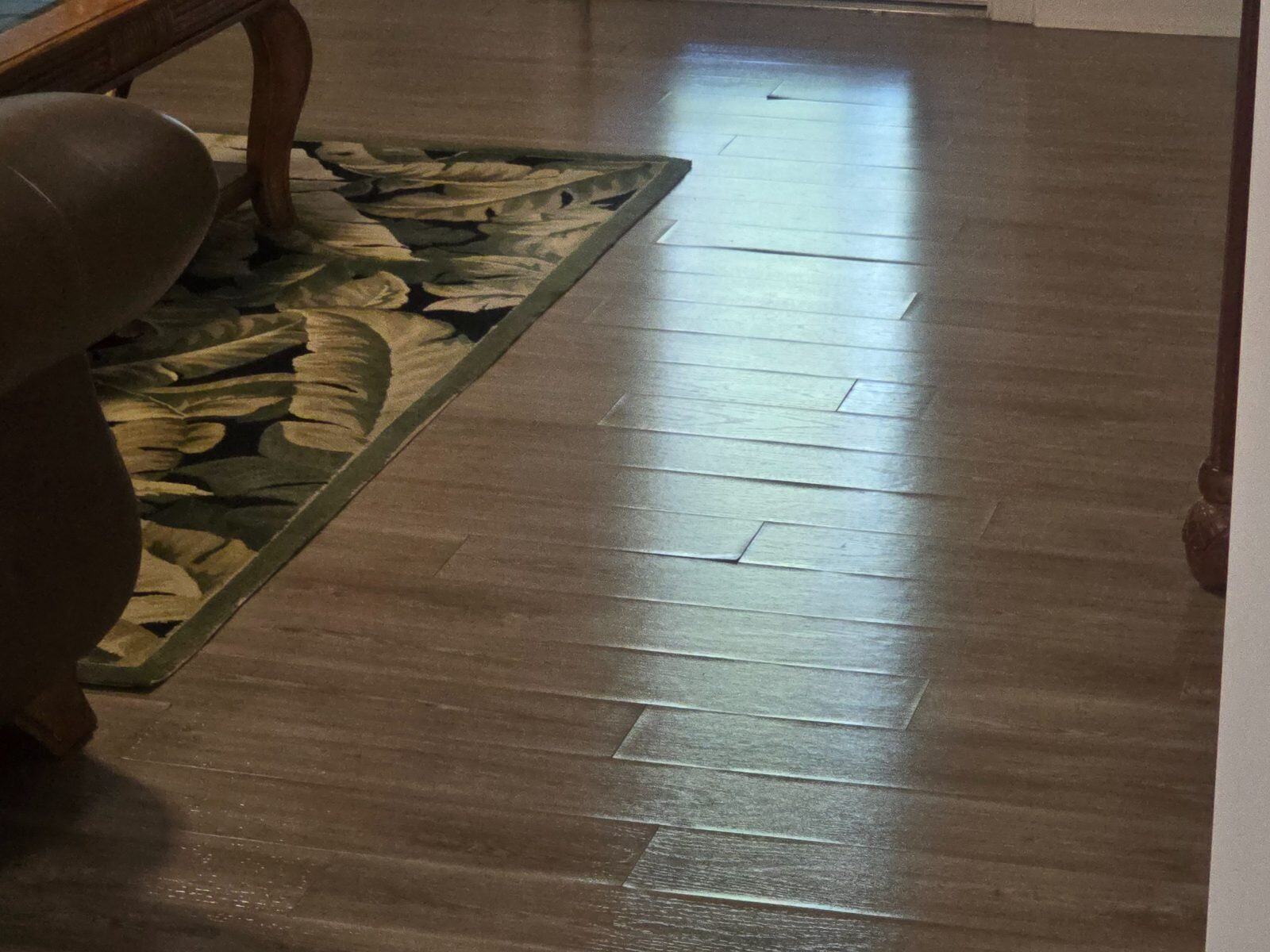
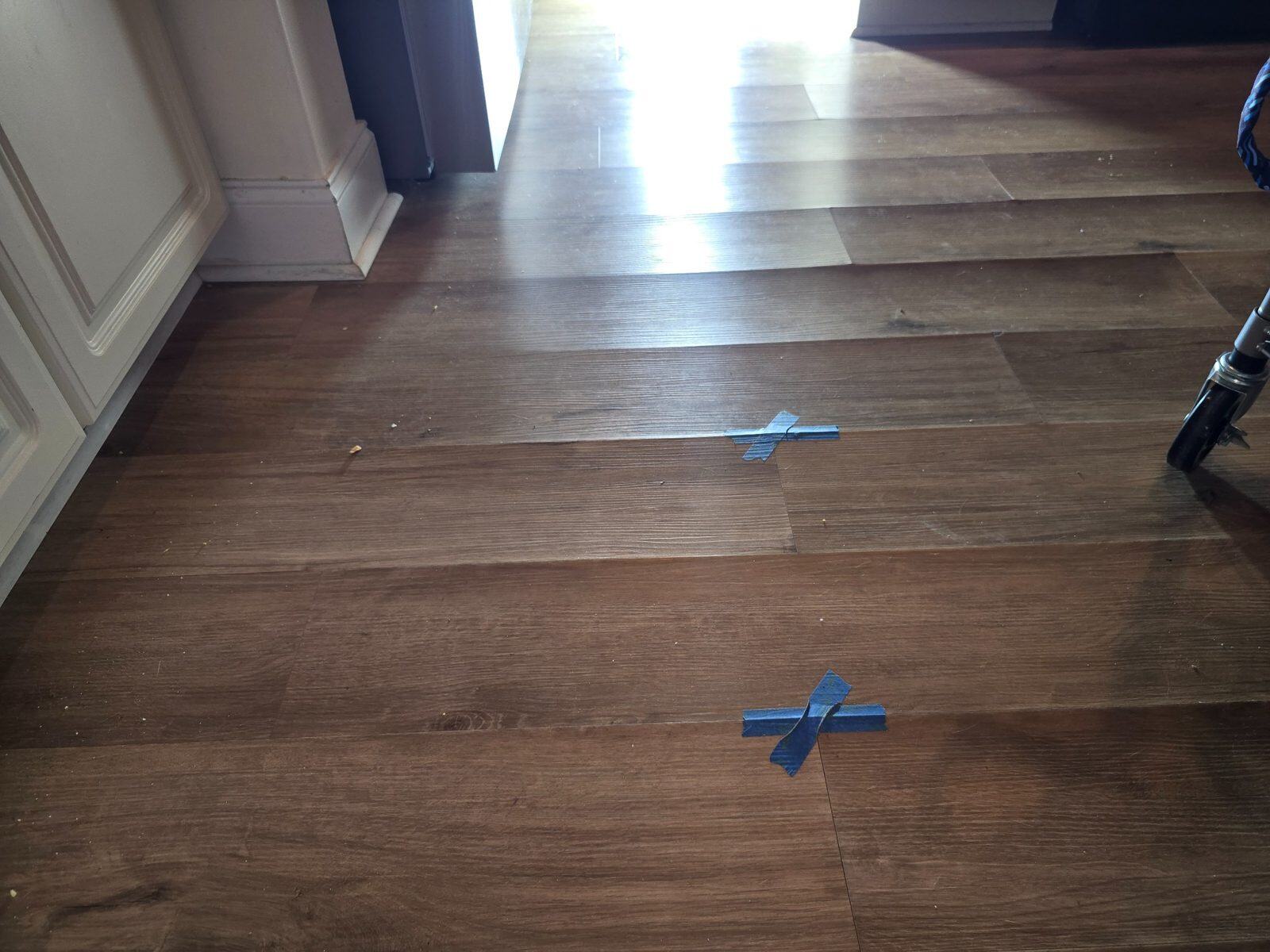
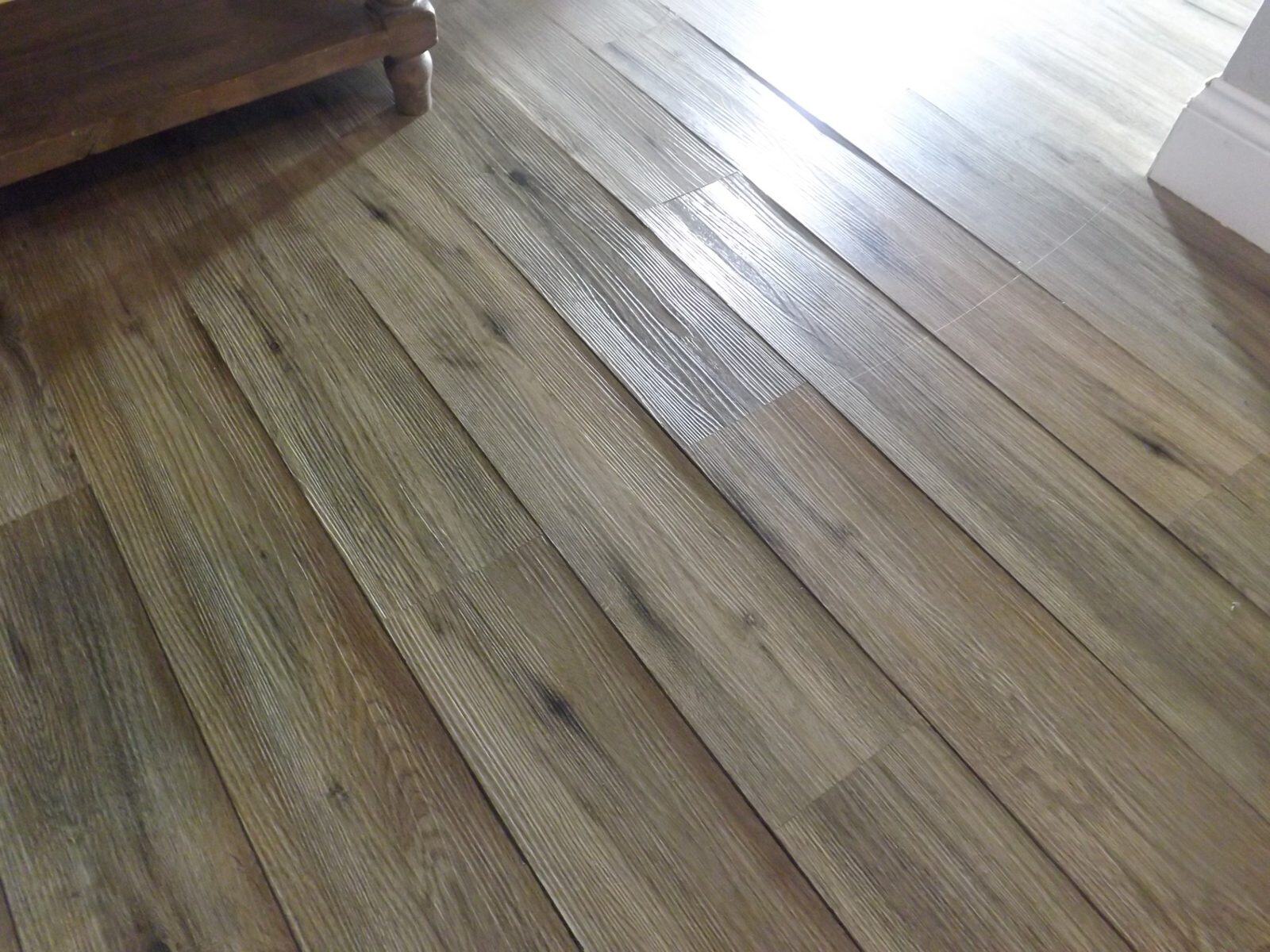
- Raised plank edges
- Raised plank ends
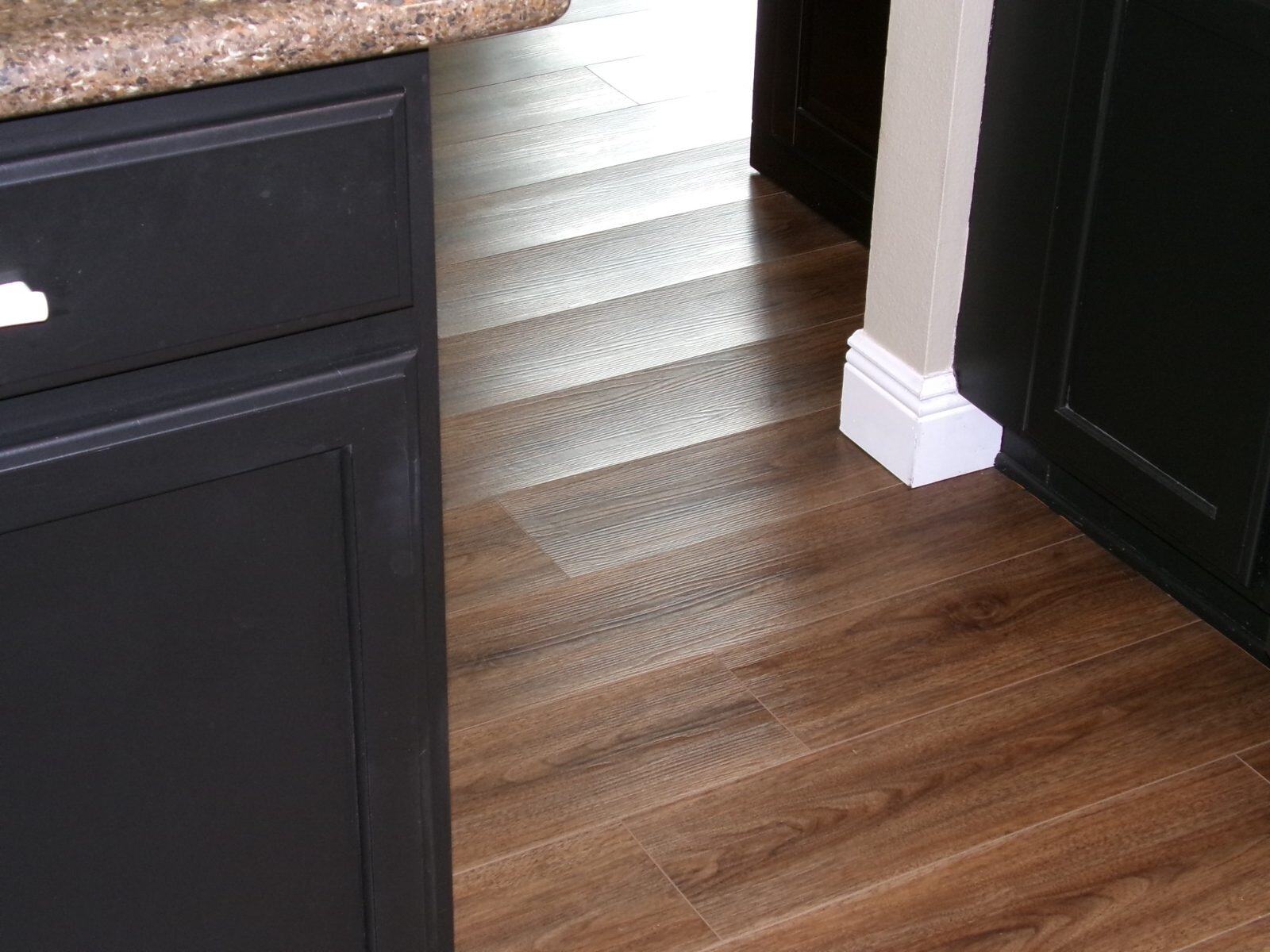
- Shadowing along joints
- Rippled or uneven floor appearance
- Increased visibility under low-angle lighting
- Localized or widespread surface distortion
- Profile appearance may resemble cupping observed in wood flooring products; however, the materials and mechanisms involved are different.
Degree of severity
Minor Level 1
Slight edge or end elevation visible primarily under certain lighting conditions with minimal impact on appearance or performance.
Moderate Level 2
Clearly visible Curling that may be noticeable underfoot or associated with additional flooring movement or distress.
Severe Level 3
Significant or widespread Curling that may create trip concerns, affect serviceability, or be associated with locking mechanism distress, plank fracture or breakage, debonding, peaking, buckling, or floor instability.
Potential causes
Curling develops when stresses acting upon the flooring system become uneven, causing the edges or ends of the flooring material to distort. Multiple contributing factors are common.
Moisture-Related Curling
Common contributing factors
- Elevated concrete moisture conditions
- Moisture vapor transmission
- Flooding events
- Appliance leaks
- Excessive wet maintenance
- Moisture absorption from below the flooring
- Elevated alkalinity
Mechanism
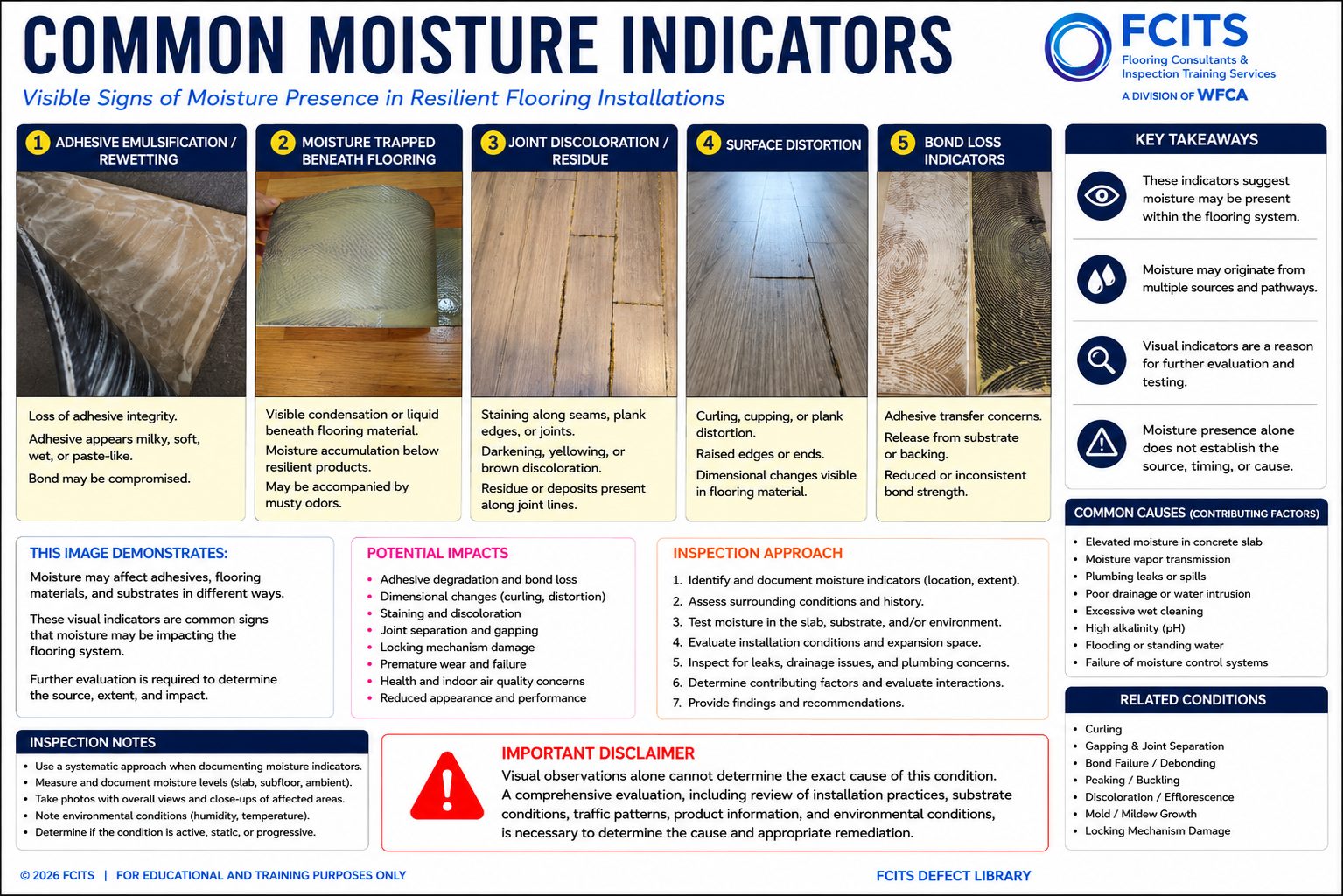
Moisture exposure may create dimensional changes within flooring materials, adhesives, or supporting components. Uneven moisture influence may contribute to stresses that result in edge or end elevation.
Product Stability / Internal Stress-Related Curling
Common contributing factors
- Dimensional instability
- Product imbalance
- Internal manufacturing stresses
- Layer-to-layer movement differences
- Material formulation concerns
Mechanism
Multi-layer resilient flooring products may respond differently to temperature, moisture, humidity, or environmental exposure. Differences between layers may create internal stresses that contribute to Curling.
Installation-Related Curling
Common contributing factors
- Inadequate expansion space
- Restrictive perimeter conditions
- Acrylic caulk bonding flooring to fixed objects
- Improper adhesive selection or application
- Improper substrate preparation
- Excessive vertical deflection
Mechanism
Installation conditions that restrict movement or create stress concentrations may contribute to distortion.
Thermal-Related Curling
Common contributing factors
- Direct sunlight exposure
- Elevated surface temperatures
- Large windows or sliding glass doors
- Skylights
- Heat-producing appliances
Mechanism
Localized heating may create uneven dimensional changes resulting in internal stresses and visible distortion.
Supporting visual guides
Inspection & evaluation
Inspection considerations
- Evaluate distribution pattern and severity.
- Evaluate moisture, environmental history, and thermal exposure.
- Inspect expansion space and restrictive perimeter conditions.
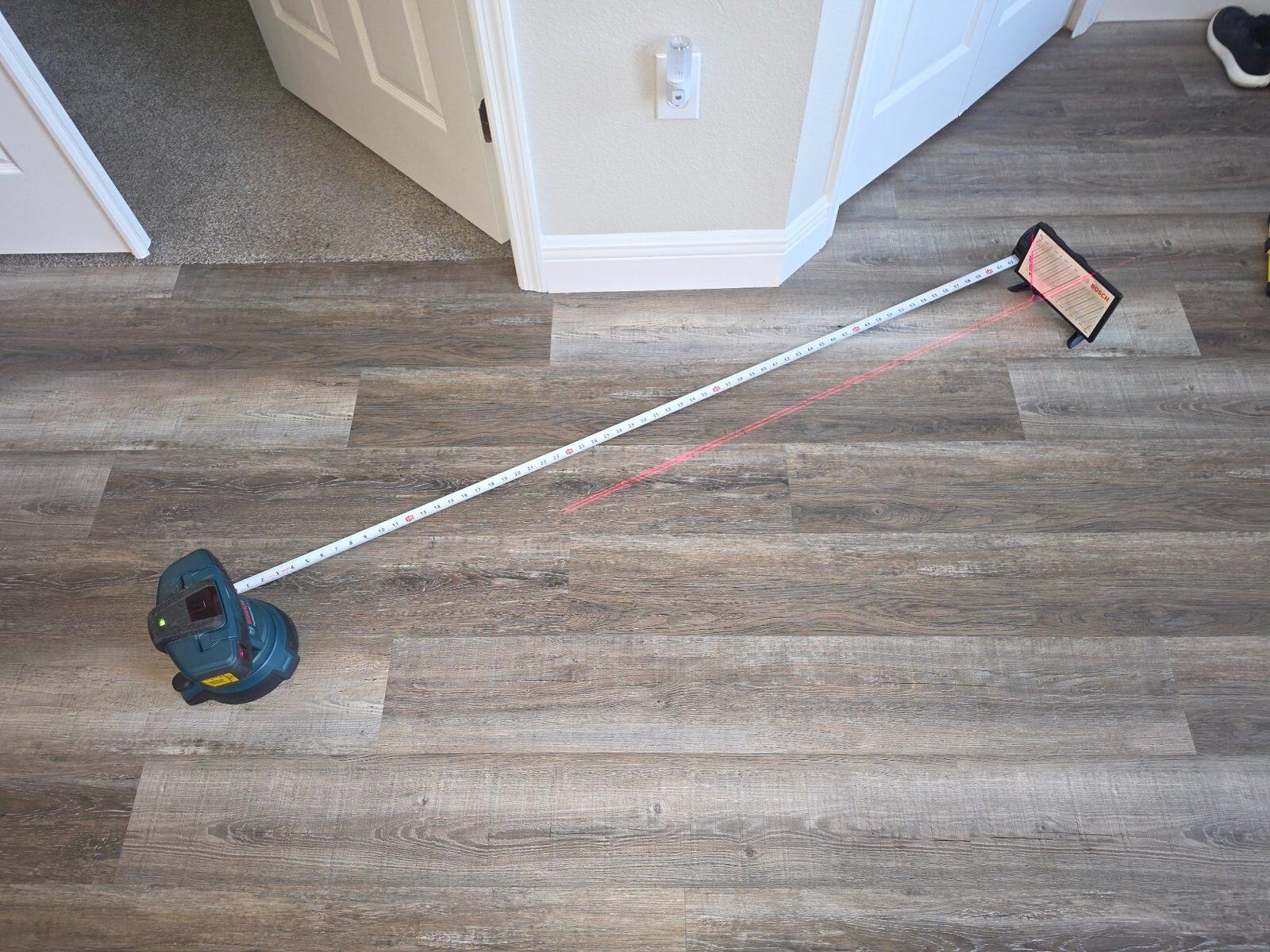
- Evaluate substrate flatness, support conditions, and vertical movement.
- Evaluate adhesive performance and bond integrity when applicable.
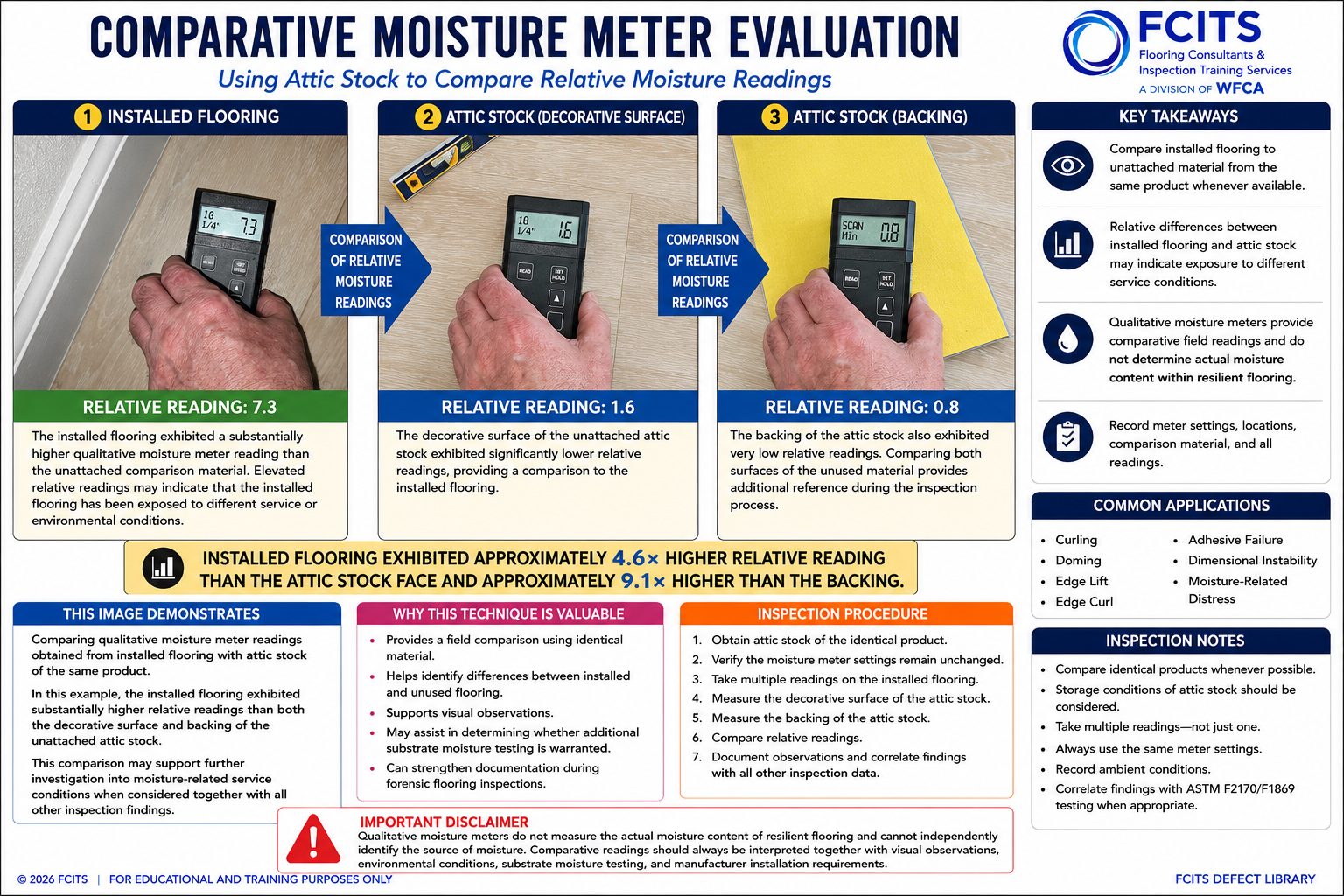
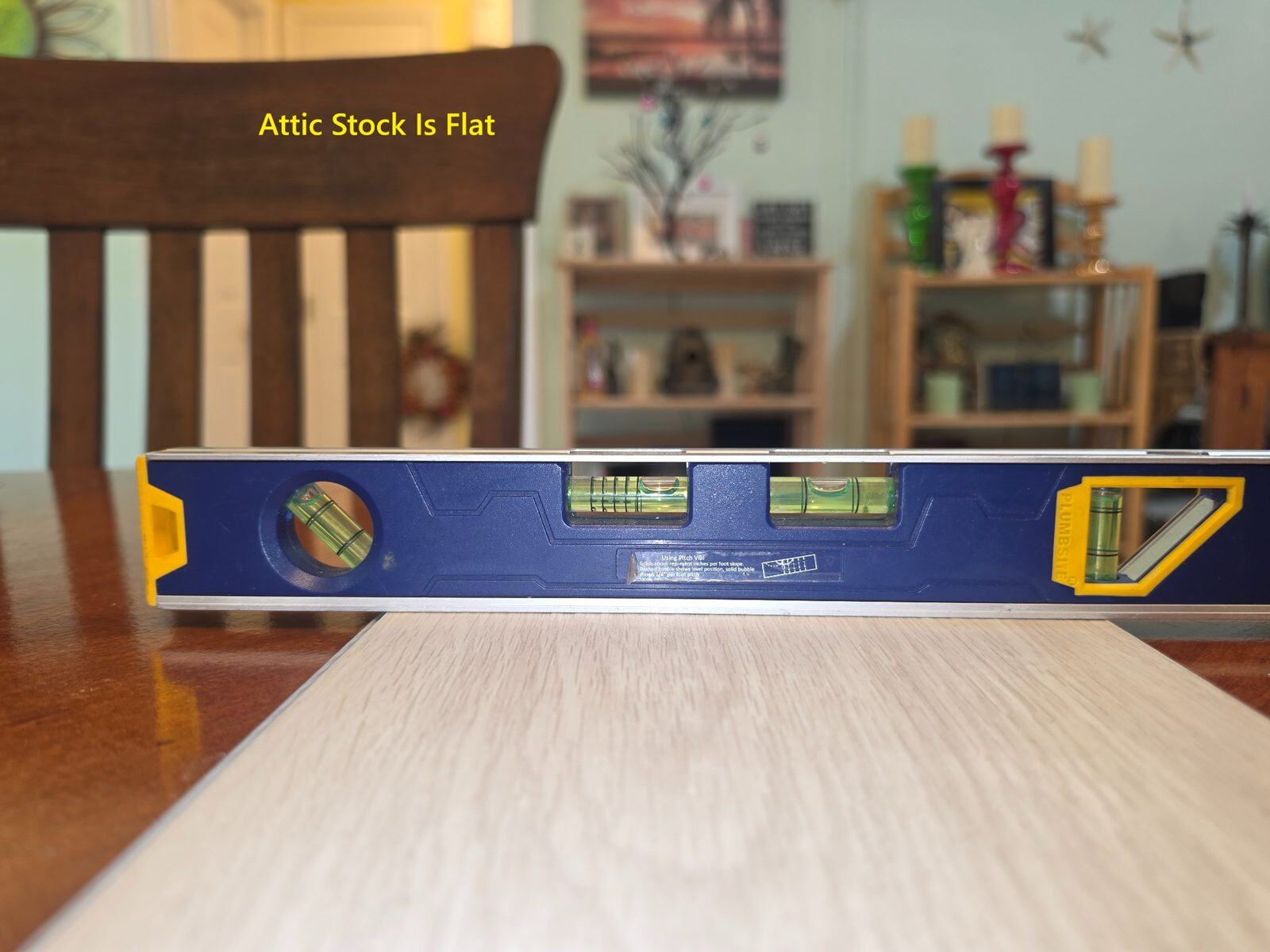
- Compare installed material with available attic stock.
- Consider laboratory evaluation when material dimensional stability concerns are suspected.
- Base conclusions on the totality of available evidence.
Curling should be evaluated as part of the complete flooring system. Field observations, installation conditions, environmental exposure, moisture evaluation, product characteristics, and other site-specific factors should be considered before determining the contributing cause(s).
What this condition does not tell you
Curling is an observable flooring condition. The presence of Curling alone does not confirm:
- A manufacturing-related condition
- An installation-related condition
- A moisture-related condition
- Product failure
- Warranty responsibility
- The need for replacement without further evaluation
Is it a manufacturing defect?
Not necessarily.
Curling may result from manufacturing-related dimensional instability, moisture influences, installation conditions, thermal exposure, support conditions, or multiple interacting factors.
Typical findings
- Raised plank edges or ends
- Visible surface distortion
- Evidence of dimensional movement
- Associated locking mechanism distress
- Moisture-related indicators
- Thermal exposure patterns
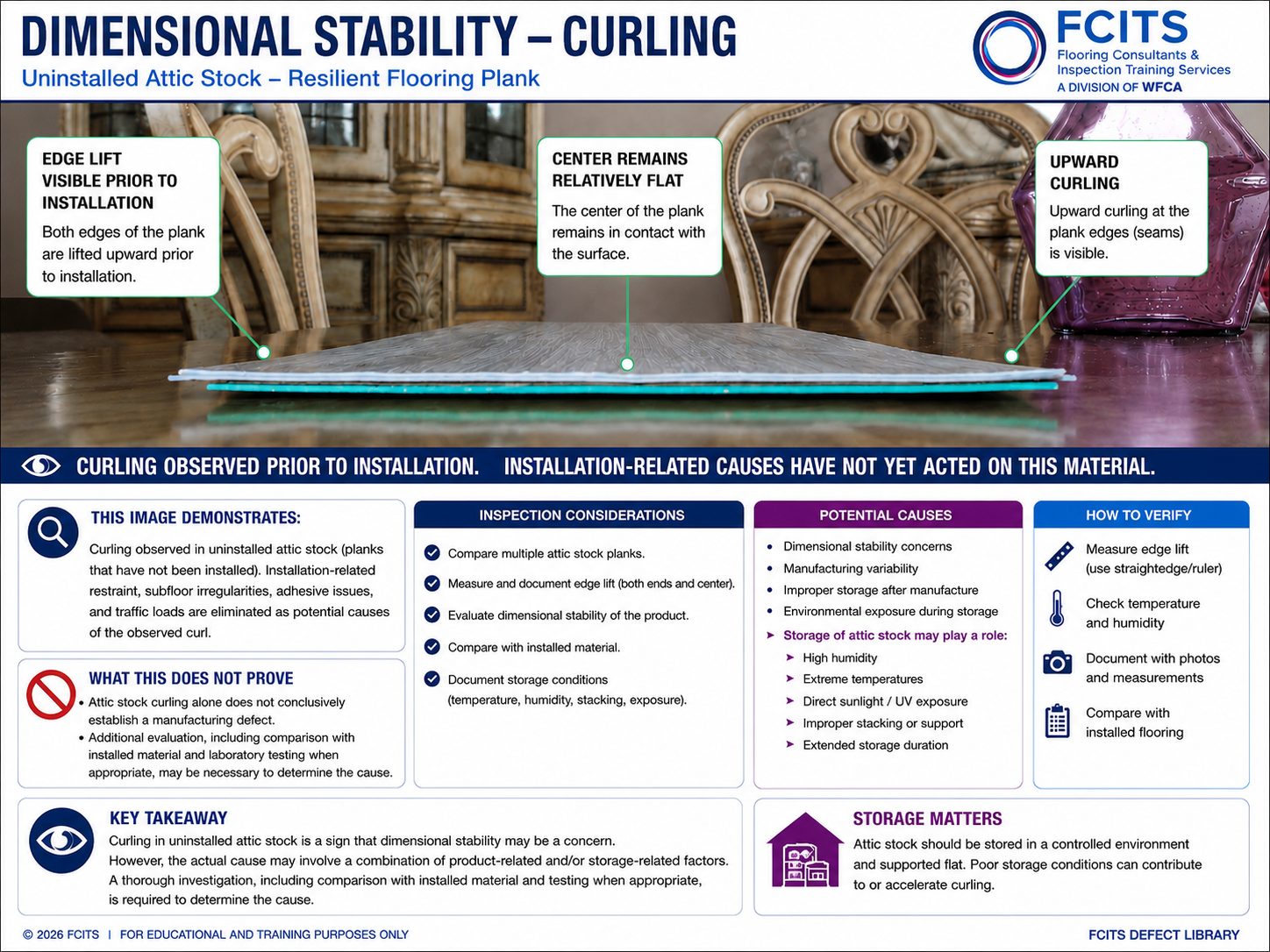
- Similar distortion in attic stock
Effect on performance
- May affect appearance
- May create trip concerns
- May increase edge wear
- May contribute to locking mechanism damage
- May contribute to plank fracture or breakage when associated stresses are sufficient.
- May reduce long-term serviceability
Recommended documentation
- Overall room photographs
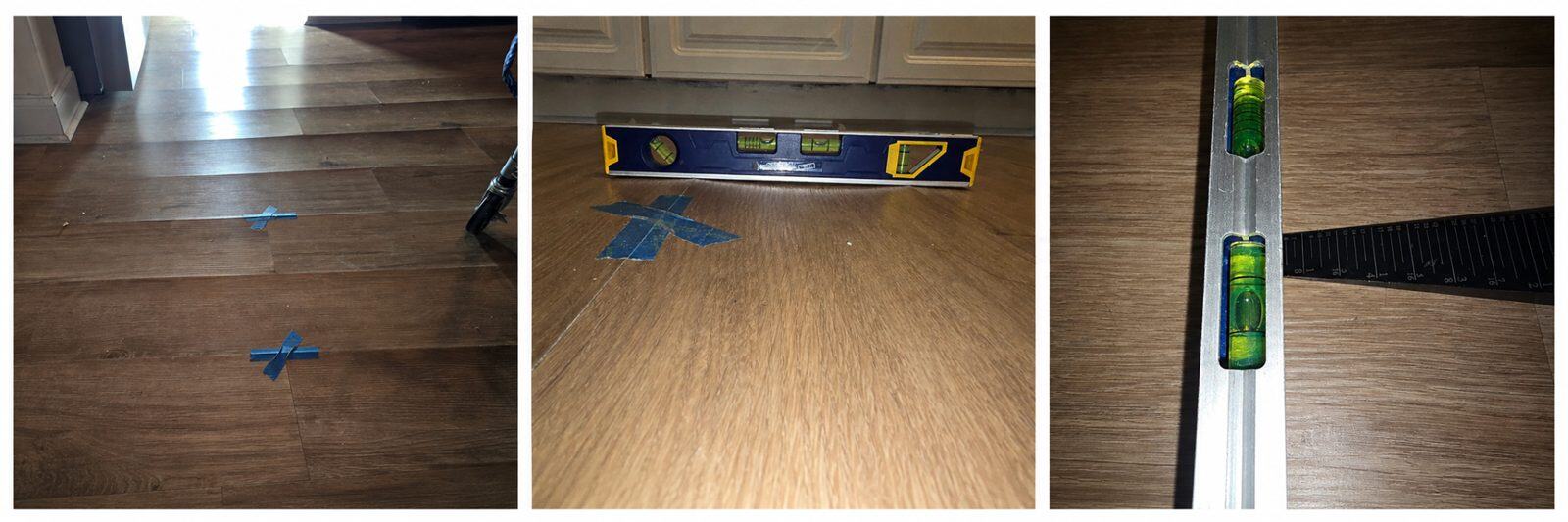
- Low-angle lighting photographs
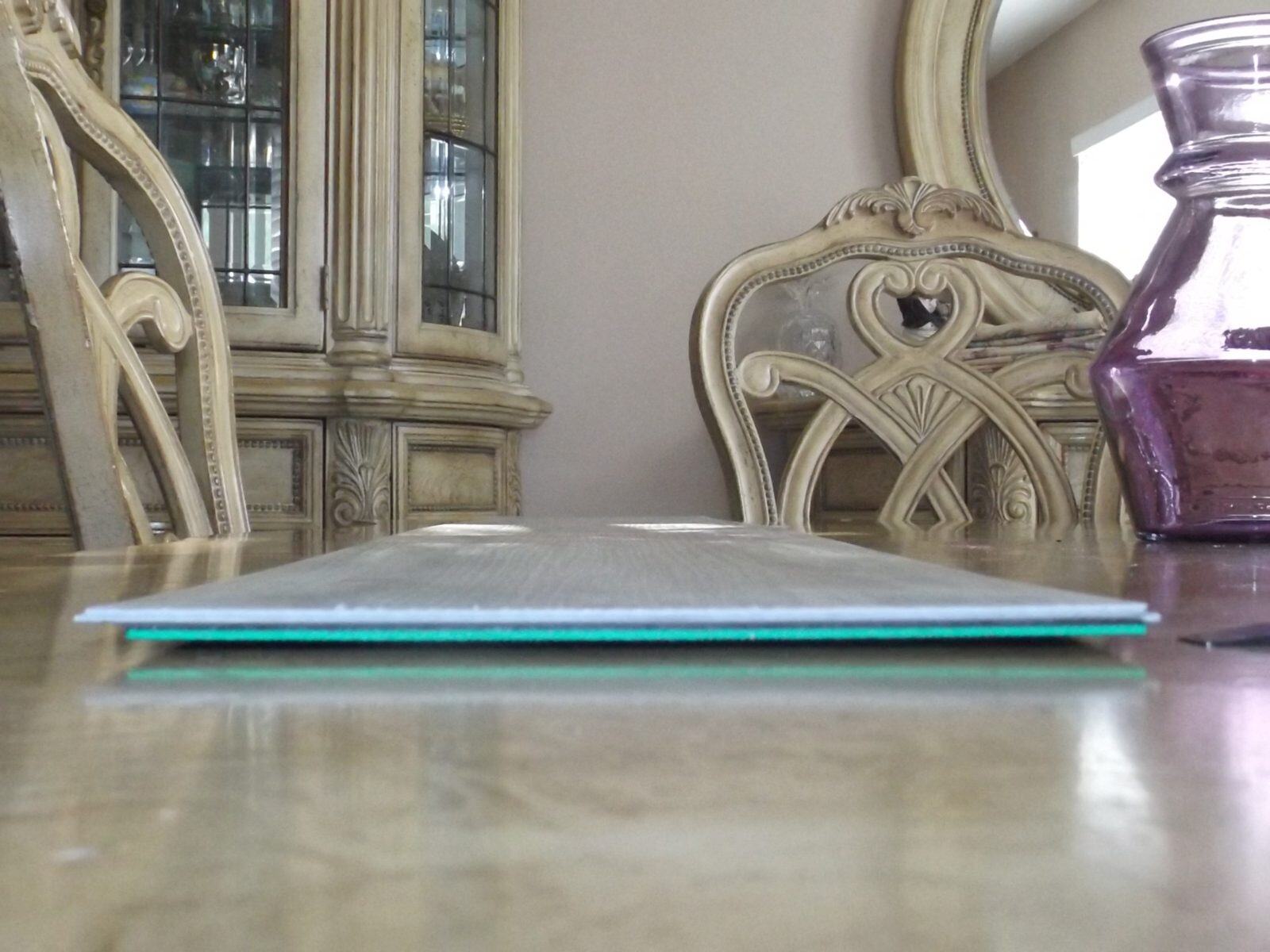
- Edge profile photographs
- Moisture testing results
- Environmental conditions
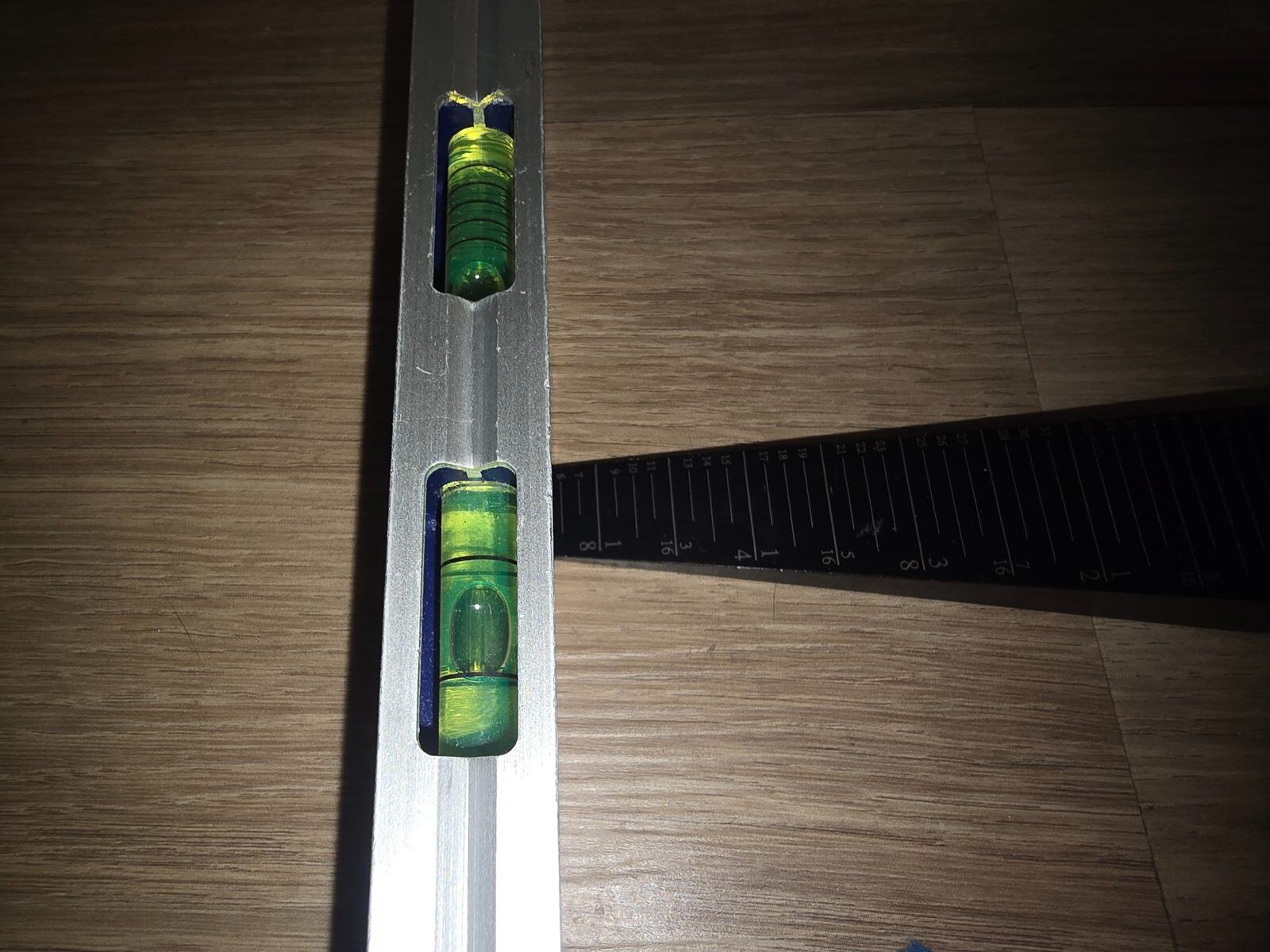
- Flatness measurements
- Deflection measurements
- Attic stock evaluation
Common misdiagnoses
Misdiagnosis
All Curling is caused by moisture.
Misdiagnosis
Curling automatically means the product is defective.
Misdiagnosis
Curling and wood flooring cupping are the same condition.
Misdiagnosis
Replacing curled flooring permanently corrects the concern.
Related conditions
Inspection photographs & guides
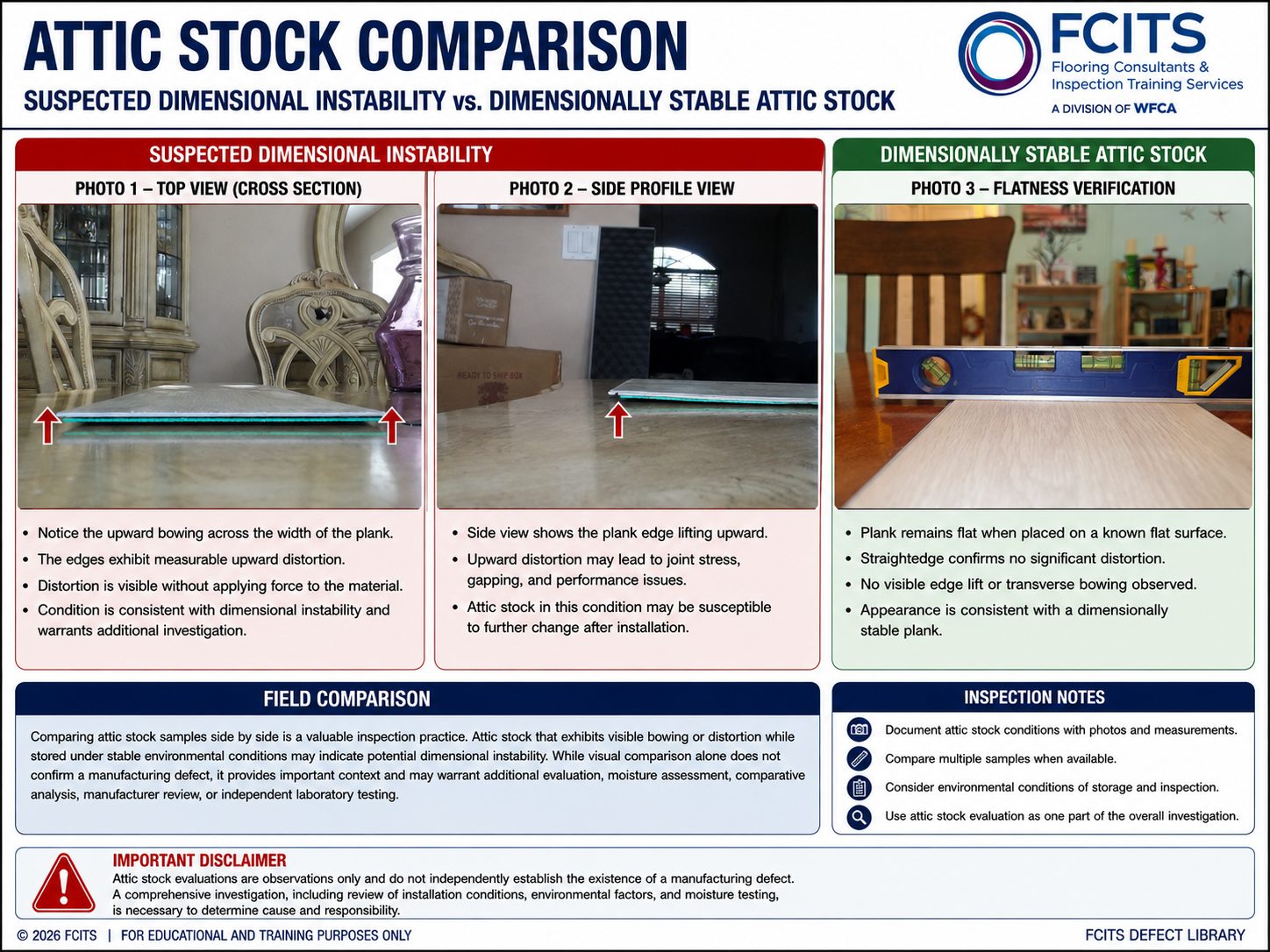
Attic stock evaluation
Uninstalled attic stock may provide valuable comparative information because installation-related influences such as substrate conditions, adhesive interaction, restricted movement, rolling loads, maintenance practices, and in-service environmental exposure have not acted upon the material.
When available, attic stock should be visually evaluated for similar dimensional changes, including edge curl, end curl, bowing, twisting, or other changes in product profile. The presence of similar conditions in properly stored attic stock may indicate the need for additional evaluation of product dimensional stability or internal material stresses.
The absence of curling in attic stock does not independently eliminate product-related concerns, as storage conditions, exposure history, production variables, and installed environmental conditions may differ.
Storage method, temperature exposure, humidity exposure, packaging condition, and storage duration should be considered when evaluating attic stock comparisons.
Applicable test methods & industry references
Laboratory testing evaluates material behavior under specific test conditions and does not independently establish the cause of Curling observed in an installed flooring system. Testing results should be considered together with field observations, installation conditions, substrate conditions, moisture exposure, environmental history, thermal influences, and other site-specific evidence.
ASTMF2199
Standard Test Method for Determining Dimensional Stability of Resilient Floor Tile After Exposure to Heat
ASTM F2199 evaluates dimensional stability characteristics of resilient flooring materials after controlled laboratory exposure to elevated temperature conditions. Testing may assist in determining whether a material demonstrates measurable dimensional change or curling tendencies under the conditions outlined within the test method.
ISO23999
Resilient Floor Coverings — Determination of Dimensional Stability and Curling After Exposure to Heat
ISO 23999 evaluates dimensional stability and curling behavior of resilient floor coverings after exposure to heat under controlled laboratory conditions. Results may provide information regarding material response; however, laboratory findings should be evaluated together with field conditions and other inspection evidence.
ASTMF3261
Standard Specification for Resilient Flooring in Modular Format with Rigid Polymeric Core
ASTM F3261 provides product specification requirements for rigid polymeric core resilient flooring products. When applicable, product flatness requirements and manufacturer specifications should be considered during evaluation.
±0.008 in.(±0.2 mm)
For products 9 in. (229 mm) wide or less, ASTM F3261 specifies a maximum width-flatness deviation of ±0.008 in. (±0.2 mm) when measured in accordance with the referenced ISO 24337 procedure. This allowance applies to both convex and concave width-flatness deviation.
A field-observed or straightedge-measured bow should not automatically be treated as an ASTM F3261 nonconformance unless the product, conditioning, specimens, and measurement procedure meet the applicable requirements of the standard.
Additional considerations
Curling vs. similar conditions
Curling should be differentiated from Edge Lift, Peaking, Buckling, and Vertical Displacement by evaluating the flooring profile, movement pattern, and associated conditions.
Reoccurring conditions following repairs
If replacement flooring develops similar Curling in the same location, evaluate whether the same underlying conditions remain present.
Additional forensic consideration
Associated conditions frequently provide more useful information than the Curling itself. Conclusions should be based on the totality of evidence.
Additional field photographs & visual guides
Select any photograph to enlarge.
Summary
Curling is an observable dimensional distortion condition involving elevation of flooring edges or ends. Proper diagnosis requires evaluation of the complete flooring system and supporting evidence.