
Inspiration Corner – Beyond the Pandemic
2021 Trends Focus on Inner Calm Amidst Outer Chaos
This past year has brought a whole new dimension to our world. The home became not just a place to live, but also a place to work, learn and play. With all the outside chaos, in 2021 we see consumers gravitating toward a home that helps them thrive in all areas of their life; where they can feel comfortable and calm, energized and inspired, safe and healthy.
Changes to everyday living environments and spending more time at home have created a very emotionally charged purchasing environment. Consumers are making buying decisions based on reaction and emotion to what’s going on in the world around them.
With that in mind, this year’s home interior looks fall into two distinct categories: Minimalism and Maximalism.
Minimalism is very simple, clean, and understated. Consumers who prefer this style want to create a sense of calmness that connects them with nature and focuses on their spiritual well-being.
Maximalism is bold, bright and eclectic. Consumers who prefer this style want to surround themselves with items that bring them back to happier times, using family heirlooms and vintage items in a mixture of pattern, color and texture.
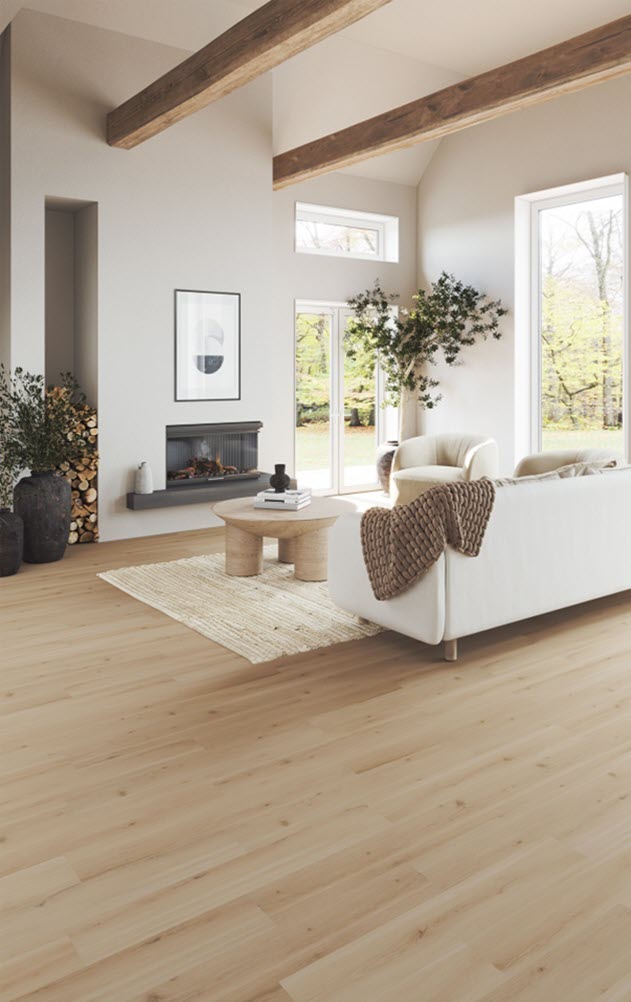
Minimalism – Less is More
Minimalistic interiors lean toward Scandinavian or Japanese influences that are focused on subtle textures, earthy pigments, and a sense of comfort. Both cultures take a “less is more” approach and feature uncluttered spaces and clean lines focused on sustainability and biophilic design. The results are spaces that are welcoming yet tidy and orderly without feeling cold.
Scandinavian interiors focus on a color palette that centers around chalky, matte, pastels that move away from the cool grey and white, focusing on earthy, neutral bases. These neutrals create the perfect backdrop for subtle pops of color such as sage green and terracotta.
Japanese inspired rooms start with a dark base that is saturated, creating a different type of neutral environment. Either way, both looks work well with muted tones of blue, green, plum, and brown or black.
The flooring that complements minimalism is naturally understated with minimal distressing. In wood looks, it’s species like White Oak, Maple, Pine and Ash – all of which have depth of character without being too busy. In tile looks the focus is on materials like concrete and French limestone that have depth of character but little variation.
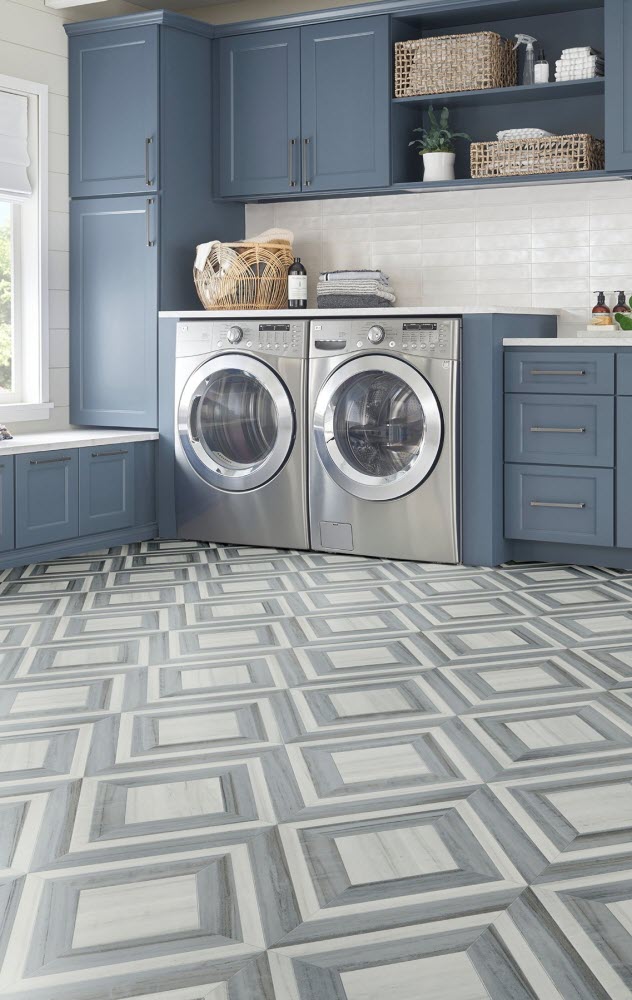
Maximalism – color and layers
Here, “more is more” as this design style focuses on filling up surfaces and spaces with interesting pieces. The look is all about indulgent color, pattern and texture that exemplify the homeowner’s personality. Often this is achieved by incorporating hand-me-downs and inherited pieces alongside second-hand vintage and reclaimed furniture and making them look like a curated collection.
This trend combines homey nostalgic accessories with textiles featuring florals, ruffles, velvet, fringe and chintz. The color palette centers around rich tones of blues and reds mixed with warmer tones of ochre and rose accented by metallic touches gold, burnished copper, brushed brass and bronze.
The flooring that complements Maximalism is traditional – with a twist. In hardwood, species such as Oak, Cherry, Hickory and Walnut are popular, but in large format planks or unique shapes such as herringbone and marquetry. In tile looks we continue to see geometrics and large formats, in both marble and encaustic tile looks.
Whatever your customer’s taste, expressing their individual style is key right now, as home is the place they will always return to as a reminder of who they are and what’s really important.